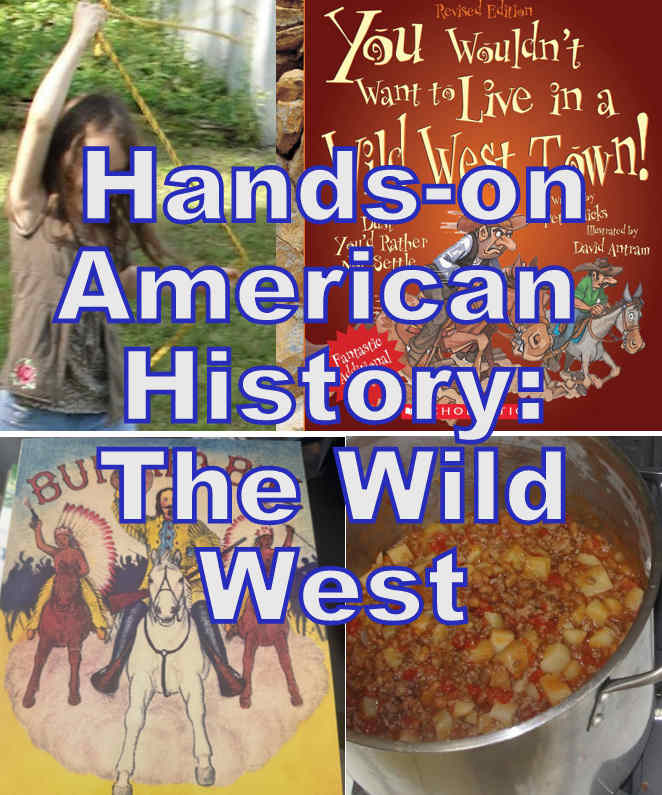
Hands-on American History Lesson Plan on the Wild West
This is the 30th lesson in a series of 35 hands-on lessons covering U.S. American History. This lesson focuses on the Wild West. I used this plan while teaching a 45 minute history class for children in Kindergarten, 1st, & 2nd grades. Each lesson includes a biography report, history notebook page, history song, our favorite children’s books, YouTube video, a history joke, & a variety of hands-on activities to make each lesson engaging & memorable. Use these fun lessons with your classroom, homeschool, after-school program, or co-op!
Cowboy Stew
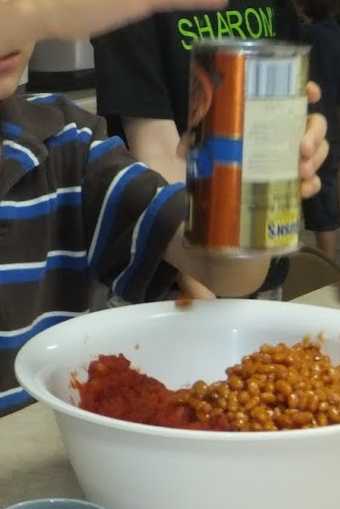
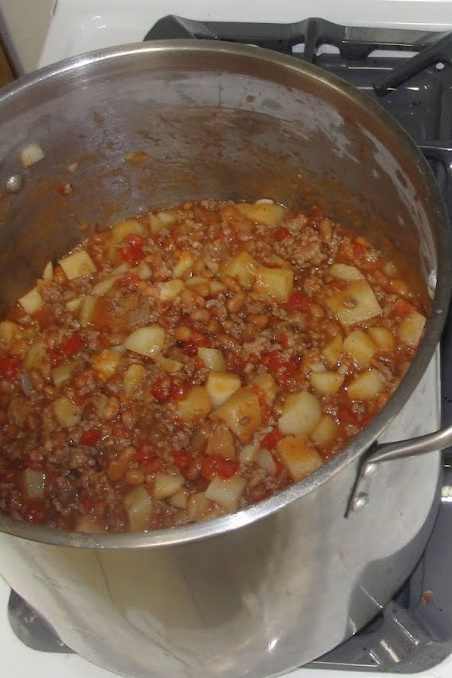
- Introduce “Cookies” and Chuck Wagons:
- In the Midwest [Point to it on a calendar of the US and have students find that area of the US on a map], there was plenty of prairie land for cows to graze, but they needed to eventually go to markets, places where there were lots of people who wanted to buy meat. Cowboys would let cows graze and then lots of them would get together on “cattle drives” to lead the cows either to train stations or to cities where they could be sold. It was a lot of work and took many weeks.
- On cattle drives, the cooks were called “cookies” as they traveled with a “chuck wagon,” which would carry all the food and cooking supplies. Cowboys sought out good cooks so they could have something to look forward to as the men on cattle drives had few other comforts. We will become “cookies” and will be make a delicious Cowboy Stew.
- Have students work together (or in groups of 6-8) to mix together the ingredients for Cowboy Stew. Let the children use a can opener (which they loved doing), dump in, and mix the ingredients.
- Mention about some of the ingredients such as: Where would the beef come from? (Cows…since that’s the animal they were moving) Why would they include potatoes and onions? (They last a long time without refrigeration and are filling and nutritious.) Would they use canned beans? (No, they didn’t have canned beans back then. They’d carry them dry beans as those can last for years. During the day or starting the night before, the cookies would soak the beans to prepare for dinner that night.)
Cowboy Stew:
- 1 pound ground beef (cooked and drained)
- 1 package Simply Potatoes diced potatoes with onions OR 1/2 chopped onion and 2 diced potatoes
- 2 beef bouillon cubes
- 1 cup water
- 1 (14.5 ounce) can kidney beans
- 1 (14.5 ounce) can diced tomatoes
- 1 tsp. salt
- Combine ingredients together in a bowl or directly into the pot. Bring to a boil and the lower the temperature and simmer for at least 20 minutes or until the potatoes are tender. If possible, still occasionally.
You will need:
- a calendar of the US
- Tools for cooking for each group of 8: large mixing bowl (optional), liquid measuring cup, 1 teaspoon, mixing spoon, pot
- Ingredients for each group of 8: 1 pound of ground beef (cooked and drained), 1 package Simply Potatoes diced potatoes with onions OR 1 chopped onion and 2 diced potatoes, 2 beef bouillon cubes, 1 (14.5 ounce) can kidney beans, 2 (14.5 ounce) can diced tomatoes, 1 tsp. salt
Student Biography Presentation: Annie Oakley
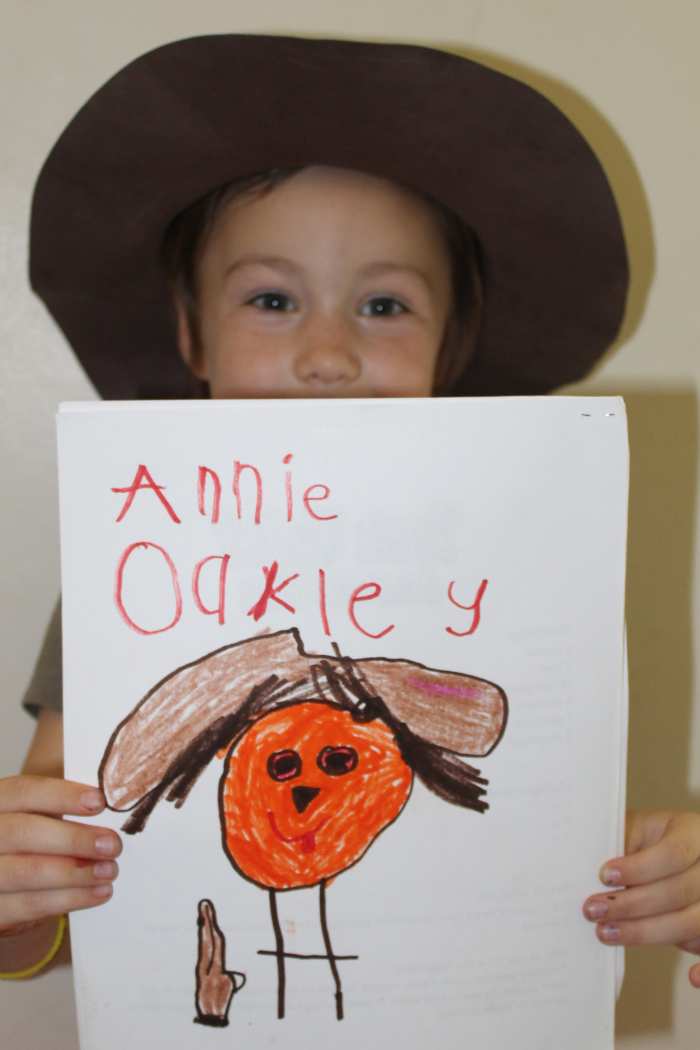
Student Biography Presentation on Annie Oakley
- Student biography presentation on Annie Oakley
Review & Presidents Song
- Review questions: When the Southern states broke away from the Union after Abraham Lincoln was elected, what did they call their new country? (The Confederate States of America) In what proclamation did Abraham Lincoln freed the slaves in the Confederate States of America? (Emancipation Proclamation) Abraham Lincoln gave a famous speech to commemorate/remember the brave soldiers who fought at the Battle of Gettysburg; what is is famous speech called? (The Gettysburg Address) Who surrendered to Ulysses S. Grant? at the Appomattox Courthouse? (General Robert E. Lee) What is the time period we studied today that happened after the American Civil War? (Reconstruction) George Washington Carve tried to convince poor Southern farmers to stop growing cotton and to start growing which plant? (Peanuts) George Washington Carver was a professor at the Tuskegee Institute; who started Tuskegee Institute at which ex-slaves and children of slaves could get a college education? (Booker T. Washington)
- Sing through the entire President’s Song 2 times while either showing the video or flipping through pictures of the Presidents. (We add in “Biden, Trump” at the end.)
You will need:
- Screen to show the below video or a book showing Presidents or point to their pictures on a President place mat
Wild West
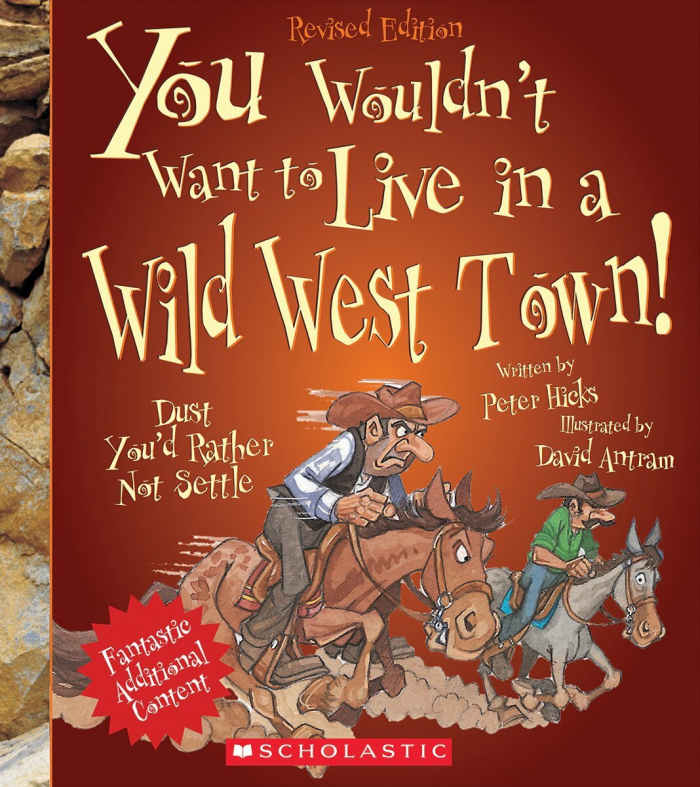
You Wouldn’t Want to Live in a Wild West Town! by Peter Hicks
- Flip through and summarize You Wouldn’t Want to Live in a Wild West Town! by Peter Hicks to introduce what life was like in the Wild West.
You will need:
- You Wouldn’t Want to Live in a Wild West Town! by Peter Hicks or other book on the Wild West
Rodeo Time
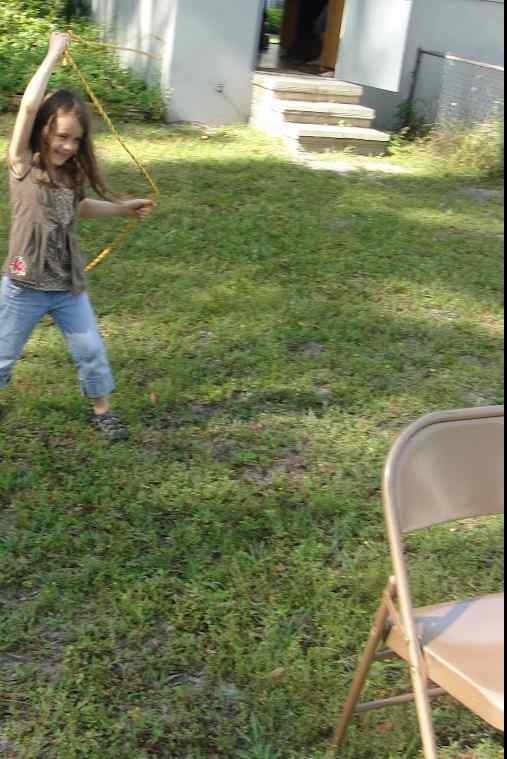
Roping “cattle”
- Show children pictures from a book about rodeo events and briefly discuss a rodeo, which were originally held so that cow hands could should off their skills in handling cattle and horses.
- Show children how to lasso a “calf” by lassoing a chair. (If you have a smaller group, you can use the handlebars of a bike since they’re similar to the horns on cattle.)
- Have children try to lasso a “calf.” Set up as many chairs as you have ropes. Have children stand back from the chair and try to lasso the back of the chair with their rope. Make sure each child gets at least one successful lasso.
You will need:
- as many ropes as you have
Buffalo Bill Cody
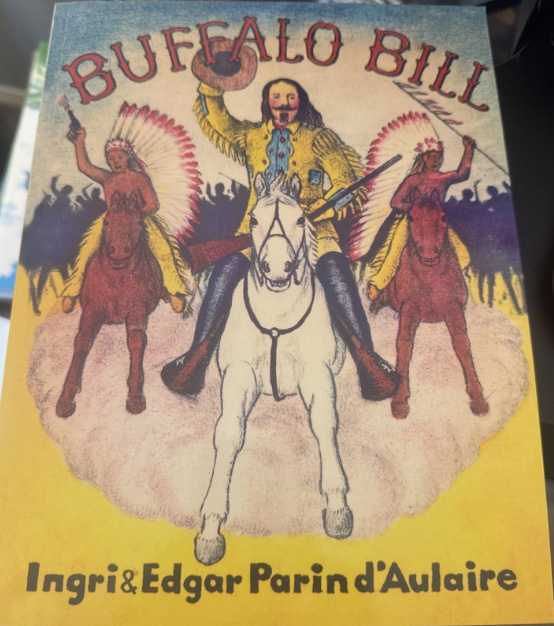
Buffalo Bill by Ingri Parim D’aulaire
- The Wild West was made famous by Buffalo Bill Cody, who had been a Pony Express rider when he was a boy. Who can tell me who the pony express riders were?
- Buffalo Bill lived in the Wild West and then took the Wild West to the rest of America and even to Europe to show them what the West was like. Annie Oakley performed and traveled with him as did Sitting Bull, a famous Lakota tribal leader. He also brought along hundreds of horses, buffalo, deer, elk, cattle, donkeys, mules; about 25 cowboys, about 100 Native Americans, and at least a dozen cowgirls.
- Flip through and summarize Buffalo Bill by Ingri Parim D’aulaire.
- If you have spare time and have children who want to move, allow the children to do a horse trot around in a circle, pretending to be cowboys and cowgirls riding their horses around the ring in Buffalo Bill’s Wild West Show.
You will need:
- Buffalo Bill by Ingri Parim D’aulaire or other book on Buffalo Bill
Eat Cowboy Stew & Review
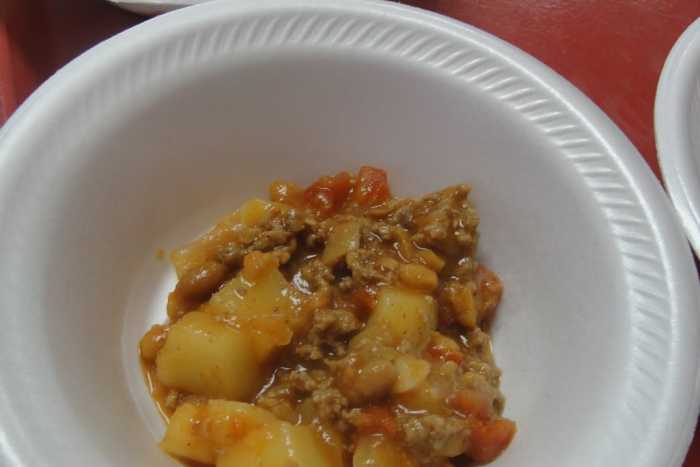
- Pass out a small amount of Cowboy Stew to each child. (There should be enough they can get seconds if they’d like)
You will need:
- disposable bowls, spoons, & napkins
- Review while the children eat their Cowboy Stew by having each student name something they learned about the Wild West.
- Assign next week’s biography report on Andrew Carnegie.
A Book to Read Each Day
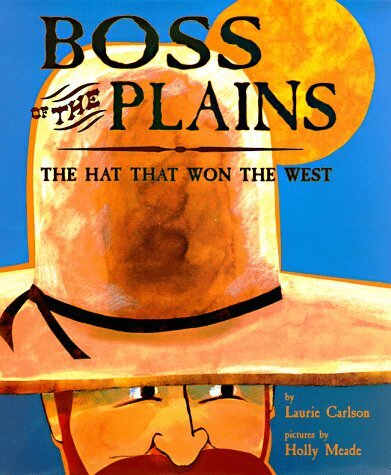
Boss of the Plains: The Hat That Won the West by Laurie Carlson (Book image is from amazon.com)
We read through a large stack of books. In addition to the book used in this lesson, these were our top 7 favorites:
- Bad News for Outlaws : The Remarkable Life of Bass Reeves, Deputy U.S. Marshall by Vaunda Micheaux Nelson
- Boss of the Plains: The Hat That Won the West by Laurie Carlson
- Shooting for the Moon : The Amazing Life and Times of Annie Oakley by Stephen Krensky
- Trail Drive by James Rice
- Cowboys by Marie and Douglas Gorsline
- The Original Cowgirl : The Wild Adventures of Lucille Mulhall
- Cowboys and Cowgirls by Gail Gibbons
Joke: Why did the cowboy buy a dachshund?
Because he wanted to get a long little doggie!
Looking for all my lessons?
AMERICAN HISTORY FOR EARLY ELEMENTARY:
Native Americans & Columbus Lesson
Jamestown Lesson
Pilgrims Lesson
Thirteen Colonies Lesson
French and Indian War Lesson
Colonial Period & Revolution Rumblings Lesson
Boston Massacre & Boston Tea Party Lesson
First Shots & Declaration of Independence Lesson
American War for Independence Battles Lesson
Valley Forge & Battle of Yorktown Lesson
American Literature Lesson & American War for Independence Review
Colonial Christmas Party
Constitution Lesson
Three Branches of Government Lesson
President George Washington Lesson
Louisiana Purchase Lesson
War of 1812 Lesson
Monroe Doctrine Lesson
Trail of Tears Lesson
Oregon Trail & Battle of Alamo Lesson
California Gold Rush & Pony Express Lesson
American Industrial Revolution Lesson
Underground Railroad Lesson
Abolitionists & Women Suffragists Lesson
Civil War: The Confederate States & Abraham Lincoln Lesson
Civil War Battles Lesson
Civil War Party & End of Year Review Game
BONUS LESSONS (if you have room for a few extra classes):
Reconstruction Lesson
Wild West Lesson
Immigrants Lesson
Tycoons & Theodore Roosevelt Lesson
World War I Lesson
Roaring Twenties Lesson
Great Depression and the 1930s Lesson
World War II Lesson
ALL MY LESSONS:
Fun, Free Hands-on Unit Studies (My Lessons in All Subjects)
© 2025 Shannon
Leave a Reply