Singing & Social Insects Middle School Biology Lesson
This is the 24th lesson in a series of 32 hands-on lessons covering middle school biology from a Christian perspective. This lesson focuses on singing and social insects. Compare honey varieties, act out pollination, spit crickets, & more. I used this plan while teaching a 55 minute middle school biology class. Each lesson plan includes homework assignments and a variety of hands-on activities to make each lesson engaging & memorable. Use these fun lessons with your classroom, homeschool, after-school program, or co-op!
These lessons are written for a class that meets once a week. If your class meets 5 days a week, simply do this lesson one day a week and use the homework assignments (at the bottom of the page) for the work for the other days of the week.
Prep Before Class: Hiding the “Flower”
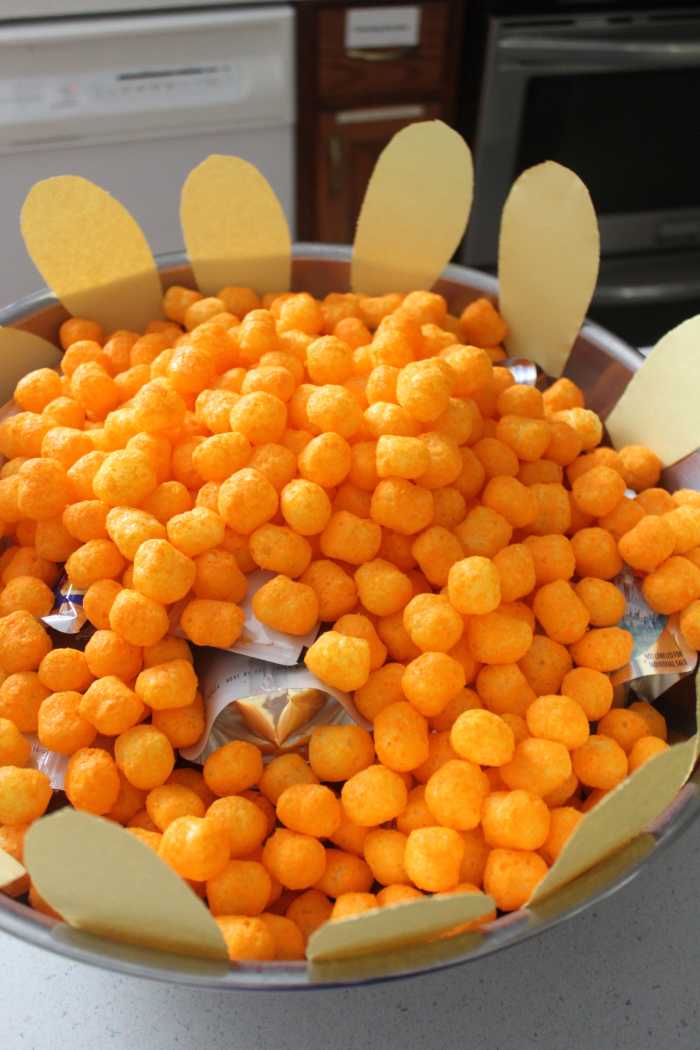
Prep before class: hiding the “flower” filled with juice-pouch “nectar” & cheese ball “pollen”
Before class starts, hide a “flower” (described in activity 13) somewhere near the classroom but not inside the classroom. Hide it somewhere that you can’t see immediately but that is still fairly easy to locate.
Homework Review
- Pass out tickets to students who did their homework and to students who did extra credit. Go over the homework questions from the book. (I give out tickets for students who volunteer to answer the questions.)
Insect Show and Tell
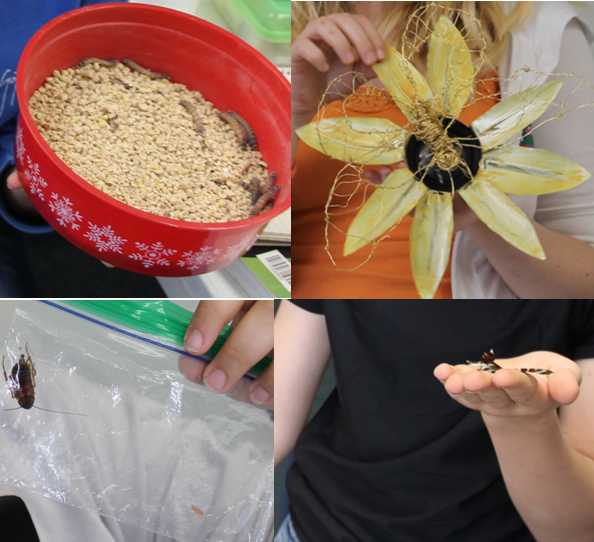
Some of the insects and insect-related items students brought to share with the class
- Allow students to each show and discuss the insect or insect-related item they brought to class. (Give a ticket to each student for presenting.)
Orthopetera: “Straight-winged” = Grasshoppers, crickets, etc.
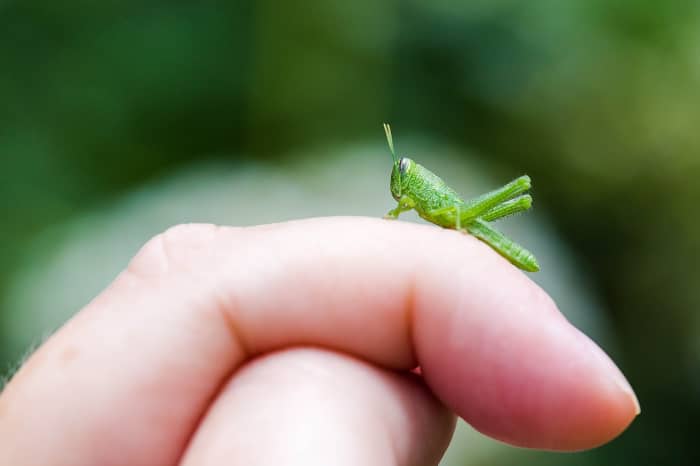
- Give a brief & quick overview of the order Orthopetera while looking at pictures from the textbook or a PowerPoint.
- “straight winged” = when not flying, wings are straight along body
- cricket, grasshopper, katydid, locust, mantises, cockroaches
- most are herbivorous & chewing = lots of crop damage
- mantises feed on insects = popular with gardeners
- Grasshoppers
- divided by length of antennae: long-horned (katydid & cricket) & short-horned (locusts)
- normally short-horned are solitary – if overpopulated, nymphs develop darker colors = absorb more heat = more active = bigger appetite = hordes (because they imitate each other)
- Make sounds & each variety is distinct so you can identify they by their song
- Stridulatory organs = musical instruments – like violin – scraper (like comb) rubbed across file (smooth or knobby) & forewings act as resonating membranes
- Higher temps = more intense songs & more chirps
- Mantis (now classified in their own order: Mantodea)
- carnivorous: eats insects, lizards, & mice
- easily blends in & resembles flowers, twigs, leaves, & stones (ingenuity of Creator)
- Cockroaches (now classified in their own order: Blattodea)
- 4000 known species & world’s most numerous insects
- only 35 species invade our homes; can carry pathogens that are harmful to humans
Grasshopper and/or Cricket Tasting

Tasting an Exo Cricket Protein Bar

Sampling a grasshopper
- Sample something made with crickets (such as a cricket protein bar) and/or grasshoppers (Chapulines): Grasshoppers are considered food in many cultures around the world. In parts of Mexico they are added to tacos.
- Tip for eating grasshoppers: Remove the legs as they easily get caught in your teeth.
You will need:
- something made from crickets such as Exo Cricket Protein bars (I cut 1 bar into 24 sample pieces. This just tastes like a chocolate protein bar, though some tasted a slightly earthly/dirt flavor.)
- edible grasshoppers (chapulines), which might be available at your local Mexican grocery store – They are available at amazon.com and e-bay (which is where I purchased ours).
- candy to reward those who try the grasshoppers & crickets
Lepidoptera: “scale-winged” = butterflies & moths
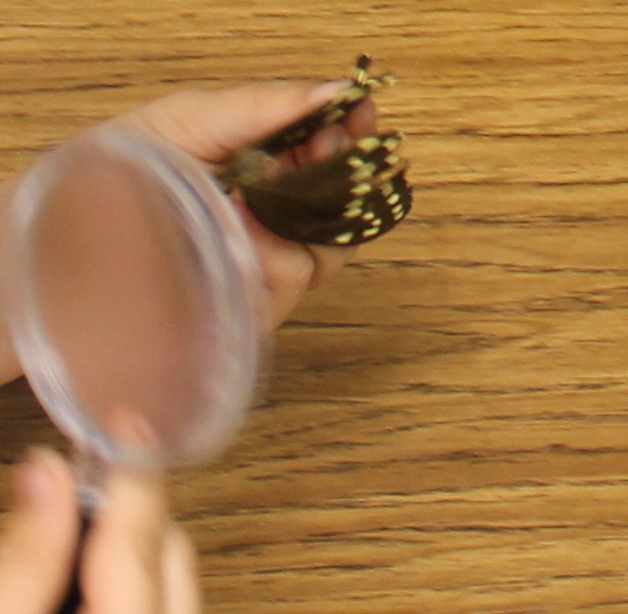
Examining a butterfly under a magnifying lens
- Give a brief & quick overview of the order Lepidoptera while looking at pictures from the textbook or a PowerPoint.
- 2nd largest insect order
- 180,000 know species with 90% moths
- How can you tell the difference between moths & butterflies? (nocturnal vs. diurnal, bodies, wings held flat or up when at rest, antennae)
- Allow students to use magnifying lenses to observe dead specimens or pieces of them. Ask, “What do you notice?” The students were were amazed to see all the scales on the wings.
You will need:
- magnifying lenses for students
- dead butterflies and moths (or related items like wings, chrysalises, and cocoons)
Hymenoptera: “Membrane-winged” = Bees, Wasps, & Ants

Examining a dead bumblebee
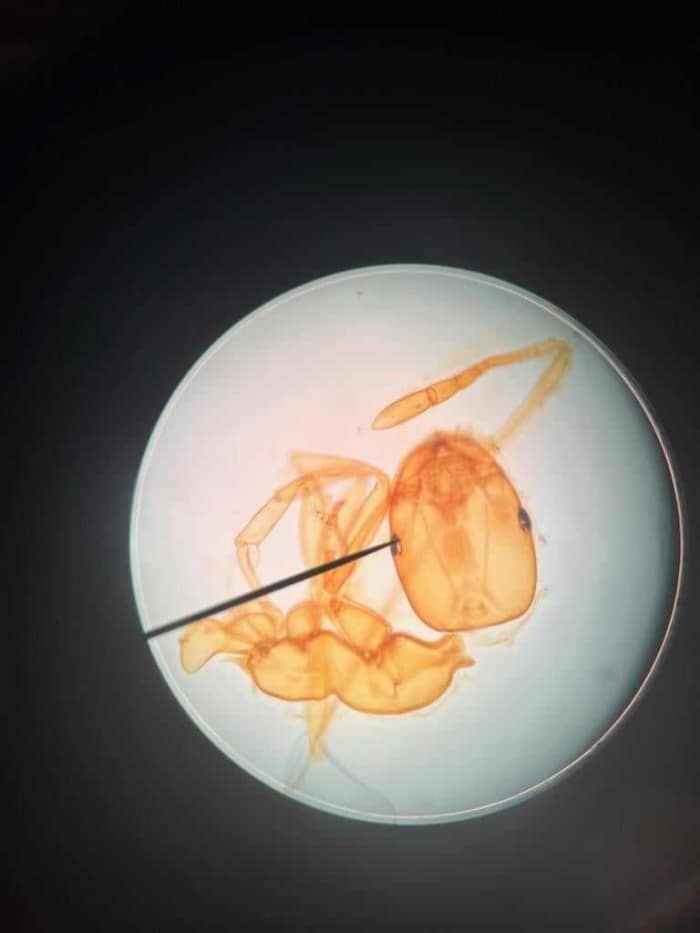
Viewing an ant under a microscope
- Give a brief & quick overview of the order Hymenoptera while looking at pictures from the textbook or a PowerPoint.
- complete metamorphosis & most are social
- Honeybees
- 1 queen (lives 5-10 years), hundreds of drones, thousands of workers – colonies last for years
- If stung, remove stinger quickly & don’t squeeze it as it can continue to pump venom up to 20 minutes
- Bumblebee
- colony lasts 1 year – only new queen lives through winter
- smooth stinger so can sting repeatedly & doesn’t die after stinging
- Wasps
- Body is long & thin with threadlike waist & few or no hairs
- Carnivorous – developing larvae feed on insects & other soft-bodied animals
- Paper wasps nests
- All except new queen die before winter
- Ants
- Some colonies have lived for more than 80 years
- May have several queens
- 12,500 species & varieties are fascinating. Some enslave ants from other colonies. Some harvest their own food. Some “milk” aphids like cattle.
- Allow students to use magnifying lenses to observe dead specimens. Ask, “What do you notice?” The students were didn’t realize how sharp the bee’s legs were and that bees have 2 sets of wings until they saw them. They were also surprised to see the stripes on the exoskeleton of the wasp.
You will need:
- magnifying lenses for students
- dead bees, wasps, or ants (or related items like honeycomb or wasps nests)
- (optional) microscope with prepared slides of an ant & a butterfly wing
Comparing Honey
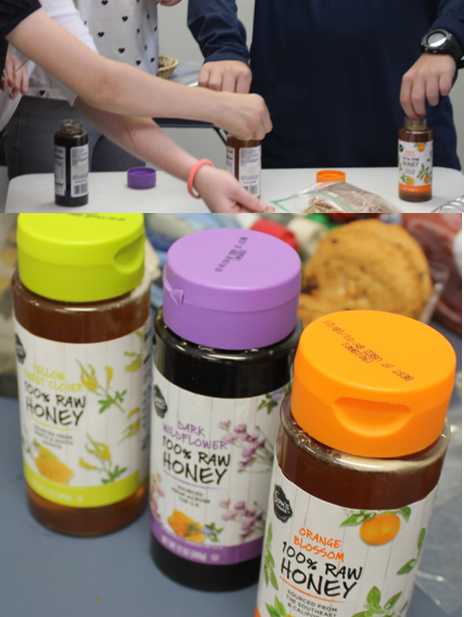
Tasting different varieties of honey one year
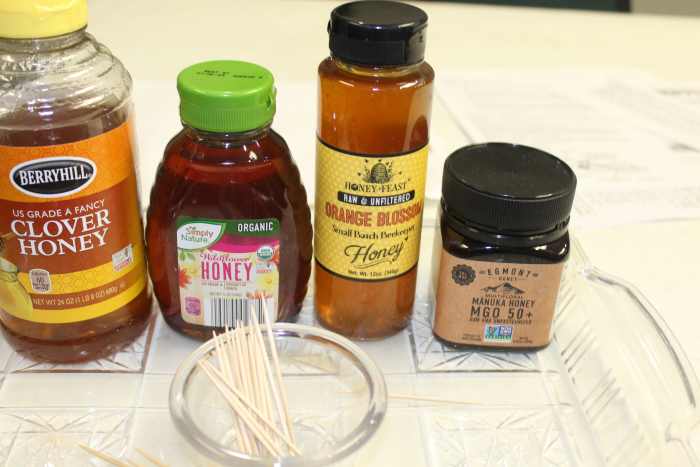
Honey options easily available for our most recent honey tasting
- Briefly discuss how bees make honey.
- Allow students to compare the colors and flavors of at least 3 varieties of honey. We used toothpicks for tasting.
- After everyone has finished tasting them, have the class vote on their least favorite and most favorite.
You will need:
- toothpicks
- at least 3 different varieties of honey (made from different flowers) – I purchased these 3 types at Wal-Mart.
Insects: Helpful or Harmful

Insects: Helpful or Harmful T-chart
- Ask for a student volunteer who likes to do charades. They will be doing charades in a moment. After selecting a volunteer, quietly tell them that they are going to pretend to be a bee who is in search of honey. They are go into [the hallway – or wherever you hid the “flower”], find the “flower” (a bowl with Cheetos on top), and then come back and non-verbally communicate with the class where the “flower” is.
- MEANWHILE, everyone else will do a Pop Quiz. Have students pull out a piece of paper and list as many ways as they can think of how insects are helpful and how they are harmful. They have 1 minute to create there list. There will be a prize for whoever comes up with the most answers.
- After students have finished, find out who had the most answers. Award them a prize. (I gave them candy.)
- Quickly go over what students wrote, and make a t-chart on the board.
You will need:
- a prize (such a candy)
Bee Pollination Activity
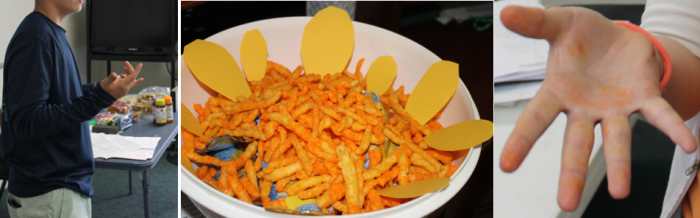
Bee pollination activity
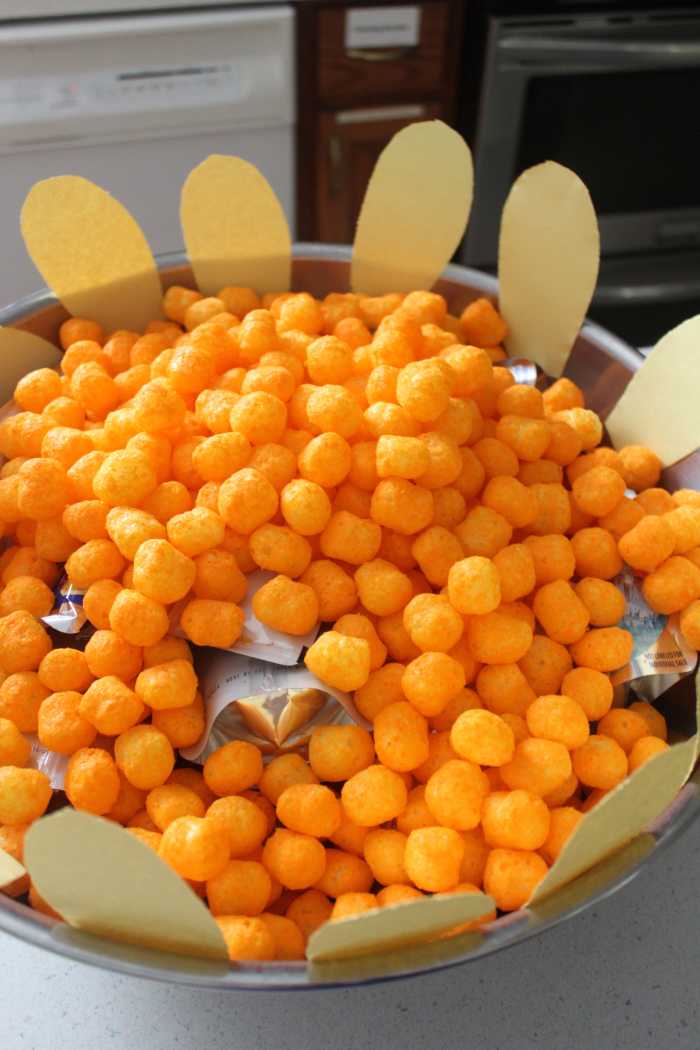
- After the volunteer student has located and the flower, s/he will need to lead the other “worker bees” to the flower.
- Briefly mention that bees actually do a waggle dance and reference the angle of the sun, but the student will just use charades (movements without speaking or writing) to try to get the other students to guess where the “flower” is.
- After a couple minutes or less, if the other students haven’t guessed the location yet, simply allow the “worker bee” student to lead them to the location.
- Allow students to grab a Caprisun-type drink (the nectar) to drink.
- Notice your hands. Did you get some “pollen” (Cheetos orange dust) on them? That helps pollinate other flowers, but it’s also brought back to the hive for food. Did you know that bees eat pollen and feed it to their growing larvae?
- Sometimes bees also pack some pollen into “pollen baskets” on their legs, so if you want to bring a small handful of “pollen” Cheetos back to eat, you may.
- Provide wet hand-wipes or baby wipes for students to use to clean their hands afterward if needed.
You will need:
- a large bowl with construction paper flower petals taped to it – Inside add a caprisun-type drink for each student and then cover them with Cheetos or cheese puff balls
- wet hand-wipes or baby wipes
Homework
A Beka’s Science: Order & Design science textbook
- Friday: Complete the Invent an Insect Worksheet. (This link shows as an inactive link, but it’s still a good link.)
- Monday: Complete 10 squares on the Insect Orders worksheet. Select 10 orders. For each order write the name of 1 or 2 insects in that order, sketch a picture of an insect in that order, and write what distinguishes that order from other insect orders (i.e. leathery wings, scaly wings, bristle tails, etc.).
- Tuesday: Sketch and identify 3 different insects that you find outside (not ones you have already identified). On each insect be sure to note the antennae, mouth parts, and types of legs. (You might need to capture it in a jar to inspect it more closely.) What order is the insect in? Is it considered beneficial or harmful? Write 2 more interesting facts about each one.
- Wednesday: Sketch and identify 3 different insects that you find outside (not ones you have already identified). On each insect be sure to note the antennae, mouth parts, and types of legs. (You might need to capture it in a jar to inspect it more closely.) What order is the insect in? Is it considered beneficial or harmful? Write 2 more interesting facts about each one.
- Extra Credit: (2 tickets) Finish the rest of the Insect Orders worksheet.
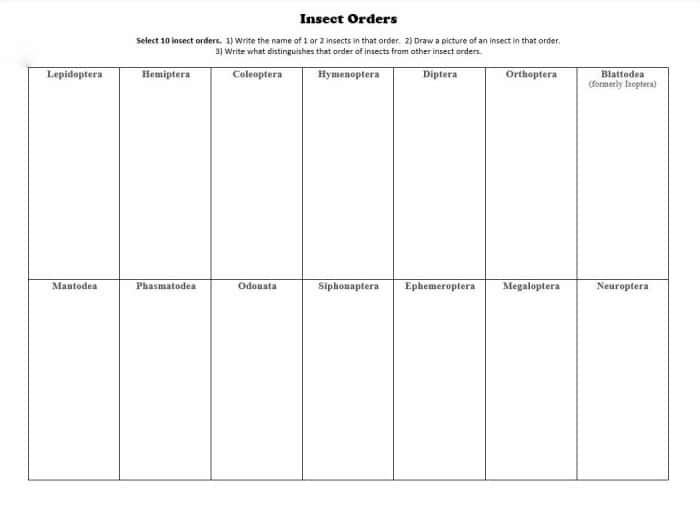
Insect Orders Worksheet
Looking for all my lessons?
- First Day of Class & Plant Identifications
- Parts of a Flower
- Amazing Plants (Horticulturist Guest Speaker)
- Seeds and Flower Families
- Photosynthesis and Plant Parts
- Cardiovascular, Respiratory, & Digestive Systems
- Skeletal, Muscular, & Integumentary Systems
- Endocrine & Nervous Systems and Healthy Living
- Human Baby Fetal Development (Pregnancy Care Center Guest Speaker)
- Creation and Science
- Creation, Evolution, & the Eyes of Faith
- Classifying Plants & Animals
- Amazing Mammals
- Mammal Dissection
- Semester Review & Winter Party
- Bird Anatomy
- Bird Features
- Bird Watching (Birding Guide Guest Speaker)
- Fish Anatomy and Dissection
- Invertebrates Anatomy and Dissections
- Frog Dissection
- Reptiles Show and Tell
- Insect Anatomy
- Singing & Social Insects
- Beneficial Insects (Entomology Guest Speaker)
- Arthropods (Crayfish & Grasshopper) Anatomy and Dissections
- Crustaceans & Arachnids
- Cells, Algae, and Fungi
- Protozoa and Bacteria
- Trees
- Ecology
- Semester Review & End of Year Party
- My Middle School American History Lessons
- All of My Hands-on Lessons & Unit Studies
© 2019 Shannon
Comments
Shannon (author) from Florida on May 21, 2019:
Thank you!
Areesha Khan from Pakistan on May 21, 2019:
Cool
Leave a Reply