Hands-on American History Lesson on 1920s, the Roaring Twenties
This is the 33rd lesson in a series of 35 hands-on lessons covering U.S. American History. This lesson focuses on the Roaring Twenties. I used this plan while teaching a 45 minute history class for children in Kindergarten, 1st, & 2nd grades. Each lesson includes a biography report, history notebook page, history song, our favorite children’s books, YouTube video, a history joke, & a variety of hands-on activities to make each lesson engaging & memorable. Use these fun lessons with your classroom, homeschool, after-school program, or co-op!
Joke: What did the silent film actor say when he realized he forgot his lines?
Absolutely nothing!
Student Biography Presentation: Louis Armstrong

Student Biography Presentation: Louis Armstrong
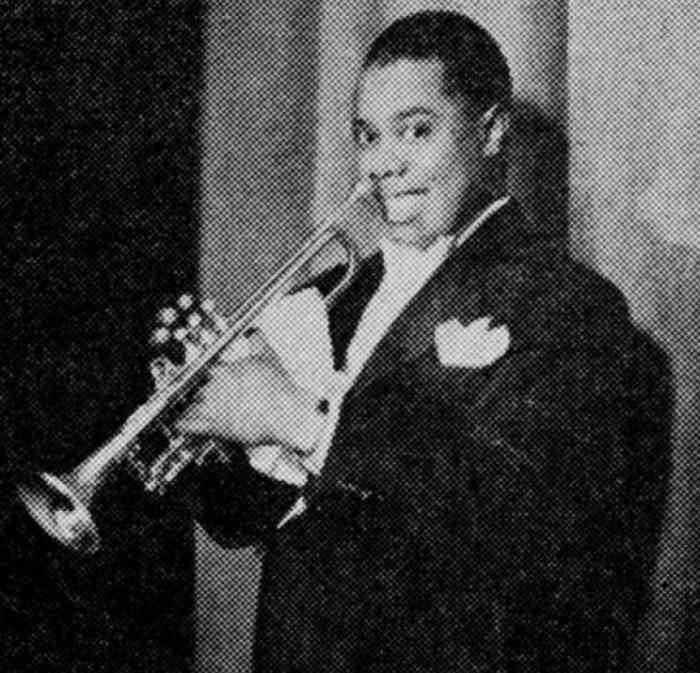
Louis Armstrong
- Student Biography Presentation on Louis Armstrong
Review & Presidents Song
- Review questions: During Reconstruction, which Tuskegee Institute professor trained Southern farmers to grow peanuts and developed almost 300 uses for peanuts? (George Washington Carver) During what time period did cowboys cattle North to get to markets and Buffalo Bill Cody toured the country with a popular show? (“Wild West”) After 1886, what statue greeted immigrants when they arrived in New York before they were processed at Ellis Island? (Statue of Liberty) What term is used to describe Andrew Carnegie, John D. Rockefeller, Cornelius Vanderbilt, and J.P. Morgan? (Tycoons) Name one resource/business that made lots of money for the tycoons. (railroads, oil, steel, banks) Which President set aside Yosemite Valley as a National Park? (Theodore Roosevelt) Germany, Austria-Hungary, and Ottoman Empire/Turkey were part of which alliance during World War I? (Central Powers). France, Great Britain, and Russia were part of which alliance during World War I? (Allies) Which side was the United States on? (Allies) Who was the President of the United States during World War I? (Woodrow Wilson) World War I was the first war to use what in battle? (airplanes) What is the word for long holes/ditches dug into the ground to protect the soldiers from getting shot at? (trenches) When you hear “trench warfare,” which war should you think of? (World War I) Who lost during World War I? (Central Powers including Germany) Who won World War I? (Allies including America)
- Sing through the entire President’s Song 2 times while either showing the video or flipping through pictures of the Presidents. (We add in “Trump, Biden, Trump” at the end of the song.)
You will need:
- Screen to show the below video or a book showing Presidents or point to their pictures on a President place mat
19th Amendment – Women Win the Right to Vote
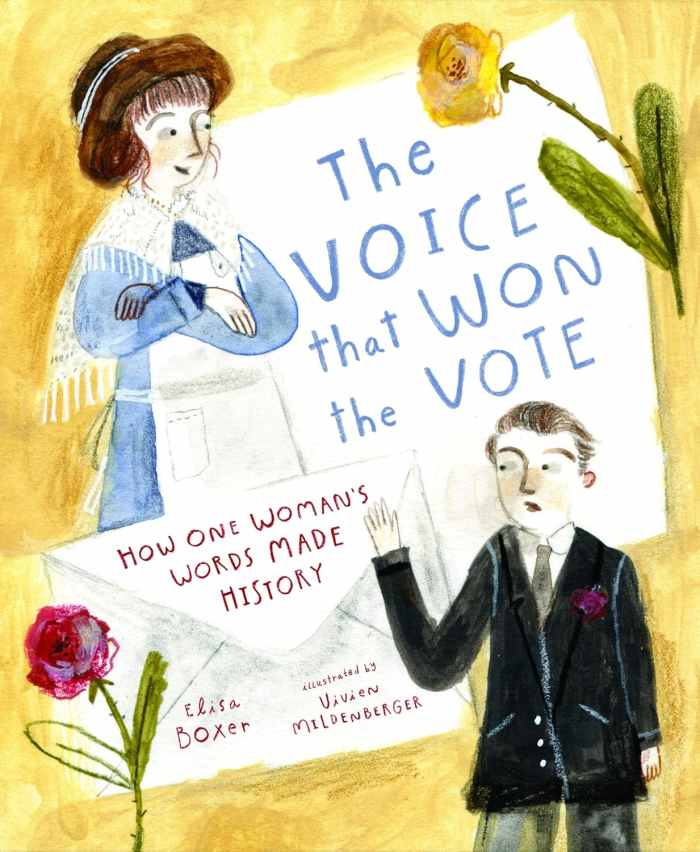
The Voice That Won the Vote: How One Woman’s Words Made History by Elisa Boxer
- After World War I ended, another battle finally ended as well. In 1920, the 19th Amendment was passed, adding a new national law to the U.S. Constitution. Women everywhere in America were finally granted the right to vote!
- Review: What is U.S. Constitution? (the document that tells the rules for how America’s government will run) Do you remember who is called the “Father of the Constitution”? (James Madison) What do we call the first part of the Constitution? (Preamble) Who remembers the Preamble? Let’s sing the Preamble again. [Sing the Preamble.]
- When a new law needs to be added to the U.S. Constitution, it’s called an Amendment. There have been 27 amendments added to the Constitution. The first 10 were added shortly after the Constitution was passed. They’re called the “Bill of Rights” and say things like you have the freedom to speak and worship as you like and the government isn’t allowed to steal your things.
- In 1920, the 19th amendment was added to the Constitution and it said women everywhere in America can vote in national elections like electing the President of the United States. This amendment was the result of many years of hard work from many different women’s suffragists.
- Review: What was a woman’s suffragist? (Someone who thought women should have the right to vote.) Name a famous women’s suffragist. (Susan B. Anthony, Elizabeth Cady Stanton, Sojourner Truth, & others)
- Summarize while flipping through or read The Voice That Won the Vote: How One Woman’s Words Made History by Elisa Boxer.
You will need:
- The Voice That Won the Vote: How One Woman’s Words Made History by Elisa Boxer or other book on women winning the right to vote
The Roaring Twenties & Dancing
- After World War I ended, people wanted to have fun. They enjoyed dancing, parties, and music.
- The 1920s time period was known as “The Roaring Twenties.”
- A popular dance at the time was called the Charleston.
- Watch a short clip such as the one below of people dancing the Charleston.
- Allow children to try to dance along and imitate the moves.
Learning the Charleston
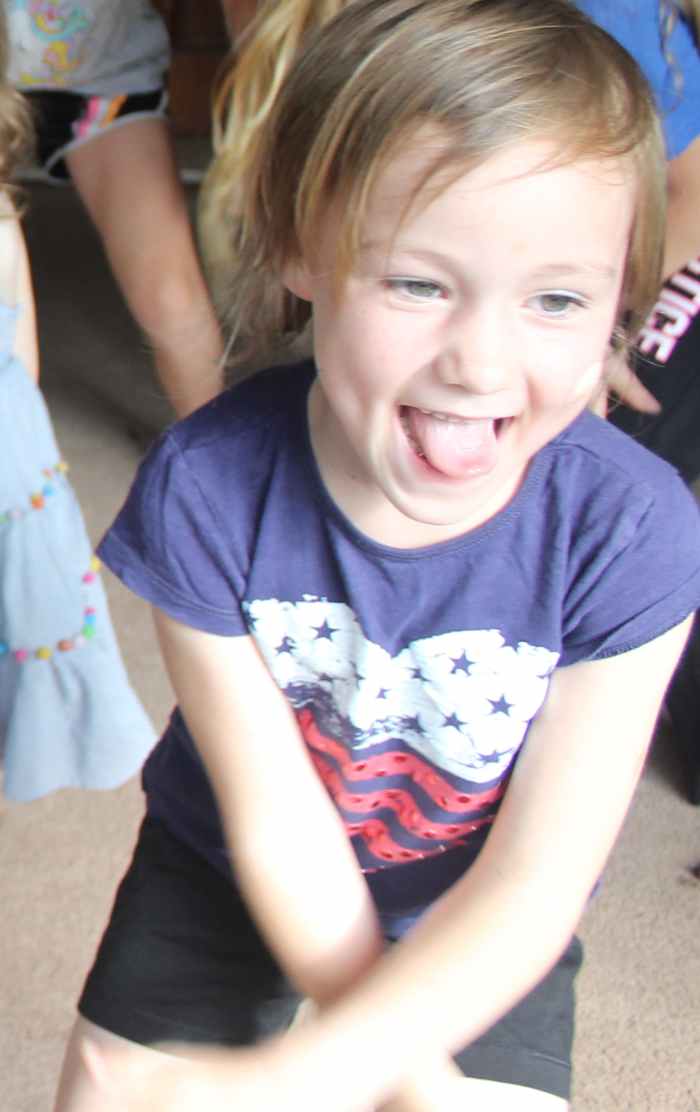
Learning the Charleston move Knocky Knees
- One fun Charleston dance move is called Knocky Knees.
- Show the students how to do the Knocky Knees.
- If desired, show them the below video on how to do it and practice it slowly with them.
- Play some 1920s music while doing the knocky knees or other Charleston dance moves.
Jazz Age & Louis Armstrong
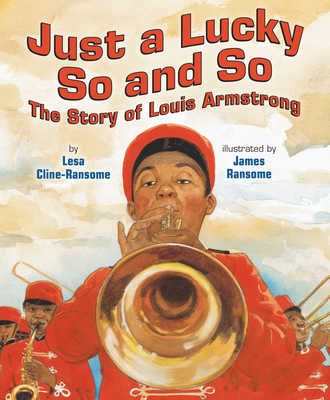
Just a Lucky So and So: The Story of Louis Armstrong by Lesa Cline-Ransome
- The 1920s are also known as the “Jazz Age” because jazz music was developed and was popular during this time.
- Many people helped create the type of music known as jazz. One of them was Louis Armstrong.
- Summarize while flipping through or read Just a Lucky So and So: The Story of Louis Armstrong by Lesa Cline-Ransome.
You will need:
- Just a Lucky So and So: The Story of Louis Armstrong by Lesa Cline-Ransome or other book on Louis Armstrong
- Listen to music by Louis Armstrong or watch a video of him playing during the 1920s. I only played about 30 seconds of each of the below clips.
- Include an earlier song/video that has him playing the trumpet.
- Some of the children have heard “What a Wonderful World” which was written and sung later than the 1920s but will help them recognize a song they might know that was sung by Louis Armstrong.
Jazz Age Notebook Page
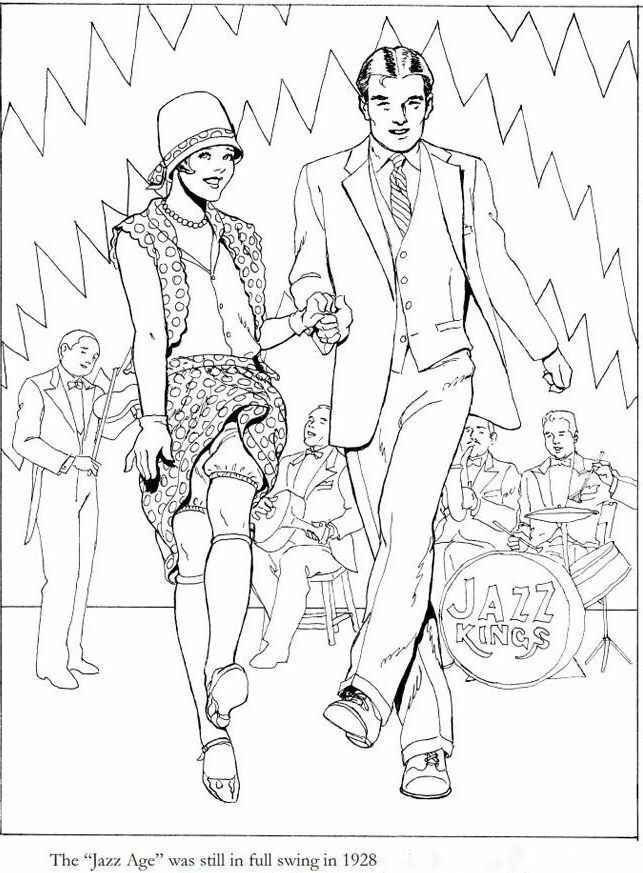
Notebook page (front side for the class) – from https://shilohroptodd.blogspot.com/2022/06/1920s-color-pages.html
- Pass out the above notebook page.
You will need:
- the above notebook page punched with a 3-hole punch
Jazz Age & Trumpets
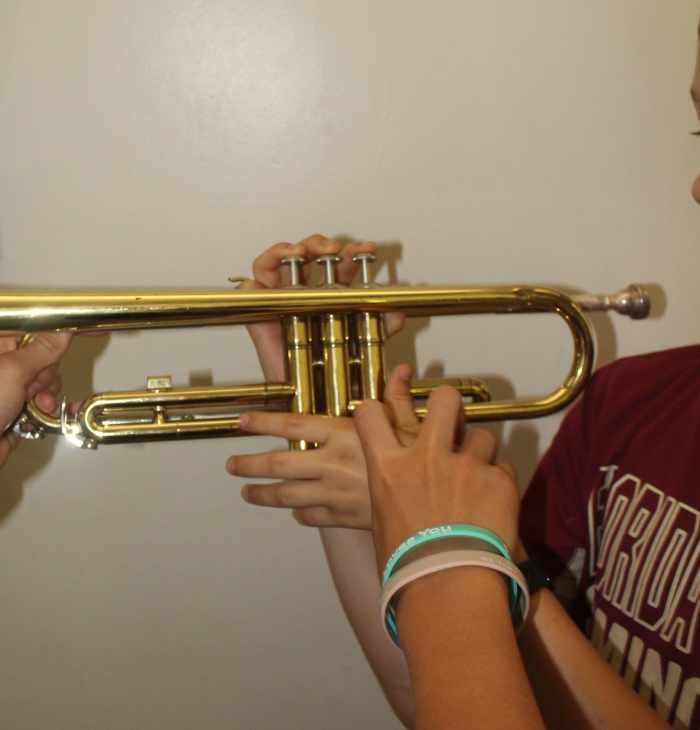
One of the older students showing how to hold and play a trumpet
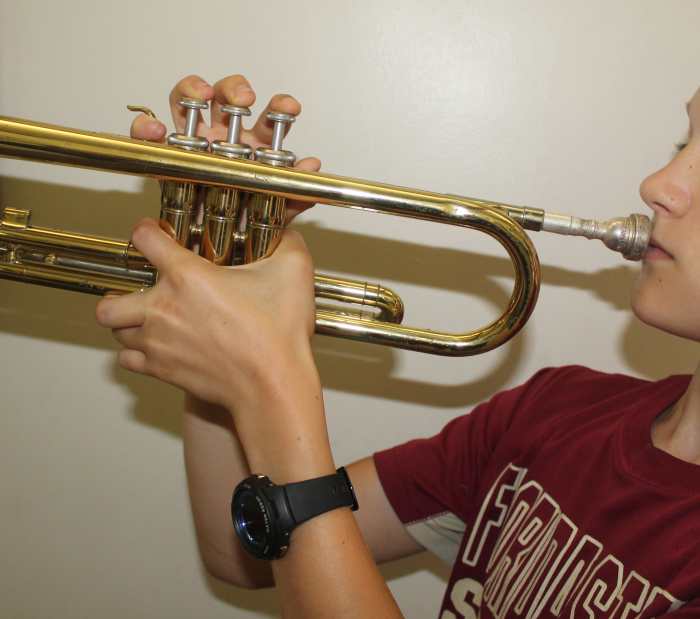
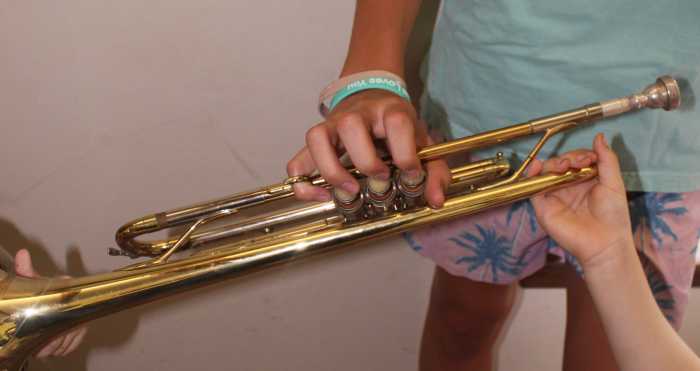
10. (Optional) If you know someone who has a trumpet or knows how to play a trumpet, demonstrate how a trumpet is played.
You will need:
- a trumpet
Silent Movies
- Who likes to watch movies? During the 1920s movies started developing.
- In the early 1900s, movies were silent. They were just moving pictures. Someone in the movie theater might play a piano, organ, or even a small orchestra. You couldn’t hear people say words. They might put up words on the screen for you to read what people were saying.
- By the 1920s they started adding music to the movies and sometimes even sound effects.
- Watch a brief clip of part of the video below or other movie from the 1920s.
- People loved comedy moves called “slapsticks.” Charlie Chaplin was a favorite actor at that time. You can watch a short Charlie Chaplin movie at https://www.youtube.com/watch?v=mpjEyBKSfJQ .
Model T’s and Mass Production
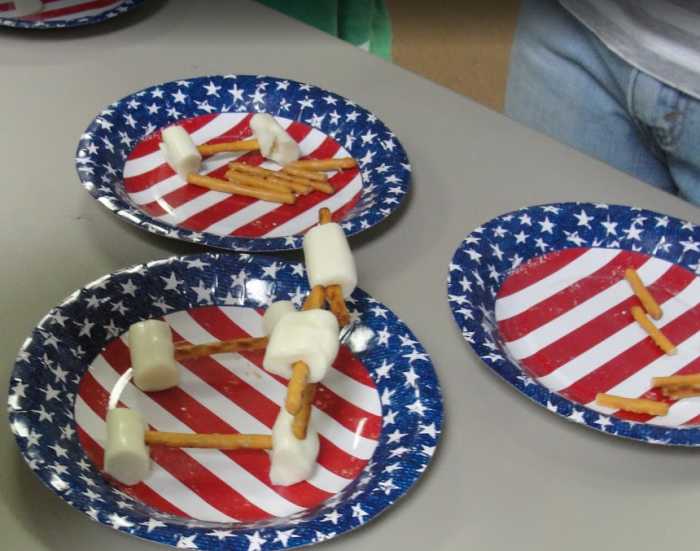
Making an edible “Model T” using an assembly line
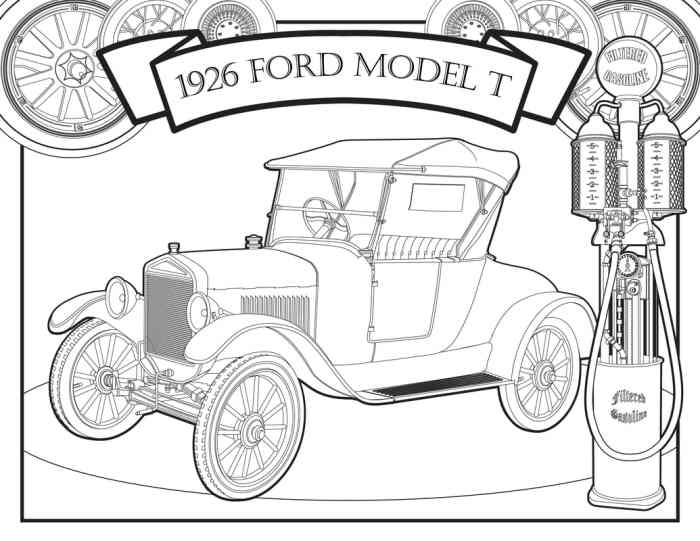
Notebook page (back) of Model T – Kids can color it BLACK. – From https://www.sketchite.com/model-t-coloring-page-sketch-templates/
- In the 1920s people started having extra income. Some people invested money in the stock market. Some people started buying things they couldn’t afford because companies started allowing people to buy items on credit. I’ll explain what that means in a moment.
- Henry Ford did NOT invent cars. Karl Benz from Germany is credited with inventing the first successful car.
- For a few decades only rich people could afford to buy a car. Henry Ford made cars inexpensively so that regular middle class people could afford to buy cars. His goal was to “[m]ake the highest quality goods possible at the lowest cost possible.”
- Flip through a book such as Time For Kids: Henry Ford by Editors of TIME For Kids and Dina El Nabli as you discuss the development of the Model T.
- Have children note the picture of the Model T on the back of the notebook page. They can color BLACK while you talk. The Model T car only came in black. Between 1914-1926 you couldn’t get it in any other color. Henry Ford wrote in his autobiography that he told his company’s salespeople, “Any customer can have a car painted any color that he wants so long as it is black.”
- He did this by making lots and lots of the same car, the Model T, with the same interchangeable parts. Who created the idea of interchangeable parts? (Eli Whitney who also invented the cotton gin.) He called this “mass production”, which is a word Henry Ford invented and is used a lot today.
- Model T cars were built on an assembly line with conveyer belts moving the products. One person put on the same part of the car on every single car that was built. We’ll try that in a moment.
- It used to take the Ford Company 12 hours to make a Model T car. Using the assembly line method, the Ford Company could make a new Model T car every 90 minutes!
- Henry Ford allowed people to buy Model T cars on credit. In 1923, Ford Motor Company launched the Ford Weekly Purchase Plan. Customers paid $5 every week and got to take home and drive their Model T car. They continued to pay $5 every week until they paid the full price of the Model T car.
- Buying things on credit that people couldn’t afford along with some other issues eventually led to what happened in 1929: the Stock Market Crash followed by the Great Depression. We’ll talk about that in the next lesson.
- For now let’s focus on the assembly line, which is how Henry Ford had his Model T cars assembled so that they were more affordable.
You will need:
- black crayons & Time For Kids: Henry Ford by Editors of TIME For Kids and Dina El Nabli or other book on the Model T
- Create edible “Model T cars” snack using an assembly line. Each child will do one task for each snack car. Eventually you should have enough snack Model T cars so that everyone will have a snack.
- Have everyone wash or sanitize their hands.
- Show an example of a completed Model T car.
- Give each child one item to add to the Model T car so that one child will add a pretzel axle to each plate. One child will add one mozzarella cheese stick wheel. The next child will add the next mozzarella cheese stick wheel.
- The assembly line continues as each child adds the same part to each “Model T” until you have enough “Model T car” snacks for each child.
- Allow each child to eat their “Model T car.”
- OPTIONS: You can use other items. I’ve also done this with Legos when we didn’t want something that was edible. You could also use construction paper and have students each paste part of a car to the paper.
You will need:
- plates and snack pieces (such as pretzel sticks and cut pieces of mozzarella cheese sticks)
Review
- Review: In 1920, the 19th Amendment was added to the U.S. Constitution; what did it say? (Women could vote in national elections) What was another name for the 1920s? (Roaring Twenties or Jazz Age) What’s a famous dance done in the 1920s? (Charleston) Who was a famous jazz musician from the 1920s who helped develop jazz? (Louis Armstrong) What’s something you learned about movies in the 1920s? (Answers can vary.) What type of car did Henry Ford invent that was very popular in the 1920s? (Model T) Why could so many people afford a Model T car? (They could purchase it on credit, and it was made relatively inexpensively using mass production on an assembly line.)
- Assign next week’s biography report on Eleanor Roosevelt
A Book to Read Each Day
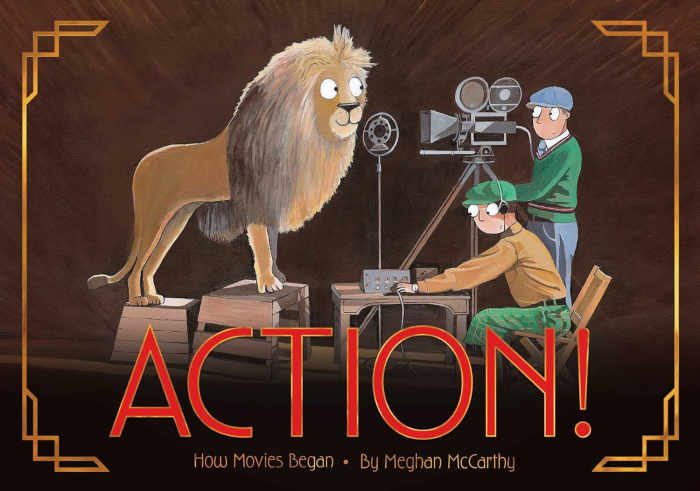
Action! : How Movies Began by Meghan McCarthy – Book image is from amazon.com.
We read through lots of books on the 1920s in America. In addition to the books we used in the lesson, we also especially enjoyed:
- What Were the Roaring Twenties? by Michele Mortlock (This is a short chapter book so we read it over a few days.)
- You Wouldn’t Want to Be a Chicago Gangster!: Some Dangerous Characters You’d Better Avoid by Rupert Matthews
- Action! : How Movies Began by Meghan McCarthy
- The Music in George’s Head : George Gershwin Creates Rhapsody in Blue by Suzanne Slade
- Smile : How Young Charlie Chaplin Taught the World to Laugh (and Cry) by Gary Golio
- Duke Ellington: The Piano Prince and His Orchestra by Andrea Pinkney
- Henry Ford and the Model T by Michael O’Hearn
Looking for All My Lessons?
AMERICAN HISTORY FOR EARLY ELEMENTARY:
Native Americans & Columbus Lesson
Jamestown Lesson
Pilgrims Lesson
Thirteen Colonies Lesson
French and Indian War Lesson
Colonial Period & Revolution Rumblings Lesson
Boston Massacre & Boston Tea Party Lesson
First Shots & Declaration of Independence Lesson
American War for Independence Battles Lesson
Valley Forge & Battle of Yorktown Lesson
American Literature Lesson & American War for Independence Review
Colonial Christmas Party
Constitution Lesson
Three Branches of Government Lesson
President George Washington Lesson
Louisiana Purchase Lesson
War of 1812 Lesson
Monroe Doctrine Lesson
Trail of Tears Lesson
Oregon Trail & Battle of Alamo Lesson
California Gold Rush & Pony Express Lesson
American Industrial Revolution Lesson
Underground Railroad Lesson
Abolitionists & Women Suffragists Lesson
Civil War: The Confederate States & Abraham Lincoln Lesson
Civil War Battles Lesson
Civil War Party & End of Year Review Game
BONUS LESSONS (if you have room for a few extra classes):
Reconstruction Lesson
Wild West Lesson
Immigrants Lesson
Tycoons & Theodore Roosevelt Lesson
World War I Lesson
Roaring Twenties Lesson
Great Depression and the 1930s Lesson
World War II Lesson
ALL MY LESSONS:
Fun, Free Hands-on Unit Studies (My Lessons in All Subjects)
© 2025 Shannon
Leave a Reply