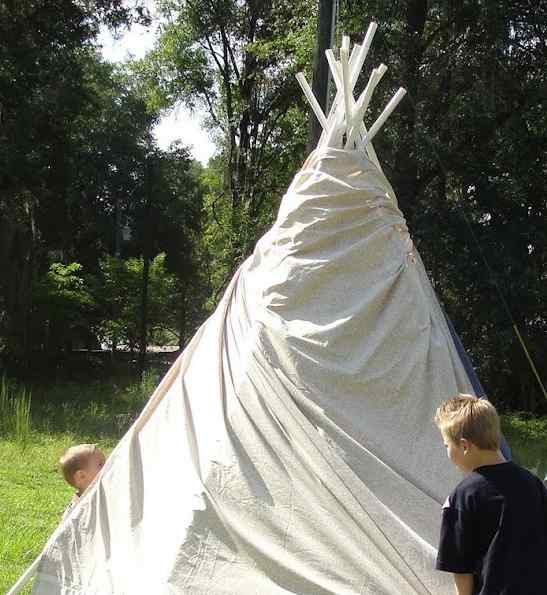
Setting up a tepee
This is part 2 of a 4 part hands-on unit on Native Americans. Create headdresses and war shields, build a tepee, eat dried “buffalo,” and more! My lessons are geared toward 3rd-4th grade level children and their siblings. These are lessons I created to do with a weekly homeschool co-op. We meet each week for 2 1/2 hours and have 17 children between the ages of 1-13. Use these fun lessons with your classroom, family, camp, after school program, or homeschool co-op group!
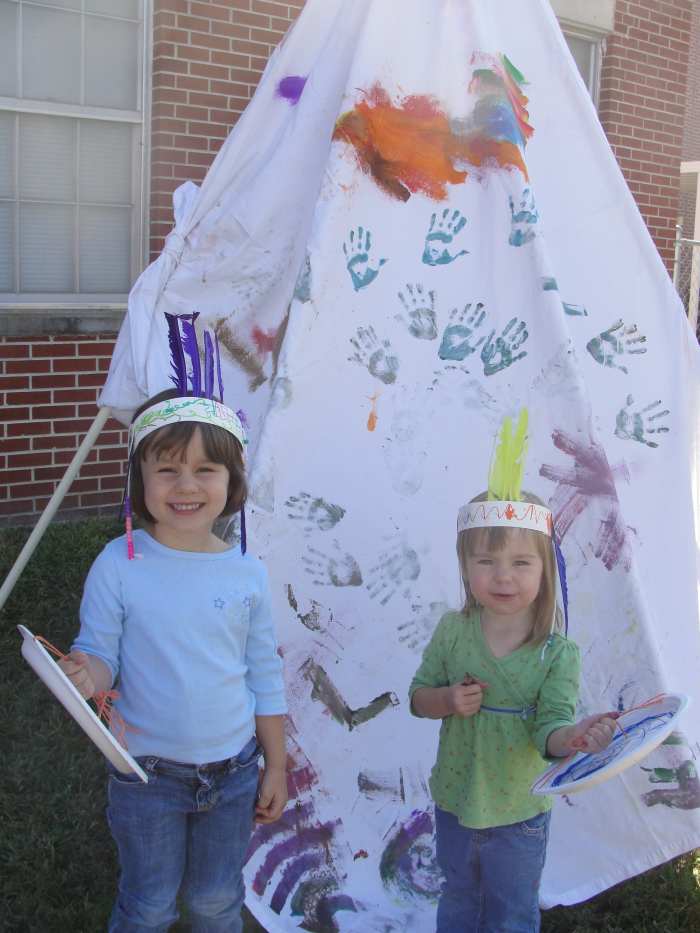
Tepee Painting
- Pray. Discuss Romans 10:13-15. Quickly discuss some of missionaries to Sioux and show pictures.
- Show a few pictures of teepees from a book. Point out the designs and colors.
YOU WILL NEED:
- pictures of teepees from a book
- Go outside and let children paint the 2 sheets that we will use for our teepee.
YOU WILL NEED:
- 2 light colored flat sheets (queen or king size) that you don’t want back, poster paints in yellow, blue, red, and brown, paintbrushes of various sizes, and baby wipes/wet wipes
- Review what we learned about the Woodlands/Northeast and Southeast Tribes.
- Point out tribes on map. Sing the “Tribes of America” Song: (Tune: “10 Little Indians”):
Eastern Woodlands, Northeast, Southeast:
Iroquois, Algonquian,
Seminole/Creek & Cherokee
All lived in the East.
Blackfoot, Lakota, Sioux, and Comanche
Cheyenne, Crow, and Pawnee
All hunted buffalo on the plains.
They are the Plains tribes!
- Read Plains tribes section from “Famous Indian Tribes” by William Moyers, which is the best book we could find describing the different tribes. The illustrations on each page are large and colorful. This was published in 1954, so it does include a few false stereotypes. You can skip those words. Overall I found this to be a great book for introducing each geographical group (Plains, Southwest, etc.) of Native Americans.
YOU WILL NEED:
- “Famous Indian Tribes” by William Moyers or other book describing the Plains Tribes
- Quickly discuss traits of Plains tribes versus Northeast & Southeast tribes.
Feather Headdresses/Warbonnets
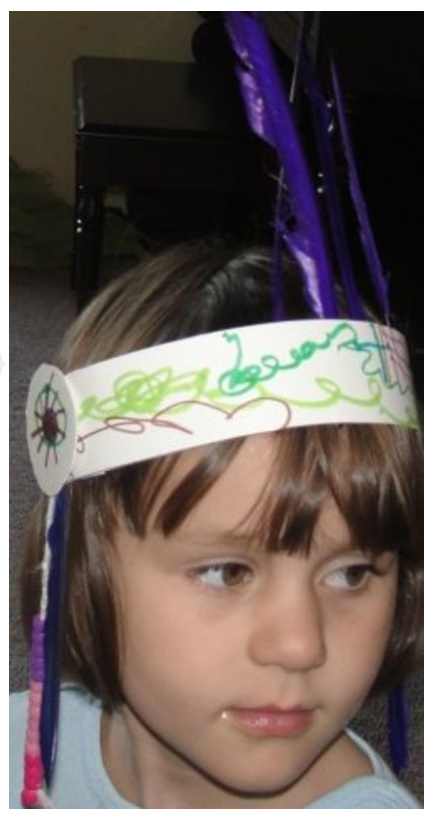
Feather Headdresses
- Discuss clothing and significance of feathers. Make headdresses.
- Give each child one 14″ x 1 1/2″ rectangles and two 2-inch diameter circles. Let them use markers to color designs on 1 side of one of the rectangle strip and on one side of each of the circles.
- Give each child 2 pieces of yarn and 6-12 beads. Knot one end of the piece of yarn and allow children to string the beads onto the yarn. Staple the string of beads on each side of the headband above where their ears would be.
- Allow children to tape or staple a feather pointing downward next to the string of beads.
- Staple (or glue) the circles over the place where the feather and string are attached to the headband.
- Pass out 5-7 craft feathers and let the children tape or staple them to the back (uncolored) of the rectangle strip.
- Staple the headdress to fit the child’s head.
- If you are not limited by time, make a more realistic looking headdress by following the directions found at this link.
YOU WILL NEED PER CHILD:
- 1 piece of posterboard cut into a 14″ x 1 1/2″ strip, two 2-inch diameter circles cut from posterboard, two pieces of yarn/string each 12 inches in length, hole punch, 7 large craft feathers, 2 small craft feathers, 6-12 pony/craft beads (2 of each color), & tape
War Shields
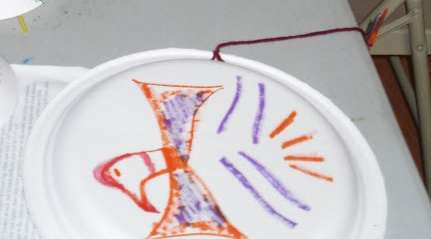
Paper plate war shields
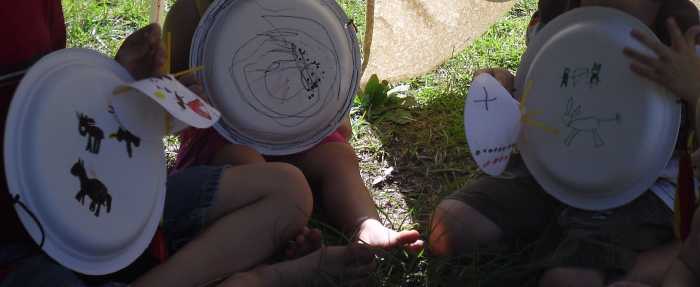
- Look at pictures of buffalo and quickly discuss buffalo hunts and uses for buffalo.
YOU WILL NEED:
- pictures of buffalo
- Discuss what war shields would be used for and look at pictures from books. Make War Shields.
- Have children use markers to draw animals on the back of a paper plate. Punch 2 holes, one on each side and string some yarn through the holes. String some beads through and tie a feather to each side.
YOU WILL NEED PER CHILD:
- 1 sturdy paper plate with a hole punched on each side, 2 pieces of string/yarn each 8 inches in length, 2 craft feathers, & 6 pony/craft beads (2 of each color)
Cradle Boards
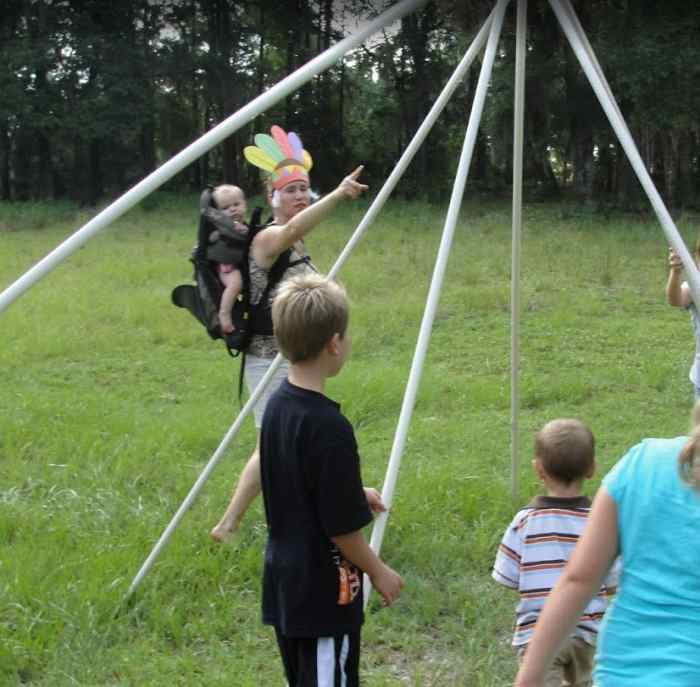
Constructing a tepee while carrying a baby using a “cradle board”
- I did briefly mention the use of cradle boards for carrying babies, so I wore my baby today. I used a “modernized” cradle board. If you are not limited by time, you can allow the girls to carry their own babies (baby dolls) by using a shoe box without a lid. Having the girls use hole punches to punch holes on each of the long sides of the box (about 1/2 an inch from where the lid would have gone. Have them wrap some moss (or strips of cloth) around the doll for a diaper and then place the doll in the box. (If the doll is too big for the shoe box, cut off one of the shorter sides.) Use yarn or leather string and thread it across to hold the baby doll in the carrier.
This video shows children making cradleboards. It starts at 3 minutes into the video.
Construct the Teepee
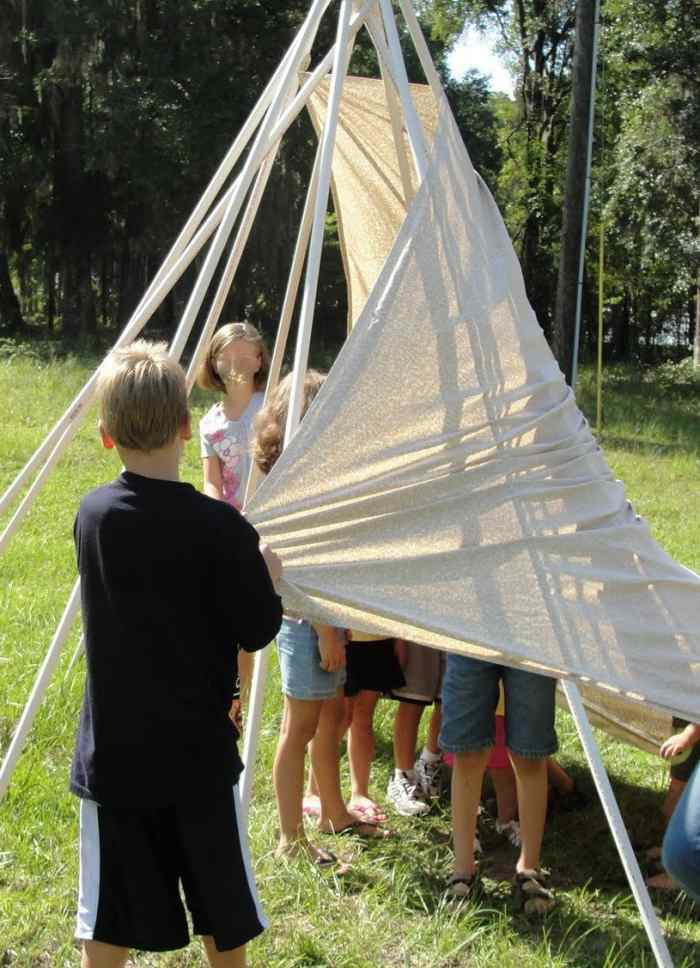
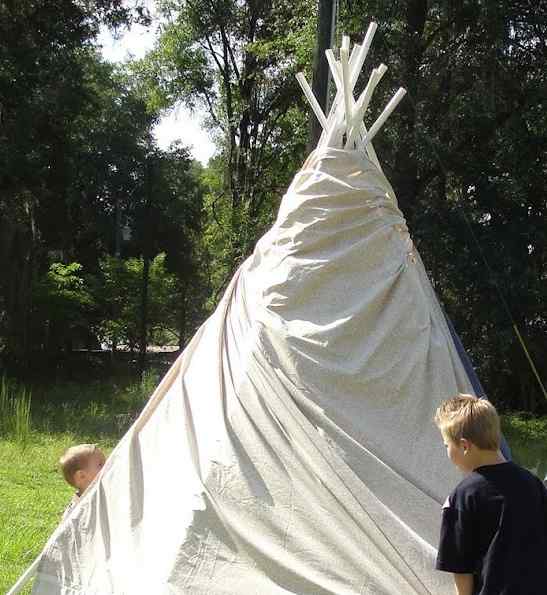
Constructing a tepee using PVC pipe, rubber bands, and a sheet
- Discuss how to make a real teepee. Lead the children in setting up the teepee outside.
- Tell them to pretend to chop down small trees and pull off the branches. Have six of the children collect a PVC pipe that you already have laying in the yard.
- Tell them you’d then use sinew to connect the poles at the top. We will use rubber bands.
- Use a rubber band to attach 3 of the PVC pipes toward the top. Set those up like a tripod.
- Place two of the PVC pipes between the other poles. Attach the tip of one sheet that we painted to the last PVC pipe using a rubber band.
- Place that PVC pipe between the last gap of the teepee.
- Wrap the sheet all the way around the teepee and tuck it back inside once you’ve wrapped it around once. Then tie the second sheet to where you tucked in the first sheet and wrap it around and tie it at the tip. (I would recommend practicing this once ahead of time. It’s really easy to do once you’ve got the hang of it.)
YOU WILL NEED:
- six 10′ long x 1/2″ PVC pipes (We purchased them at Lowes. They were about $1.50 each.) and at least 6 strong rubber bands
Teepee Etiquette and Legends
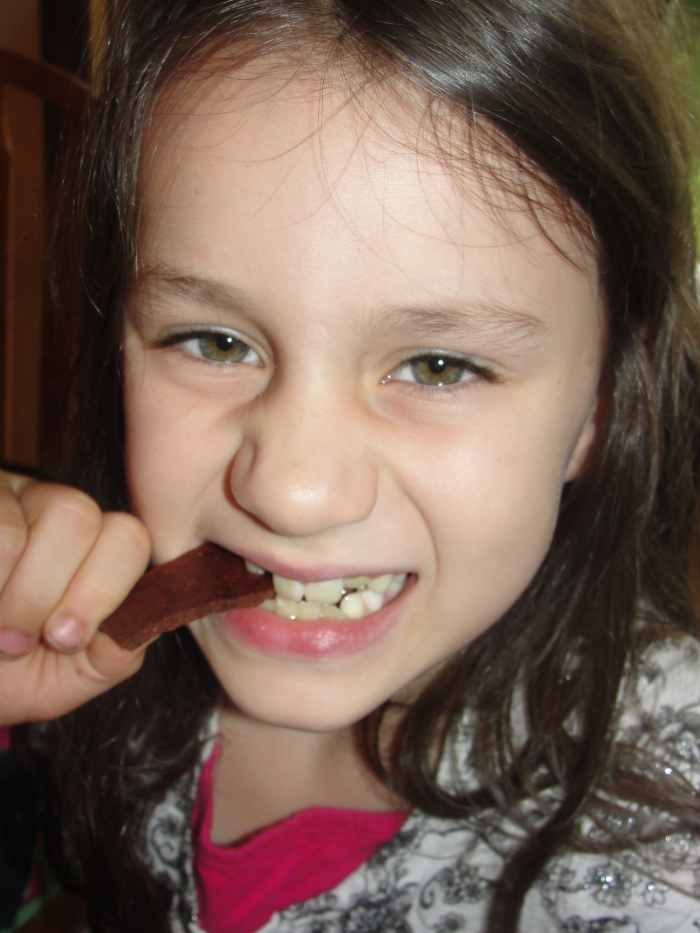
- Teepee Etiquette:
- Before letting the children get inside the teepee, discuss teepee etiquette. (You can find one example of what to say at this link.)
- While children sit inside the teepee, let them eat dried “buffalo” (beef jerky) as one of the teachers/parents tells a legend. We retold “Crazy Horse’s Vision” by Bruchac without using the book. It’s a great picture book biography about Crazy Horse. The illustrations are drawn in a manner similar to the ledger book style of the Plains Indians.
YOU WILL NEED PER CHILD:
- 1 piece of beef jerky (or buffalo jerky if you can find it) and “Crazy Horse’s Vision” by Bruchac
- Five minute review on what we learned
Homework: Tribe & Missionary Reports and Lapbooks
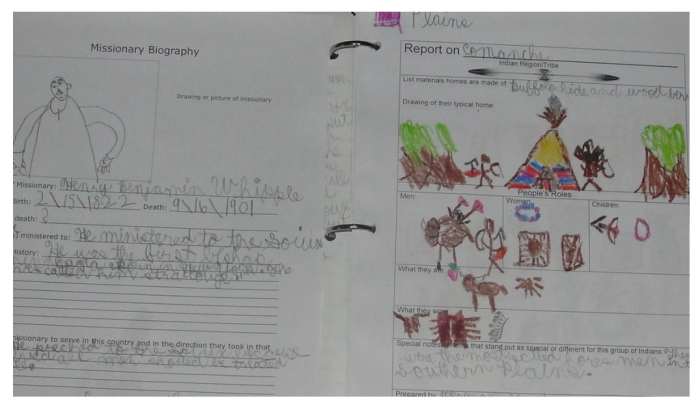
Missionary Report page and Indian Tribe Report page
For each of the main tribes we studied, my sons and I completed an “Indian Tribe Report” page from this link. This week we did reports on the Sioux and Comanche.
We also completed a missionary report page using the form from this link. This week we did a report on Stephen & Mary Riggs, missionaries to the Dakota/Sioux in the late 1800’s using the information we got from “The Adventures of Missionary Heroism.” We also did a missionary report on Henry Benjamin Whipple, missionary to the Dakota/Sioux and champion for their rights in the US, using information we got from Wikipedia.org and Anglicanhistory.org.
If you would like to make a Lapbook for this lesson, dynamic2moms has created a really nice one you can print off free. Homeschoolshare.com also has a free one based on the book, “Where the Buffaloes Begin.”
Our Favorite Children’s Picture Books on the Plains Tribes

Heetunka’s Harvest: A Tale of the Plains Indians by Jennifer Berry Jones – All images are from amazon.com.
We read through many books on the Plains Tribes. These were our favorites.
- The Bluebonnet Girl by Michael Lind retells the Comanche legend of how the sacrifice of a little girl caused the end of a drought. We enjoyed the illustrations in this book. “The Legend of the Bluebonnet” by Tomie dePaola tells the same legend, but we preferred this version.
- The Legend of the Indian Paintbrush retells the Comanche legend of a boy who longs to be an artist and eventually paints using the colors of the sunset, which become the flower, the Indian Paintbrush.
- Heetunka’s Harvest: A Tale of the Plains Indians by Jennifer Berry Jones retells the Dakota legend of a girl who borrows from a field mouse but doesn’t leave anything in exchange…and the devastating effects of this selfish act.
- Gift Horse: A Lakota Story by S. D. Nelson is a Lakota legend about Flying Cloud. It shows the process of what a Lakota boy had to go through to become a warrior.
- The Man Who Painted Indians: George Catlin (Benchmark Biographies) by Nancy Plain is a wonderful picture book biography about George Catlin, who captured the Plains tribes way of life in many of the most famous paintings of them.
- The Cheyennes (First Americans Books) by Virginia Driving Hawk Sneve is a fact-filled picture book on the Cheyenne. We read through some of it and enjoyed all the beautiful, historically accurate watercolor illustrations.
- The Old West: The Indians by Benjamin Capps is not a children’s picture book. It is a fabulous compilation of photographs and illustrations showing the Plains tribes. It includes many works by George Catlin. My 7 year old especially loved flipping through the pages to look at the pictures.
Our Favorite Children’s Chapter Books
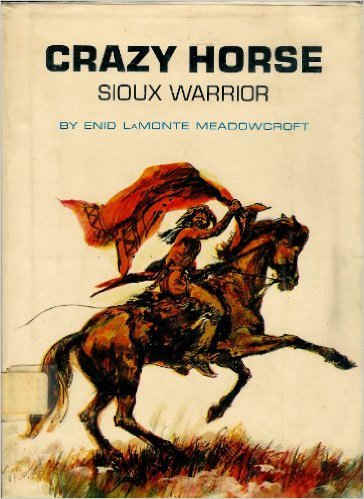
Crazy Horse: Sioux Warrior by E. L. Meadowcroft
- Crazy Horse: Sioux Warrior by E. L. Meadowcroft is an 80 page chapter book biography on Crazy Horse that I read with my 7 year old. It is the perfect reading level for him right now and includes illustrations every few pages. It includes enough action that even my 4 year old enjoyed sitting through some of the book.
- Sitting Bull, Great Sioux Chief by Lavere Anderson which is from the same book series and was equally enjoyable.
- The Adventure of Missionary Heroism has wonderful stories of Christian missionaries from various times and in various places. Unfortunately it has very few illustrations, so I read it at bedtime when my children are in bed and are not expecting to see the book. Each story is full of adventure. We read the story of Stephen and Mary Riggs from this book.
Ready for the next lesson?
Hunt for arrowheads, build teepees, paint totem poles, draw Pueblo chalk drawings, present on specific Native American tribes, and more during this fun four week hands on study of Native Americans.
- Northeast and Southeast Native Americans Lesson – This is part 1 of a 4 part hands-on unit on Native Americans. Make arrows, cook Three Sisters Stew, go on an “archeological dig” for arrowheads, create Iroquois Bowl games, bead Seminole necklaces, and more!
- Plains Native American Tribes Lesson – This is part 2 of a 4 part hands-on unit on Native Americans. Create headdresses and war shields, build a teepee, eat dried “buffalo” and more!
- Northwest and Plateau Native American Tribes Lesson – This is part 3 of a 4 part hands-on unit on Native Americans. Decorate parfleches, fry salmon cakes, create totem poles, dramatize a dramatize potlatch ceremony, and more!
- Southwest Native American Tribes Lesson – This is part 4 of a 4 part hands-on unit on Native Americans. Make Navajo Fry Bread, draw Pueblo chalk drawings, create Navajo sand paintings and concho-style belts, weave Apache baskets, and more!
- Native American Powwow and Field Trip Ideas – After our 4 part unit study on Native Americans, our culminating activity was a powwow. Each child presented on a different tribe and brought food from that tribe for us to share. I am also including where we went for field trips during this unit.
- Fun, FREE Hands-on Unit Studies – Looking for all of my lessons and unit studies? Over the years I have posted over 35 science and social-studies based unit studies, compromised of more than 170 lessons. For each lesson I have included activities (with photos), our favorite books and YouTube video clips, lapbook links, and other resources. I posted links to all of my unit studies and lessons at the above link.
KONOS Curriculum
Konos Volume I (Attentiveness)
Would you like to teach this way every day?
I use KONOS Curriculum as a springboard from which to plan my lessons. It’s a wonderful curriculum and was created by moms with active boys!
© 2011 Shannon
Leave a Note – I love getting feedback from you! Let me know you dropped by!
Shannon (author) from Florida on June 18, 2012:
@Kailua-KonaGirl: Thank you for such an encouraging comment!
KonaGirl from New York on June 18, 2012:
Another well done home schooling lens. You kids are very fortunate to have you for both their Mother and educator. You are doing a fabulous job. *Squid Angel Blessed* and added to “My Squid Angel Blessings for 2012” in the “Education » Home School Lessons” neighborhood.
julieannbrady on May 15, 2012:
It sure is cool to learn more about Native American life … I see an opportunity to explore the various tribes and how they were similar and yet perhaps a little different.
anonymous on November 18, 2011:
How wonderfully excellent, I would have loved to sit in your classroom as a child!
Leave a Reply