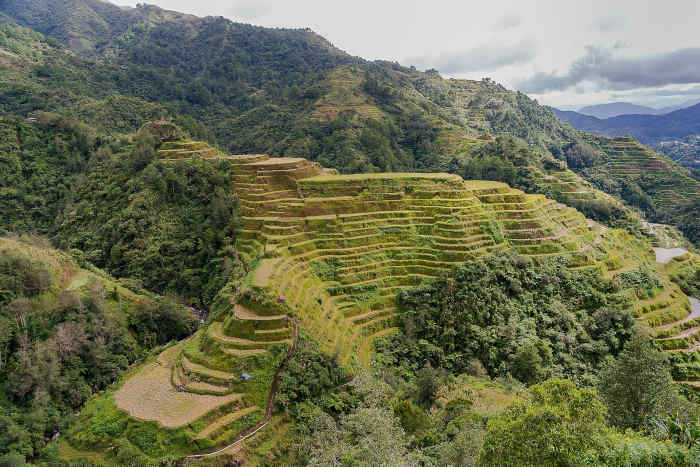
The Banaue Rice Terraces, carved by ancestors of the Ifugao people
Want to know more about the Republic of the Philippines? Are you a lover of travel, geography teacher, homeschooling or involved parent, student, or life-long learner? In an effort to make world geography more meaningful and memorable, I’ve compiled all you will need to locate the Philippines on a map, cook a Filipino meal, watch YouTube clips on the Philippines, color the flag, create an Filipino-inspired craft, read a great book about the Philippines, and more! This is part of a series of lessons I did with my family while studying various countries from around the world. You can see them all at Around the World in 26 Letters .
Where are the Philippines?
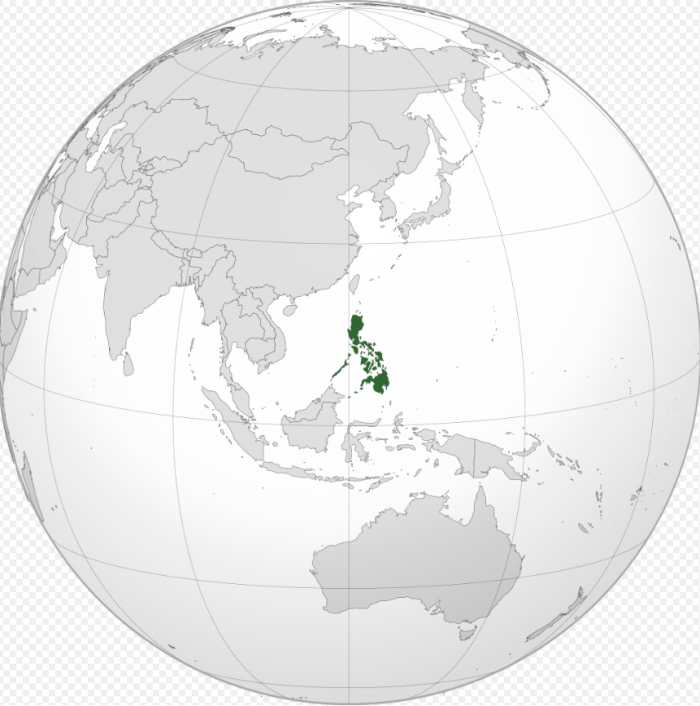
The Philippines on a map
- Locate the Philippines on this map of Asia.
- Use this map of the Philippines to label the capitol, Manila. Mark other relevant features (rivers, mountains, famous locations, etc.) if desired.
- If you’d like to spend a bit more time researching the country, you can add the language, currency, type of government, religion, and/or famous landmarks. Write them on the back of the map. You can easily find all this information at https://en.wikipedia.org/wiki/Philippines.
Top Five Fun Facts About the Philippines
Fun Fact #1: So Many Islands!
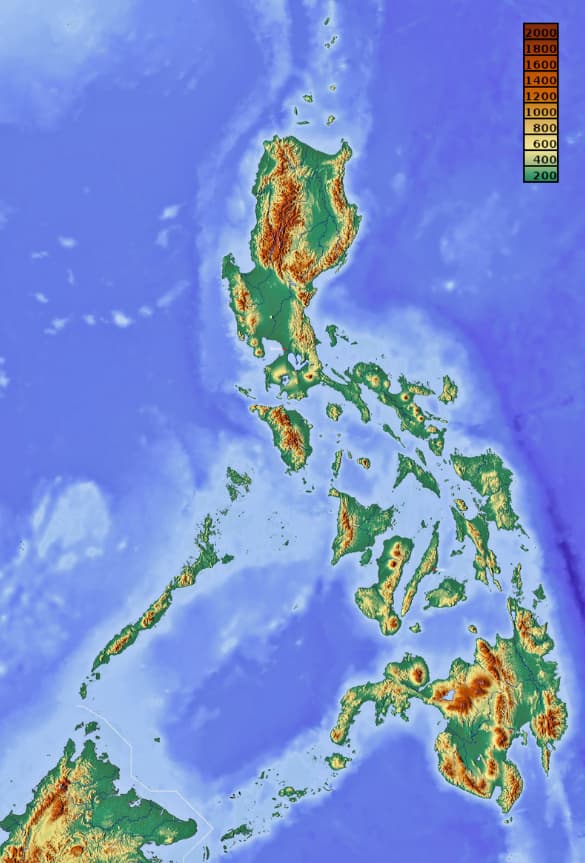
The Philippines is generally mountainous, making up 65% of the country’s total land area. It has 22,549 miles of coastline.
- The Philippines is an archipelago consisting of 7,641 islands, making it the second largest archipelago nation after Indonesia in the world. Originally only about 7,000 islands were known, but in 2016, the national mapping authority identified over 500 new islands.
Fun Fact #2: Daily Earthquakes and Frequent Volcanic Eruptions
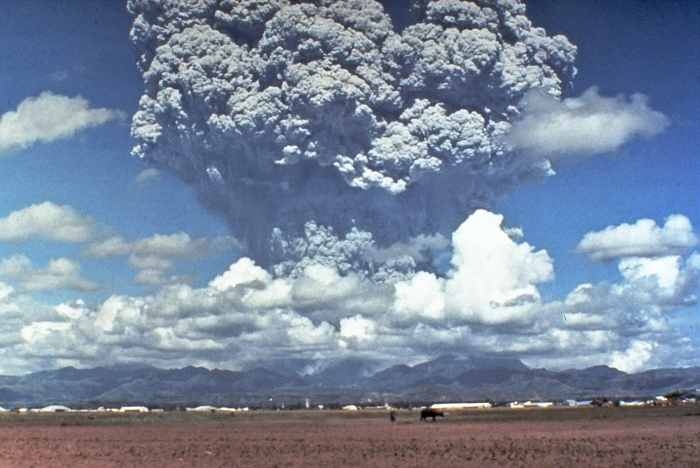
The June 1991 eruption of Mount Pinatubo was the second-largest terrestrial eruption of the 20th century.
- Because the Philippines is located on the Pacific Ring of Fire, it has frequent seismic and volcanic activity. About five earthquakes are recorded daily, although most are too weak to be felt. The Philippines has 23 active volcanoes.
Because of its geologic structure and high level of seismic activity, the Philippines has valuable mineral deposits. It has the world’s second-largest gold deposits (after South Africa), large copper deposits, and deposits of palladium, chromium, nickel, molybdenum, platinum, and zinc.
Fun Fact #3: Chocolate Hills
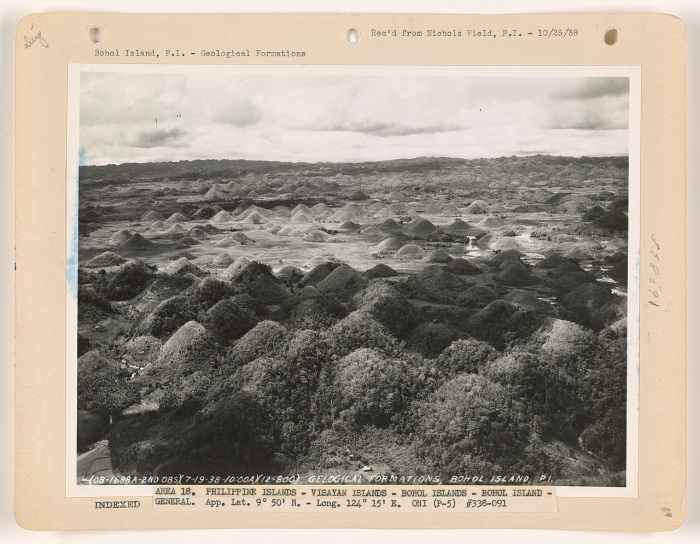
Chocolate Hills, 1938
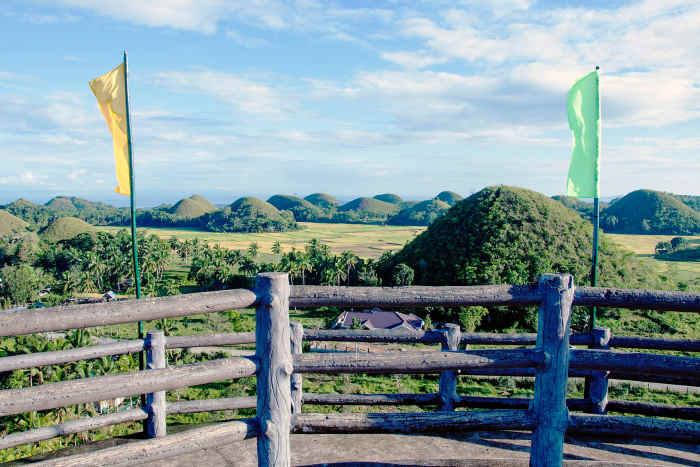
Current View of the Chocolate Hills from Sagbayan Peak in Bohol
- The Chocolate Hills in Bohol consist of over 1,200 perfectly cone-shaped hills that turn brown and look like tall mounds of chocolate during the dry season. Scientists understand the general cause for their formations but are still baffled by the consistent symmetry on such a large scale.
Fun Fact #4: 2,000 Year Old Rice Terraces
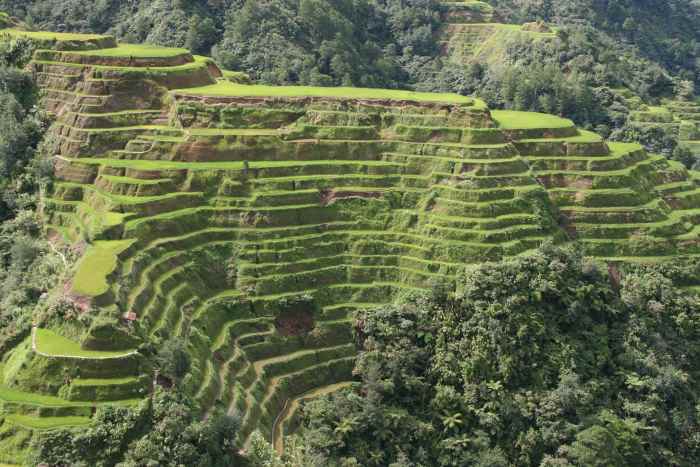
Banaue rice terraces (N. Luzon, Philippines)
- The Philippines is home to the Ifugao Rice Terraces, which were carved into the mountains over 2,000 years ago. They were inscribed on the UNESCO World Heritage List in 1995, the first-ever property to be included in the cultural landscape category of the World Heritage List. The Ifugao Rice Terraces reach a higher altitude and were built on steeper slopes than many other rice terraces. The stone or mud walls were careful carved along the natural contours of the hills and mountains to create terraced pond fields, which provided a natural irrigation system.
Fun Fact #5: Balut
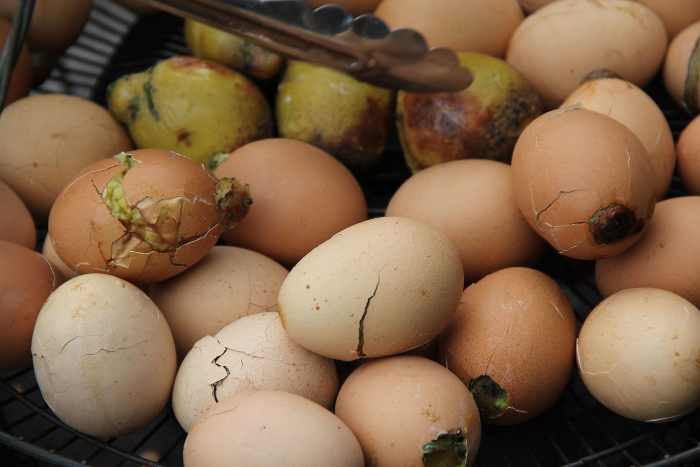
Balut is a popular street food in the Philippines
- Balut, a fertilized duck egg with a partially developed embryo inside, is a popular street food. The egg is boiled or steamed and eaten from the shell, often eaten with salt and vinegar.
The Flag of the Philippines
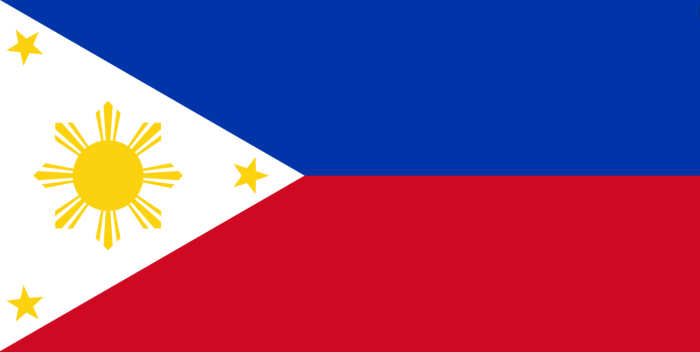
The national flag of the Philippines
- Print and color the flag of the Philippines and learn the history and meaning of it from wikipedia.org.
- The national flag of the Philippines has bands of royal blue and crimson red, with a white, equilateral chevron on the left. In the center of the triangle is a golden-yellow sun with eight rays, representing the original eight provinces that rebelled against the Spanish during the 1896 Philippine Revolution. At the corners/vertexes of the white triangle are five-pointed yellow stars, each representing one of the country’s three main island groups: Luzon (the northern-most islands), Visayas/Panay (the middle islands), and Mindanao (the southern-most islands).
Make a Parol (Christmas Star Lantern)
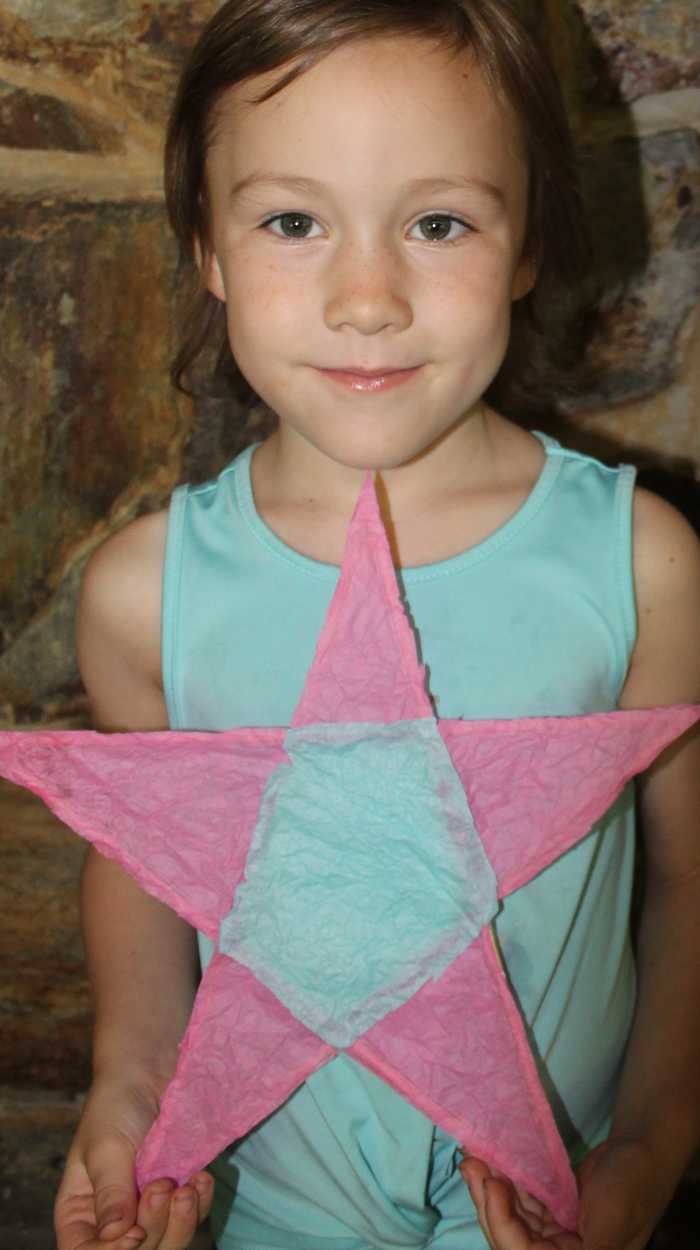

- Use these directions from https://raisecuriouskids.com/philippine-christmas-parol-craft/ to create a parol, which is a Filipino star lantern popular around Christmas time. It represents the star that pointed the Magi to Christ.
About the Parols
Filipino Meal
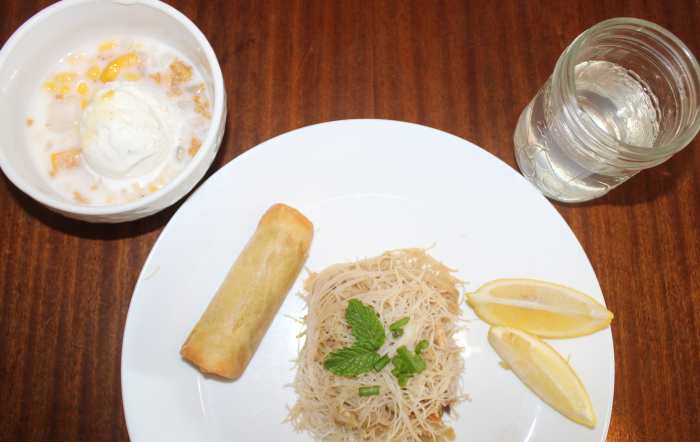
Pancit with lumpia, Mais Con Yelo, & Coconut water
Prepare and serve:
- Pancit (or Adobo)
- Mais Con Yelo
- Lumpia (optional – if you can get them prepared from the frozen section of a grocery store or from a restaurant/food truck)
- Coconut water
Panict
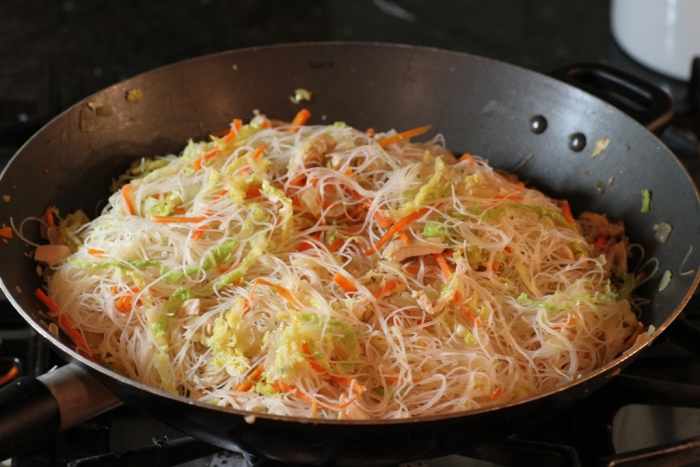
Yield: 4 servings
Ingredients
- 1 (12 ounce) package dried rice noodles
- 1 teaspoon vegetable oil
- 1 onion, finely diced
- 3 cloves garlic, minced
- 2 cups diced cooked chicken breast meat
- 1 small head cabbage, thinly sliced
- 4 carrot, thinly sliced
- 1/4 cup soy sauce
- 2 lemons – cut into wedges, for garnish
Directions
- Place the rice noodles in a large bowl, and cover with warm water. When soft, drain, and set aside.
- Heat oil in a wok or large skillet over medium heat. Sauté onion and garlic until soft. Stir in chicken, cabbage, carrots and soy sauce. Cook until cabbage begins to soften.
- Toss in noodles, and cook until heated through, stirring constantly.
- Transfer pancit to a serving dish and garnish with quartered lemons.
(Recipe came from: https://morethanwhatyoueat.blogspot.com/2012/01/pancit-and-lumpia.html )
Mais Con Yelo / Mas Kon-Yelo
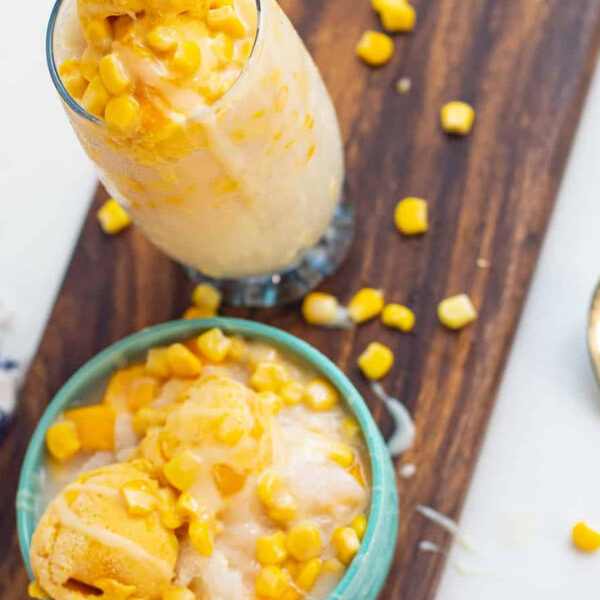
Mas Kon-Yelo
Yield: 4 small servings
Ingredients
- 1/4 cup condensed milk
- 1/4 cup evaporated milk
- 2-5 Tbsp white sugar (sweetened to your preference)
- 1/2 cup canned sweet corn kernels
- 2-3 cups ice, shaved or crushed (use a blender if needed)
- 1/2 cup cornflakes, crushed
- 4 scoops vanilla or mango flavored ice cream
Instructions
- Combine the sweetened condensed milk and evaporated milk. Add 2 – 5 Tbsp. of sugar, sweetening to your preference. Set aside.
- In each serving glass, add 2 heaping tablespoons of corn in the bottom.
- Top with 1/2 cup crushed/shaved ice.
- Top with 2 Tbsp. corn.
- Sprinkle 2 Tbsp. cornflakes over the top.
- Pour 1/4 of the sweetened milk mixture over the top.
- Add a scoop of ice cream to the top.
(Recipe came from: https://www.chefspencil.com/mais-con-yelo/)
Read a Book on the Philippines
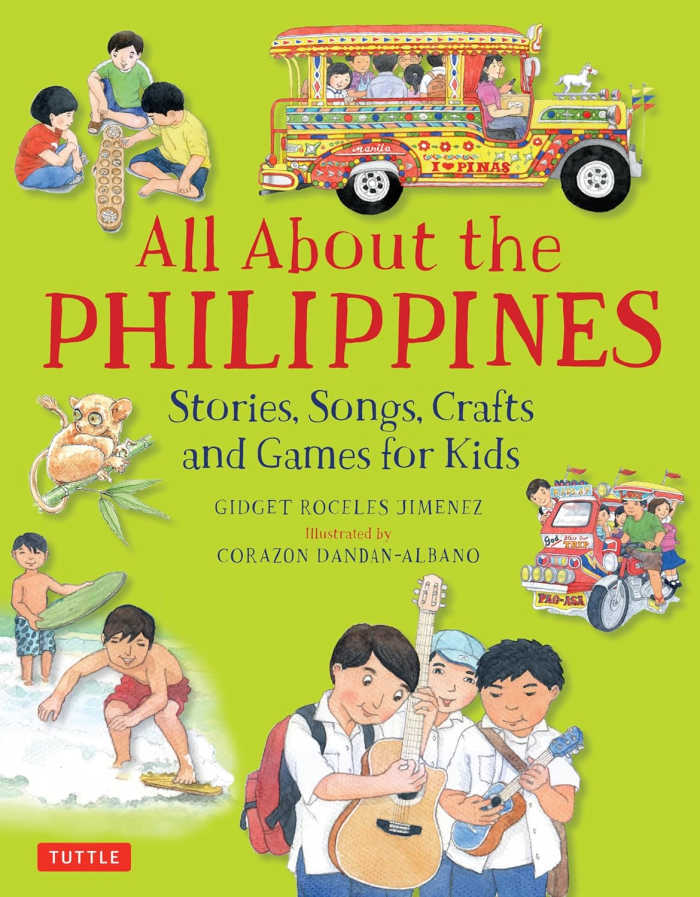
All About the Philippines: Stories, Songs, Crafts and Games for Kids by Gidget Roceles Jimenez – Image is from amazon.com
- All About the Philippines: Stories, Songs, Crafts and Games for Kids by Gidget Roceles Jimenez
- Cora Cooks Pancit by Dorina Lazo Gilmore
- Filipino Celebrations: A Treasury of Feasts and Festivals by Liana Romulo
- Our Nipa Hut: A Story in the Philippines by Rachell Abalos
- Pedro’s Yo-Yos: How a Filipino Immigrant Came to America and Changed the World of Toys by Rob Peñas
History of the Philippines
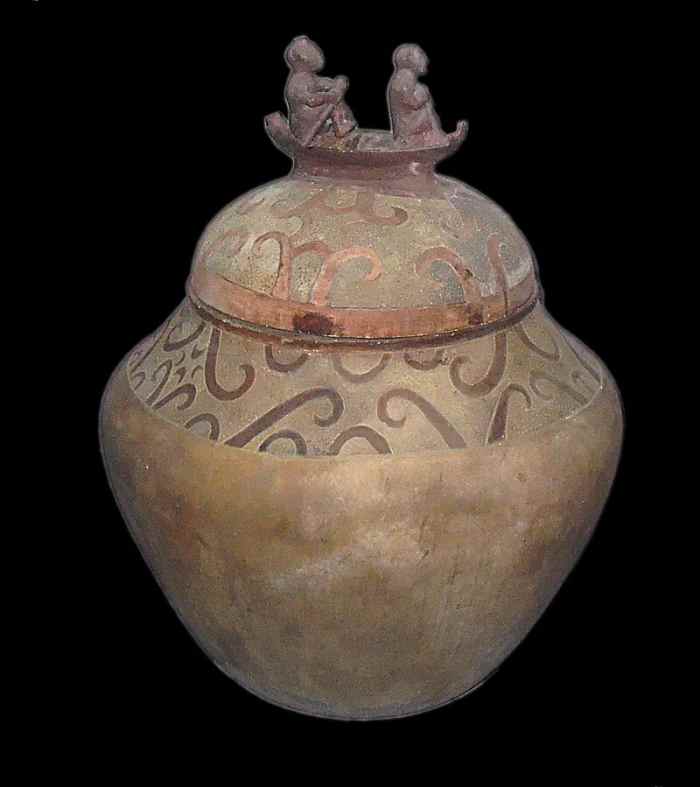
The Manunggul burial jar, one of the numerous burial jars found in the Manunggul cave of the Tabon Caves in Palawan, Philippines. It dates from 890–710 B.C.
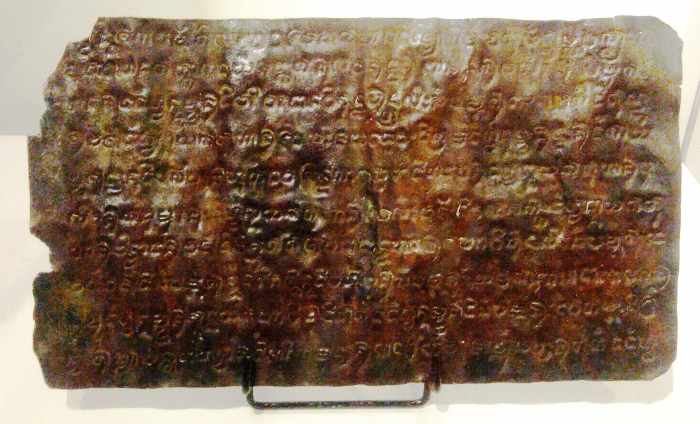
The Laguna Copperplate Inscription, which is the earliest known surviving written record in the Philippines from 900 AD It was written in Old Malay using the early Kawi script.
- The first known settlers to Philippines were from Taiwan around 2200 BC, settling the Batanes Islands (where they built stone fortresses known as ijangs) and northern Luzon. Jade artifacts made in Luzon with raw materials from Taiwan from that time period have been found. These early settlers, known as the Ivatan, built castles (similar to Japanese gusuku castles) on triangular-shaped hills. The Ivatan used gold as currency and engaged in agriculture, seafaring, and boatbuilding.
- By the 14th century, numerous settlements emerged as trading centers, exchanging with other Asian nations including China. Indian cultural traits such as linguistic terms and religious practices began to spread in the Philippines during the 14th century. By the 15th century, Islam was established in the Sulu Archipelago and spread from there.
- The first know European to land in the Philippines was Ferdinand Magellan, who was killed there in 1542.
- The Philippines was named after King Philip II of Spain in 1543 by Spanish explorer Ruy López de Villalobos.
- The country was a Spanish colony for over 300 years, from 1565 to 1898, greatly influencing its culture and religion. The Spanish conquistadors primarily took interest in the Philippine islands for two things: its strategic location (either as a military base or for trade) and to evangelize the word of God. It isn’t surprising then that the Philippines is largely Catholic.
- After the Spanish-American War, Spain sold the Philippines to the United States for $20 million, which was convenient sale on Spain’s part as the nation of the Philippines had just declared their independence from Spain that same year.
- After decades of American colonial rule and three years of Japanese occupation during World War II, the Philippines gained independence from the United States on July 4, 1946.
Dance the Tinikling, a traditional Filipino dance
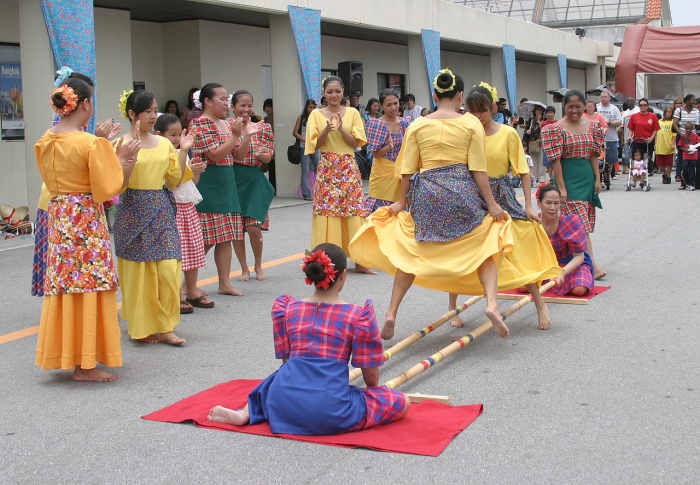
Members from the Philippine Cultural Dancers group performing the tinikling
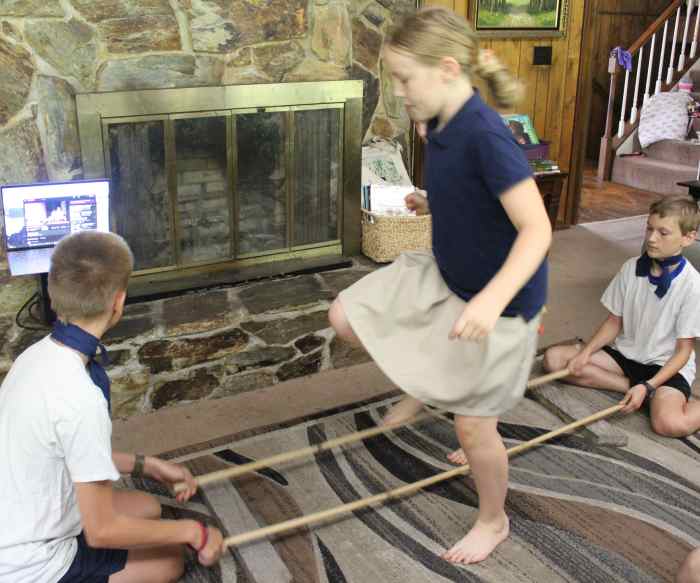
Our attempt at the Tinikling
- Listen to traditional Filipino music (which we did while preparing our meal).
- Watch the below video on instruments used in music from the Philippines
- Watch the below video on the Tinikling and then attempt the dance.
- You can also watch: https://www.youtube.com/watch?v=puwpGbxW1g0
Pray for the People of the Philippines
- To find out about the religious nature of the Philippines and specific ways you can pray for the country, go to operationworld.org and https://prayercast.com/prayer-topic/philippines/ .
Visit the Philippines on YouTube
If you have older children, you can also watch:
- Why is the Philippines still poor: http://www.youtube.com/watch?v=qjsmJGh2V-8
- Surviving in the Philippines against all odds (this contains some curse words): https://youtu.be/a_D0NJW1mCE
Want to study a different country that begins with the letter P?
Other countries starting with the letter P
Would you prefer to study a different country? Try one of these.
- Pakistan
- Palau
- Palestinian Authority (not always recognized as a country)
- Panama
- Papua New Guinea
- Paraguay
- Peru
- Poland
- Portugal
- Puerto Rico
Ready to visit other countries?
- Go to Around the World in 26 Letters to find links to all the countries we “visited.” Each webpage features a menu, craft, books, video clips, worksheets, and more!
© 2025 Shannon
Leave a Reply