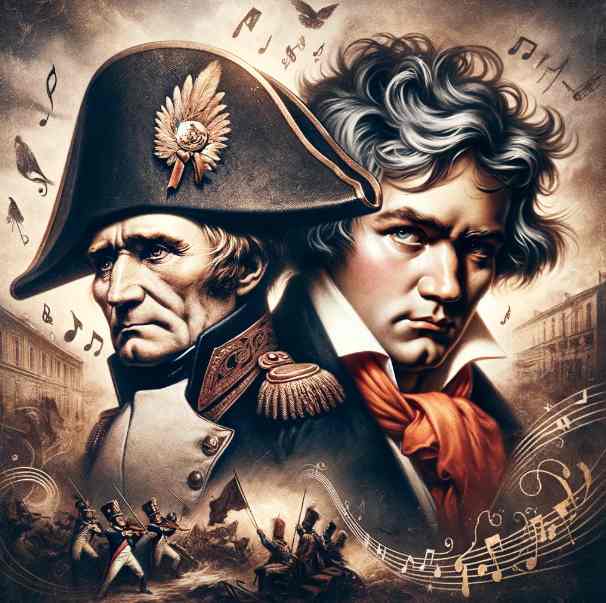
Image credit: https://lvbeethoven.com/wp-content/uploads/2024/04/The-Napoleon-Bonaparte-Connection-Politics-and-Passion-in-Beethovens-Works.webp
Below you’ll find my lesson plan focused on Phase 3: Napoleon and Early Missions Hands-On Week from “World Empires, World Missions, World Wars” by Diana Waring, part of the History Revealed curriculum. Students will study the art, architecture, music, and science of the Napoleonic Era. I used this during a weekly 50-minute homeschool co-op world history class!
Maps of the French Empire, Napoleon’s Battles, and William Carey’s Time in India
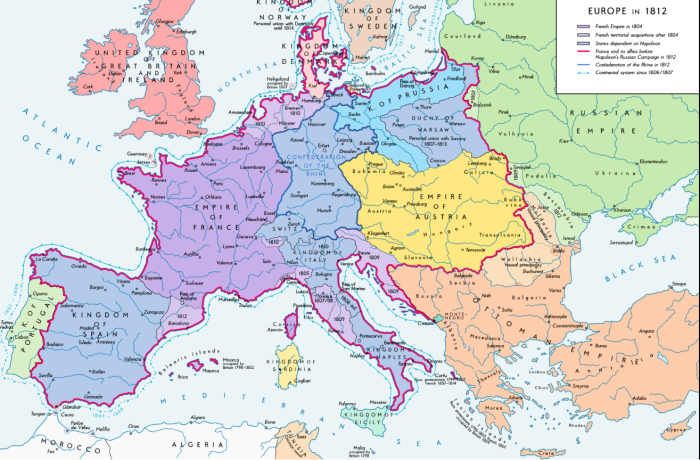
The French Empire at its greatest extent in 1812
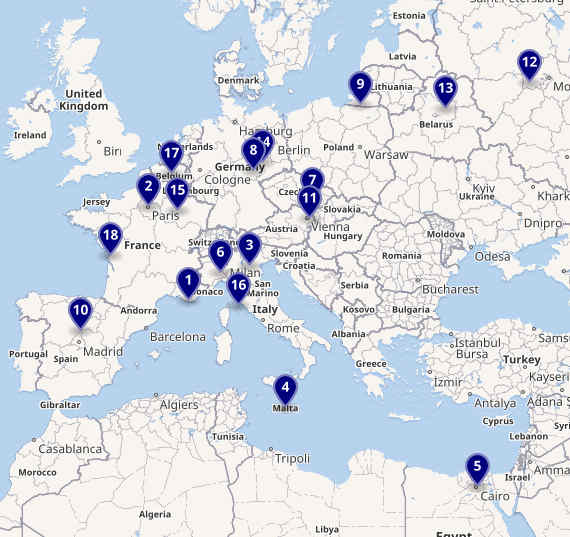
Battles of Napoleon
- Pass out tickets to students who completed their map or maps from pp. 46-48 in “World Empires, World Missions, World Wars” by Diana Waring. They will receive 4 tickets per map they completed. (Tickets will be used at the end of the semester for students to redeem prizes.)
YOU WILL NEED:
- tickets
Art Appreciation
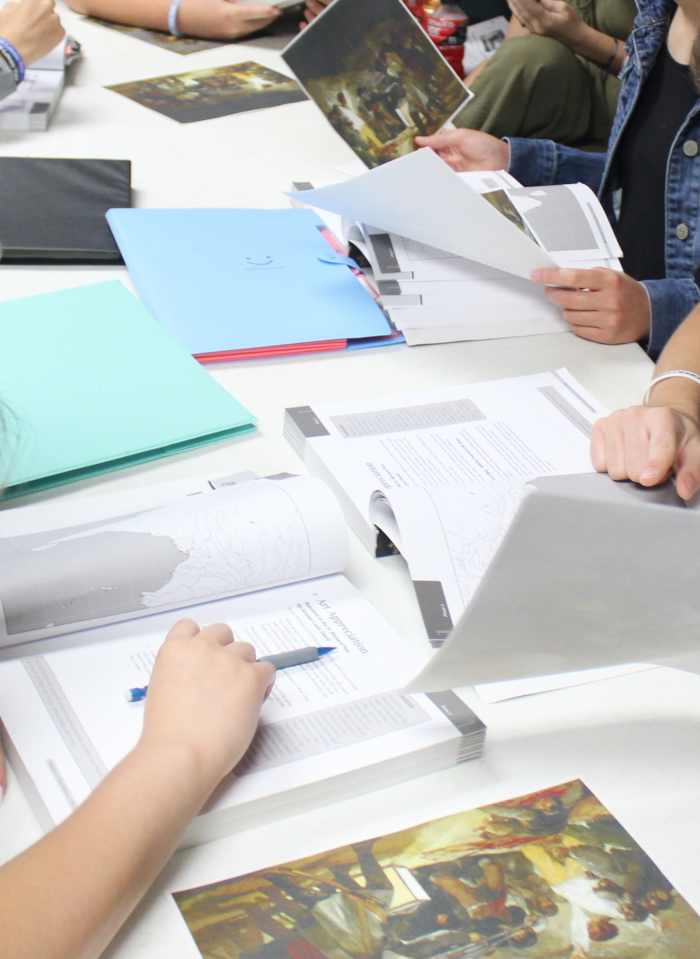
Students studying and comparing portrayals of Napoleon in art
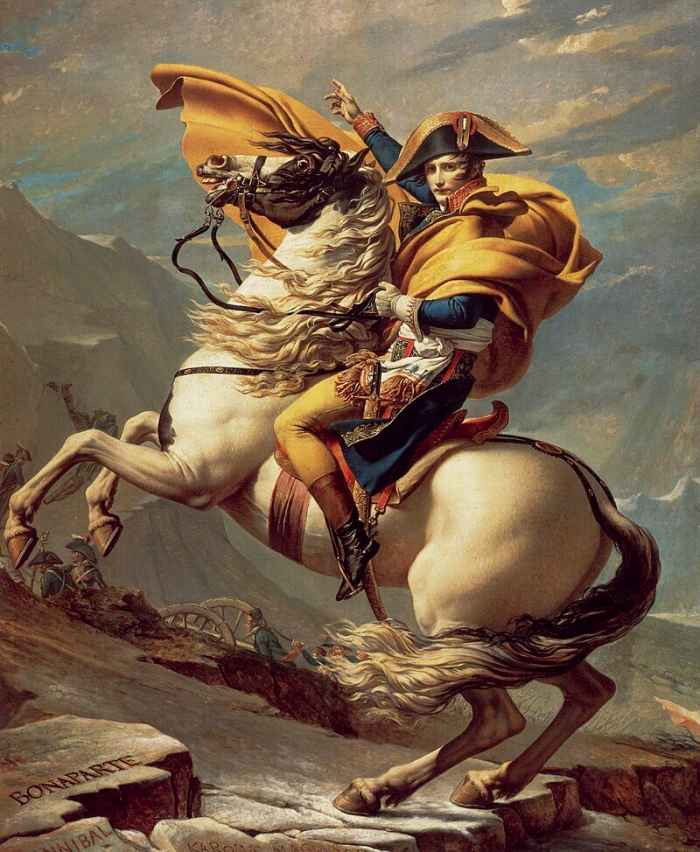
Napoleon Crossing the Alps (also known as Napoleon at the Saint-Bernard Pass or Bonaparte Crossing the Alps) painted by the French artist Jacques-Louis David between 1801 and 1805
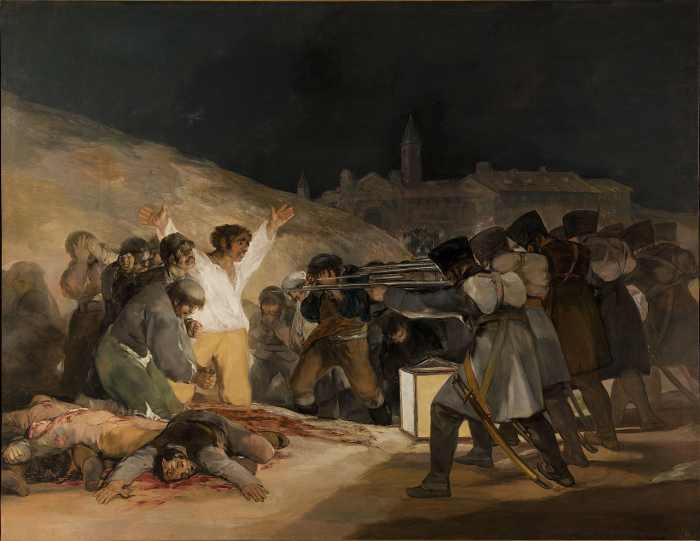
The Third of May 1808 by Francisco Goya, showing Spanish resisters being executed by French troops
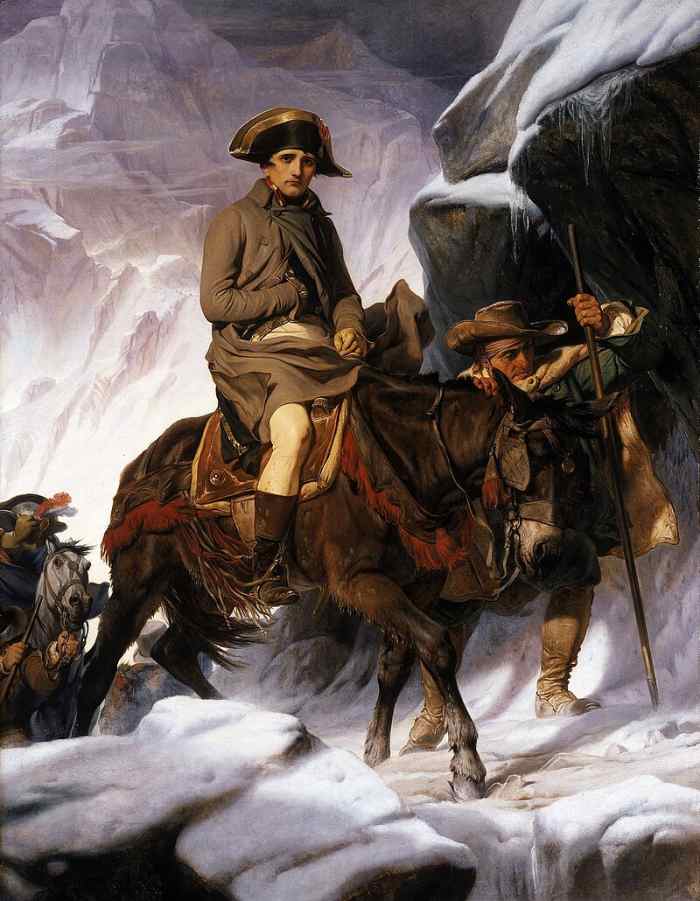
Bonaparte Crossing the Alps by French artist Paul Delaroche, 1850
- Have students study and compare the above paintings using the questions from p. 49 in “World Empires, World Missions, World Wars” by Diana Waring.
- I divided the students into groups of three and then passed out to each group printed copies of the Jacques-Louis David and Francisco Goya paintings. The groups studied the paintings and discussed the questions among themselves.
- After about 5 minutes, have students report what they concluded. (I passed out tickets to students who shared answers.)
- Show the Paul Delaroche painting and have the students compare that to the one by Jacques-Louis David.
YOU WILL NEED:
- “World Empires, World Missions, World Wars” by Diana Waring, above 3 paintings (either from online or printed), and tickets
Neoclassical Architecture: The Pantheon, Paris
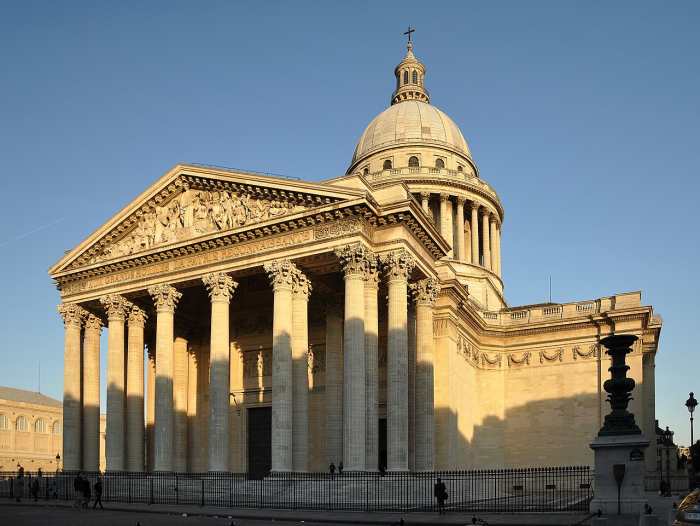
Pantheon of Paris
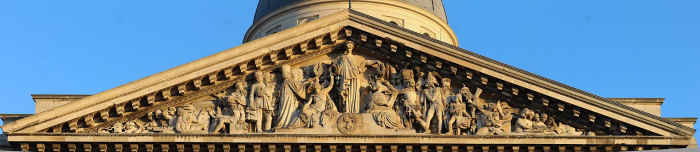
The façade and peristyle on the east side, modeled after a Greek temple, features Corinthian columns and pedimental sculpture. To the right is Napoleon Bonaparte, along with soldiers from each military service. Below is the inscription: “To the great
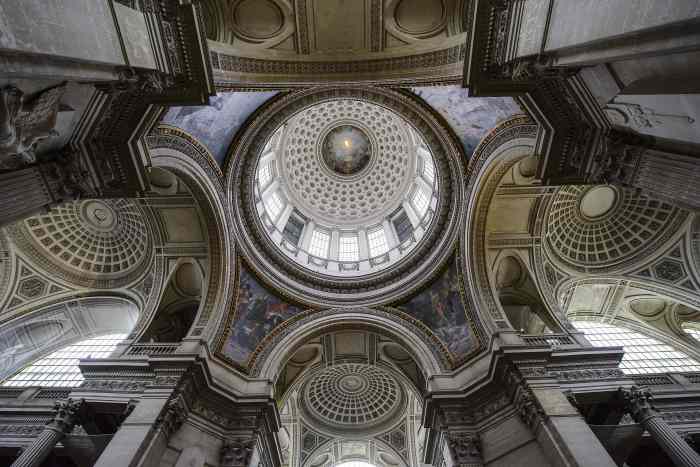
Looking upward at the first and second domes
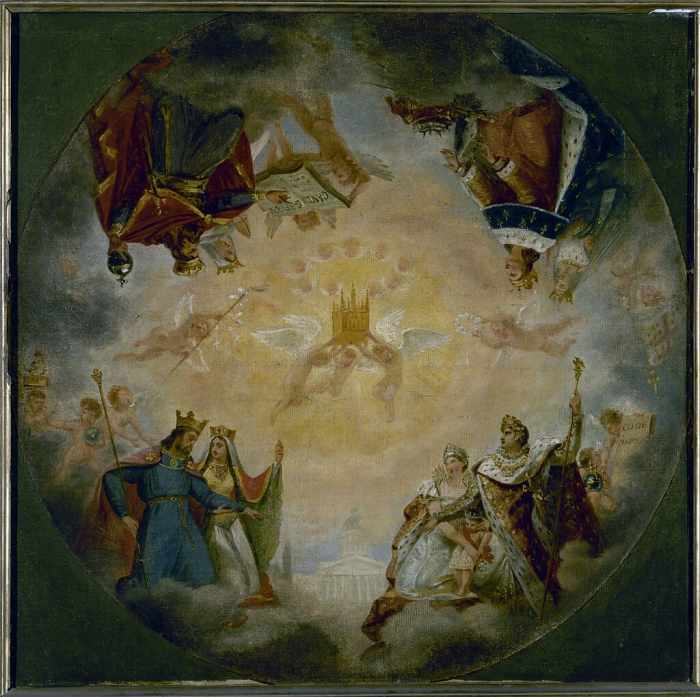
Design for the cupola by Antoine-Jean Gros (1812). Napoleon is at the bottom right. (Now in the Carnavalet Museum)
- Show pictures of the Pantheon of Paris found at https://en.wikipedia.org/wiki/Panth%C3%A9on and briefly discuss the information from p. 50 in “World Empires, World Missions, World Wars” by Diana Waring.
Beethoven vs. Napoleon
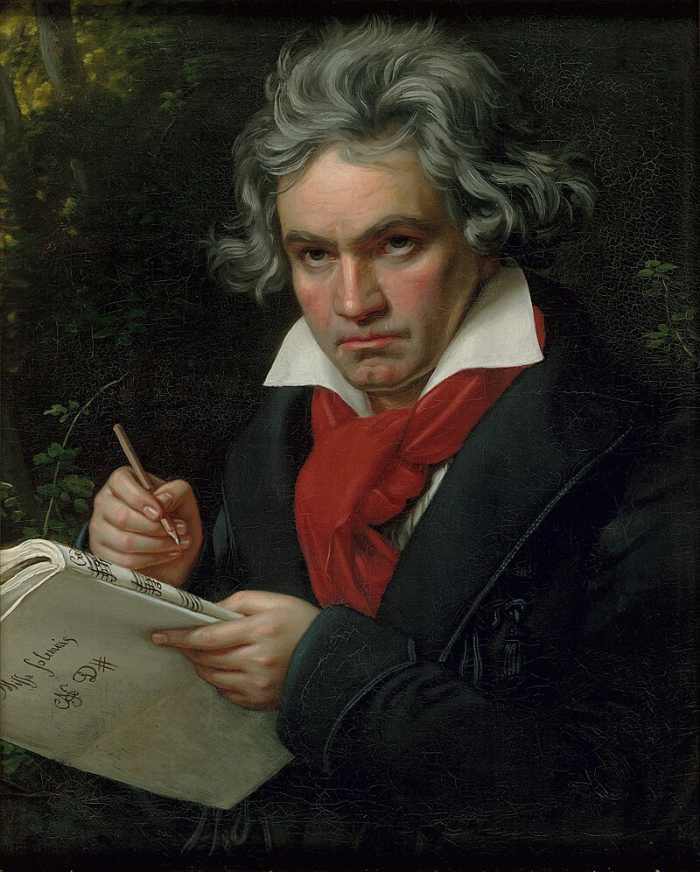
Beethoven with the Manuscript of the Missa Solemnis by Joseph Karl Stieler, completed in 1820
- Briefly discuss Beethoven using the information from p. 51 in “World Empires, World Missions, World Wars” by Diana Waring.
- Probably his most recognized piece is his 5th Symphony. Play the first 30 seconds of the video clip below.
- Why do you think this is so famous? (Pass out tickets to students who participate in the discussion.)
- Be sure to include that Beethoven composed most of his pieces while he was going deaf.
- Briefly discuss how Beethoven composed his 3rd Symphony (also called the Heroic Symphony) in honor of Napoleon…until Napoleon crowned himself emperor.
- If desired, quickly flip through Beethoven’s Heroic Symphony by Anna Harwell Celenza while summarizing all of this.
- Play about a minute of the below video. I started in the middle around where Napoleon crowns himself emperor.
YOU WILL NEED:
- Beethoven’s disappointment with Napoleon did not end there. In 1814, Beethoven wrote Germania to celebrate the victory against Napoleon.
- Play about 30 seconds of the below video clip.
Pyotr Ilyich Tchaikovsky
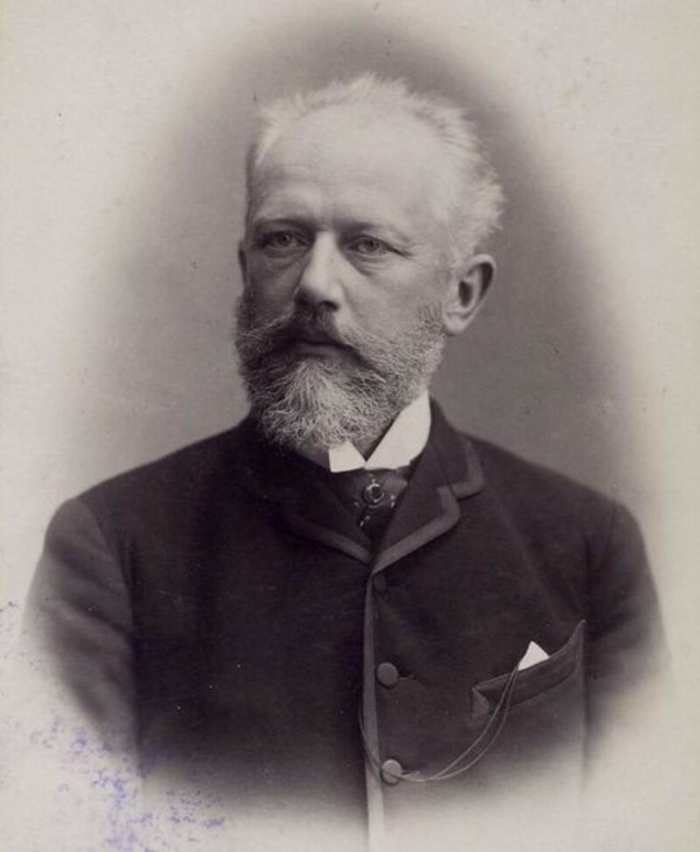
Pyotr Ilyich Tchaikovsky, 1888
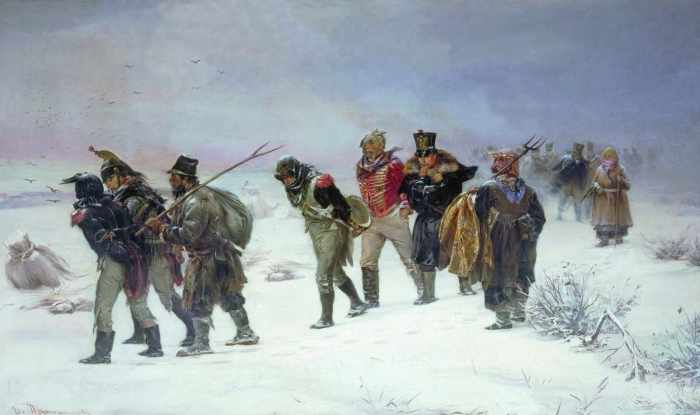
French retreat from Russia in 1812, painted by Illarion Pryanishnikov, 1874
- Beethoven was not the only musical composer to celebrate Napoleon’s Defeat.
- Who can name a famous musical piece by Tchaikovsky? (Swan Lake, The Nutcracker, the 1812 Overture)
- In 1880, Russian composer Tchaikovsky composed the 1812 Overture to commemorate Russia’s successful defense against Napoleon’s invasion in 1812.
- This is one of the few symphonies that calls for actual cannons, though symphonies usually replace the cannons with drums.
- Listen to and watch the entire video below. (We listened on double speed.)
- What message do you think Tchaikovsky was trying to portray?
Napoleon’s Natural Historian & Scientist: George Cuvier
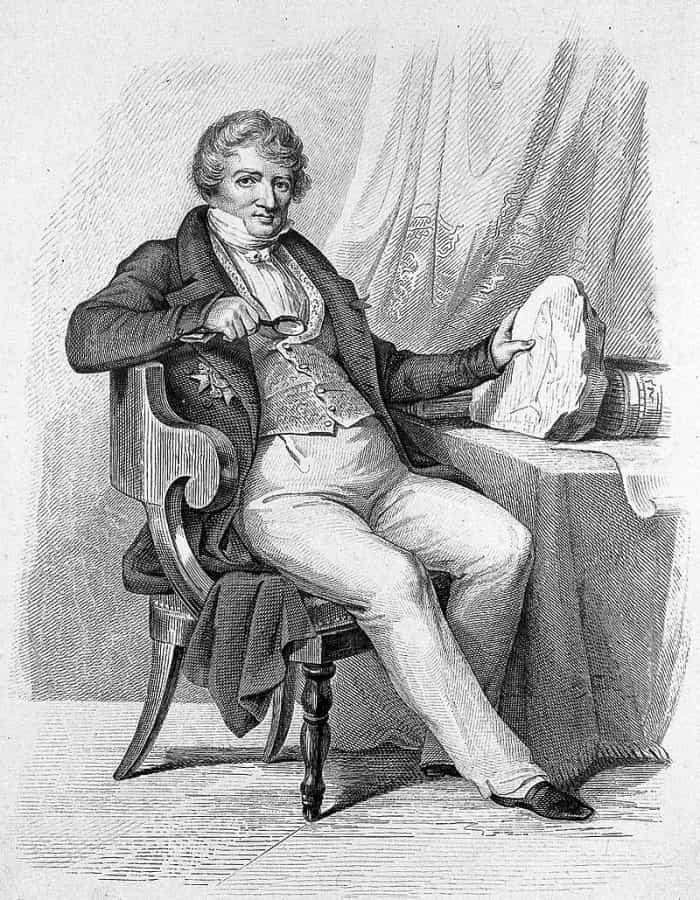
Cuvier with a fish fossil
- Briefly discuss Georges Cuvier, the “Napoleon of Natural Science.” (This is a good resource for background information on him: https://www.britannica.com/biography/Georges-Cuvier .)
- He met Benjamin Franklin, corresponded with Thomas Jefferson (who was hoping Lewis & Clark would find a living mastodon while exploring the Louisiana Territory), & advised the real Napoleon
- Napoleon asked him to join him as the Natural Historian on the Egyptian Expedition, but he declined.
- A couple decades before Darwin popularized the theory of evolution, a French scientist named Lamarck was insisting that fossilized remains of unfamiliar animals was due to them evolving.
- Cuvier insisted animals have basically remained the same since Creation as they are obviously well-designed and we find fossilized remains of unfamiliar animals because they became extinct. He insisted the Flood from the time of Noah was the primary cause of the majority of the fossils. He also insisted the earth is young, only a few thousand years old.
- Watch part of the below video. Only watch through 3:30 and be sure to cover up in Michelangelo’s Sistine Chapel portrayal of Adam. (*Note: After 3:30, the below video veers off to insist Cuvier was wrong and evolution is right.)
Play this through 3:30 & cover up part of Adam in the Sistine Chapel painting
Homework
- Go over homework for next week’s class:
- Using pp. 54-57 for ideas, complete a Creative Expression project to present in class. Tip: Don’t forget to check the rubrics I passed out last week to see what should be included in your presentation.
- Optional Extra Credit (4 tickets): Prepare Chicken Marengo (on p. 52) for your family and post a photo on Facebook OR prepare it for class to share with us next week.
- Optional Extra Credit (4 tickets/dish): Prepare or purchase French food to share with us next week in class.
Looking for all my “World Empires, World Missions, and World Wars” Lessons?
World Empires, World Missions, and World Wars
UNIT 1: NAPOLEON & EARLY MISSIONS
- Napoleon Lesson Plan (Unit 1: Phase 1)
- Napoleon Exploration and Discovery Lesson Plan (Unit 1: Phase 2)
- Napoleon Art, Music, Architecture, and Science Hands-on Lesson Plan (Unit 1: Phase 3)
© 2025 Shannon
Leave a Reply