Middle School Biology First Day Lesson Plan
This is the 1st lesson in a series of 32 hands-on lessons covering middle school biology. This is the lesson for the first day of class and covers introductions, how to use the textbook, and plant identification. I used this plan while teaching a 55 minute middle school biology class. Each lesson plan includes homework assignments and a variety of hands-on activities to make each lesson engaging & memorable. Use these fun lessons with your classroom, homeschool, after-school program, or co-op!
These lessons are written for a class that meets once a week. If your class meets 5 days a week, simply do this lesson one day a week and use the homework assignments (at the bottom of the page) for the work for the other days of the week.
Welcome & Introductions

Student Name Plate
- Welcome everyone to the first day of biology class! Each class everyone will need to bring a 3 ring binder with paper, colored pencils, a pencil, & their textbook. Our class textbook is A Beka’s Science: Order & Design, but any textbook of your choice could be used.
- Create nameplates.
- Pass out a sheet of paper to each student and have them fold it into thirds. Using a marker or bright color, have them write their name in big letters in the middle section. This will act as a nameplate at the front of each student’s desk until I learn everyone’s names.
- On their nameplates, have them answer (using words or drawings) the following in each of their four showing corners: What you did this summer, your favorite animal, favorite activity or something you like doing, & your favorite flower or plant. (If they need help with the last one, remind them that fruits and vegetables are plants.)
You will need per student:
- blank paper
- Have each student say their name and share what they wrote on each corner. Then have them put the nameplate propped up at the front of their desks so that I can see their names.
Tickets

Tickets passed out for students doing homework, answering questions, & doing extra credit
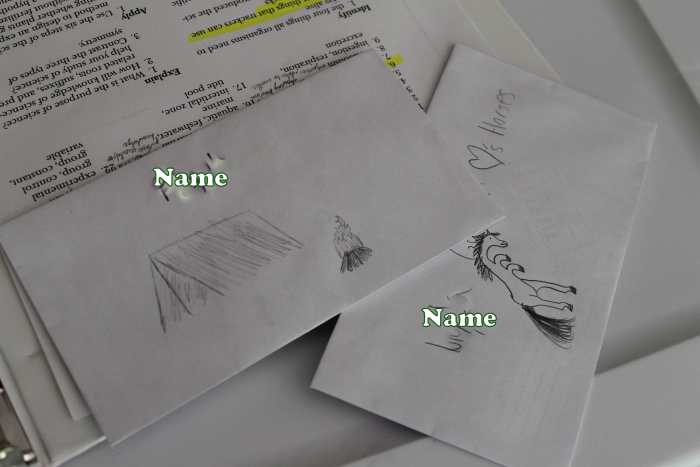
Student envelopes for holding their tickets
- Explain the ticket system.
- Pass out an envelope to each student and have them write their name on it. They will need to keep this in their binder.
- They will get tickets for completing homework, answering questions, and completing extra credit assignments. The tickets will be used to redeem prizes before winter break and before summer break.
You will need per student:
- an envelope
Textbooks
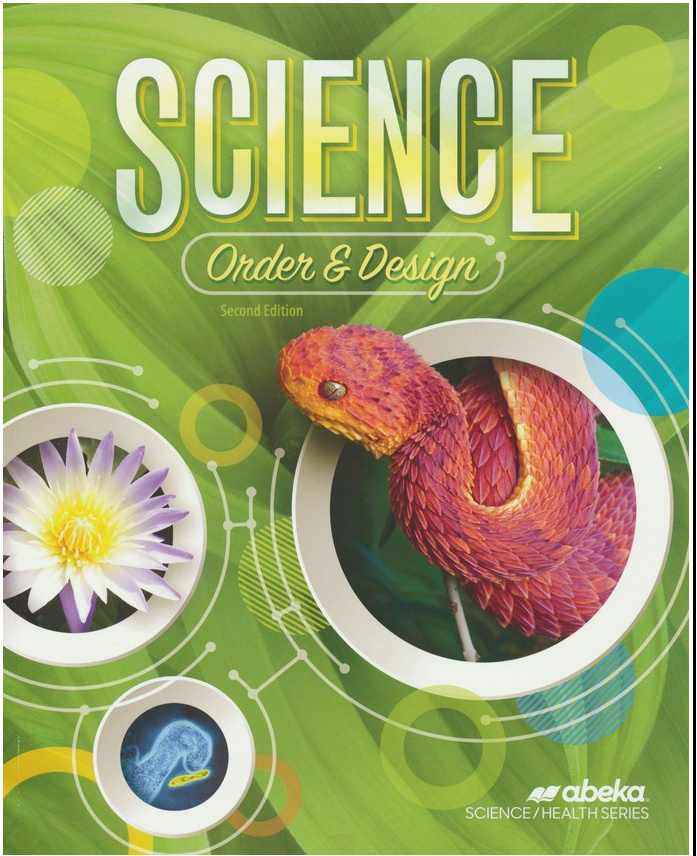
Our class textbook: A Beka: Science: Order & Design (2nd edition)
- Have everyone open their textbook to the first chapter. Give everyone a question they need to answer. (I used the questions from the end of the unit review for Chapter 1.) If needed, show them how to use the index.
- Have them flip through Chapter 1 from the textbook with you & quickly summarize the chapter. When you get to a part that one of the students answered or defined, have them share that answer or definition.
The Need for Botanists

A Rose by Any Other Name Might Just Be a Rhododendron from the August 15, 2018 edition of the Wall Street Journal
7. (Optional) Project or pass out copies of the article A Rose by Any Other Name Might Just Be a Rhododendron from the August 15, 2018 edition of the Wall Street Journal.
- Quickly summarize the article, which shares how America is in desperate need of botanists who can actually identify plants.
- Ask students to come up with ideas on jobs they might have that would involve botany or identifying plants.
You will need:
- a copy of A Rose by Any Other Name Might Just Be a Rhododendron from the August 15, 2018 edition of the Wall Street Journal
Plant Identification
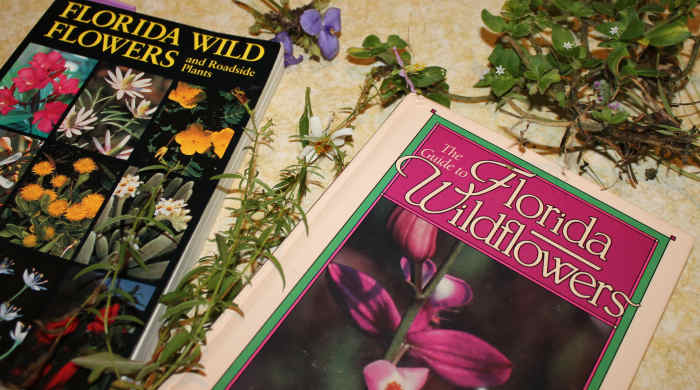
Learning how to use guide books to identify wild flowers
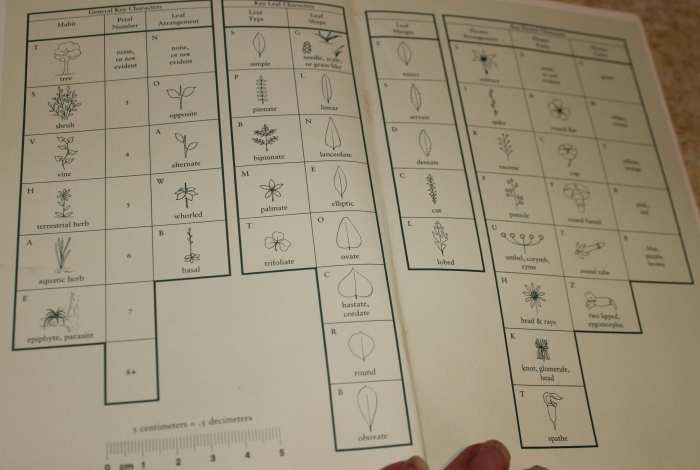
Flower identification key from “Florida Wild Flowers and Roadside Plants” is what I use when identifying wild flowers.
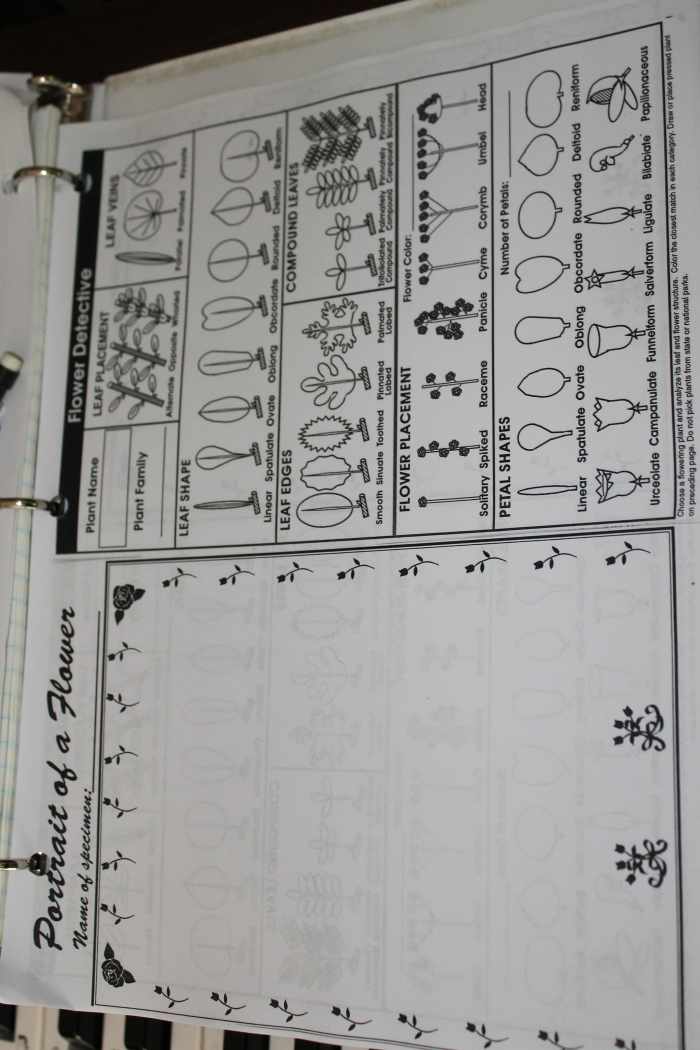
Flower identification worksheet from Considering God’s Creation is also a good option.
- Pass out flower identification guide pages and walk through how to identify a plant. Pass out wildflowers and have the students work together to sketch it, record its traits, and use a wildflower guide book to try to identify it.
You will need:
- a flower identification guide page per student
- local wildflowers (make sure to include the leaves)
- wildflower guide books (Check out as many as you can find from the library.)

Identifying wild flowers using guide books
My Favorite Florida Flower Guide Book
Homework Review
- Pass out homework assignment sheets. Quickly walk through what to do.
- Remind students that they will receive tickets for completing their homework. The tickets will be redeemed at the end of the semester for prizes.
- They will also receive tickets for answering questions when we review homework each week, so they can answer more questions in the book if they’d like in order to give them more opportunities to answer questions.
- There is a Thought Provoker question in each review. It counts as a question.
Homework
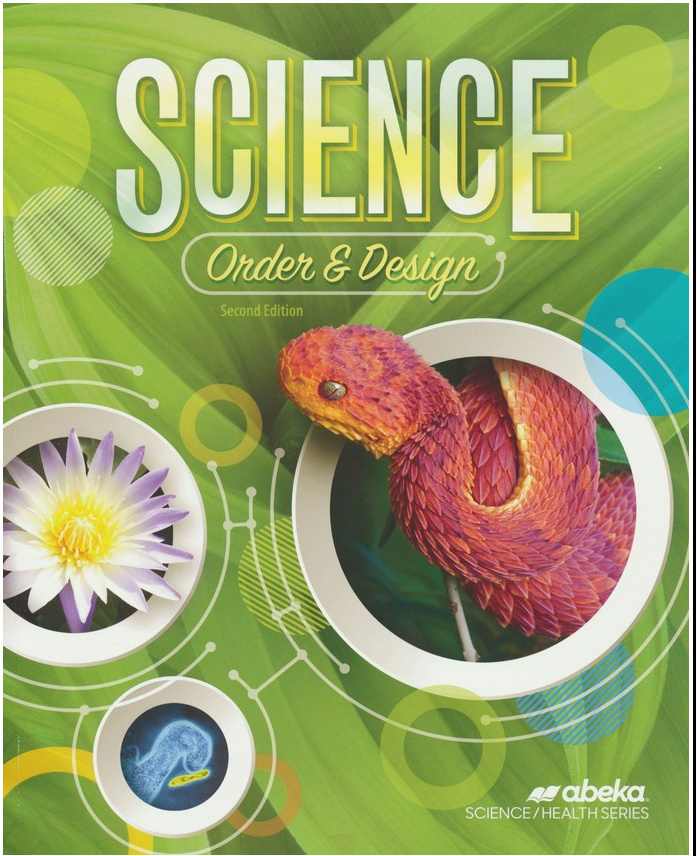
A Beka Science: Order & Design
(Page numbers refer to the pages in A Beka’s Science: Order & Design.)
- Friday: Flowers: Read pp. 34-35 & answer 4 questions of your choice on p. 36.
- Monday: Seeds: Read pp. 37-40 (skip “Science Investigation” on p. 39) & answer 5 questions of your choice on p. 41.
- Tuesday: Find 3 live wild flowers outside. Draw detailed pictures of them & identify them.
- Wednesday: Germination: Read pp. 41-43 & answer 3 questions of your choice on p. 43.
Homework Example
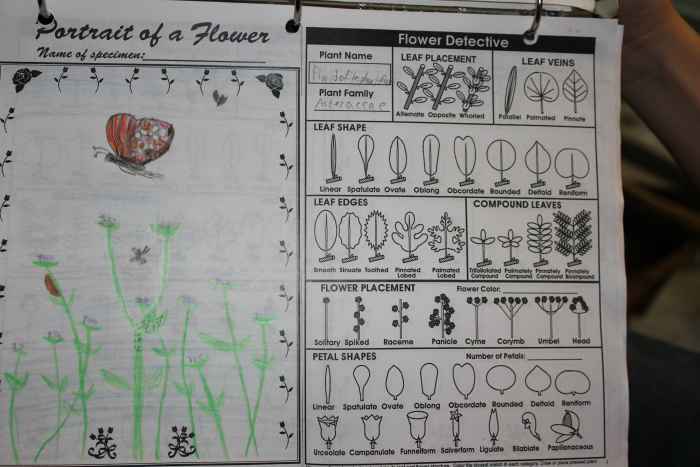
Homework assignment for Tuesday: Find and sketch 3 flowers and identify them.
Looking for all my lessons?
- First Day of Class & Plant Identifications
- Parts of a Flower
- Amazing Plants (Horticulturist Guest Speaker)
- Seeds and Flower Families
- Photosynthesis and Plant Parts
- Cardiovascular, Respiratory, & Digestive Systems
- Skeletal, Muscular, & Integumentary Systems
- Endocrine & Nervous Systems and Healthy Living
- Human Baby Fetal Development (Pregnancy Care Center Guest Speaker)
- Creation and Science
- Creation, Evolution, & the Eyes of Faith
- Classifying Plants & Animals
- Amazing Mammals
- Mammal Dissection
- Semester Review & Winter Party
- Bird Anatomy
- Bird Features
- Bird Watching (Birding Guide Guest Speaker)
- Fish Anatomy and Dissection
- Invertebrates Anatomy and Dissections
- Frog Dissection
- Reptiles Show and Tell
- Insect Anatomy
- Singing & Social Insects
- Beneficial Insects (Entomology Guest Speaker)
- Arthropods (Crayfish & Grasshopper) Anatomy and Dissections
- Crustaceans & Arachnids
- Cells, Algae, and Fungi
- Protozoa and Bacteria
- Trees
- Ecology
- Semester Review & End of Year Party
- My Middle School American History Lessons
- All of My Hands-on Lessons & Unit Studies
© 2018 Shannon
Comments
Shannon (author) from Florida on September 01, 2018:
That is so kind of you to say! Thank you!
Liz Westwood from UK on September 01, 2018:
I reckon if my biology lessons had been like this I would have got a lot more out of the subject.
Leave a Reply