
This is lesson 6 from a 6-week hands-on unit on the Medieval Period. We held a festive feast complete with entertainment and much merriment. Also included are the field trips we took during our unit. These are lessons we created to do with a weekly homeschool co-op for preschoolers and kindergarten-aged children. Use these fun lessons with your class, family, homeschool co-op, after school program, or camp!
Setting up the “Banquet Hall”
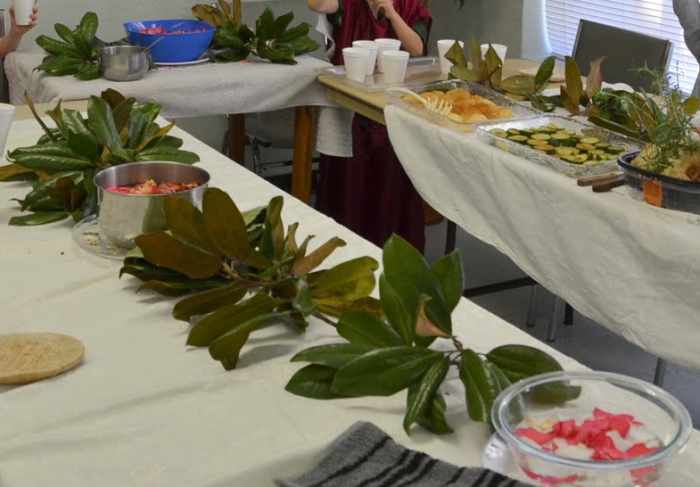
Setting up 3 tables in a U-shape with white tablecloths and greenery – Add bowls of water with flower petals for the “aquamaniles.”

Adding the “tapestries to the wall that the children painted in a previous lesson
***Start boiling a pot of water for pasta.***
- Pray. Read & discuss Psalm 36:7-9.
2. Read “Medieval Feast” by Aliki.
YOU WILL NEED:
- Have children set up & decorate the “banquet hall.”
- Use 3 tables to make a U shape. Place the chairs on the outside of the U.
- Cover the tables with white tablecloths.
- Place cut greenery from a tree or bush on the tables.
- If you have them, place flameless/electric candles on the tables.
- Use tape or hang up on the walls the “tapestries” the children made during the lesson on Medieval Art.
- Place 1-2 medium-sized mixing bowls on each table and place a dish that is larger than the bowl under the bowl. Fill the bowls with water. Place flower petals and/or fresh herbs in the water. Place a kitchen towel or a cloth napkin next to each water bowl. These will be used as “aquamaniles” to wash hands during the meal.
- Place a pita bread round at each place setting. These will be the “trenchers” that will be used as plates.
YOU WILL NEED:
- 1 tablecloth per table (preferably a white tablecloth), cut greenery from trees or bushes, the “tapestries” the children made during the lesson on Medieval Art, tape, 1-2 medium-sized mixing bowls per table, 1 large plate to go under each bowl, 1 kitchen towel or cloth napkin per bowl, flower petals and/or fresh herbs, flameless/electric candles (optional) , & 1 pita bread round per child (and adult if they are eating)
Prepare the food for the feast
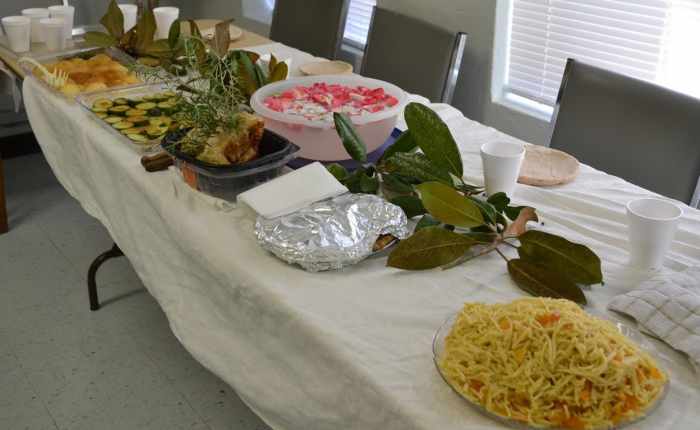
- Lead the children in preparing the food for the feast by following the recipes below, which are from KONOS Volume I Curriculum.
Wassail
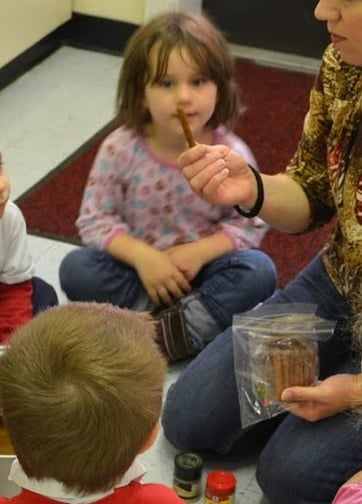
Talking about spices & the spices used in wassail
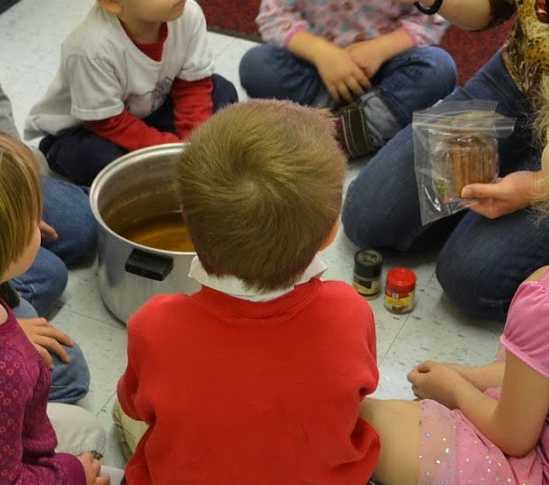
Preparing wassail
- Prepare Wassail: Quickly discuss about spices during the Medieval Ages. Allow the children to smell them. Then let the children prepare wassail.
- 1 bottle (64 oz.) of apple juice or apple cider
- 1/4 t. nutmeg
- 1/2 t. ginger
- 1-7 sticks cinnamon
Pour or place everything into a pot. Bring it to a boil, cover, and simmer.
(While the children work on cucumbers, a teacher/parent should pour wassail into cups.)
YOU WILL NEED:
- 1 bottle (64 oz.) of apple juice or apple cider, 1/4 t. nutmeg, 1/2 t. ginger , 1-7 sticks of cinnamon, 1 Styrofoam cup per person, & a pot for simmering wassail
Apricot Pasta
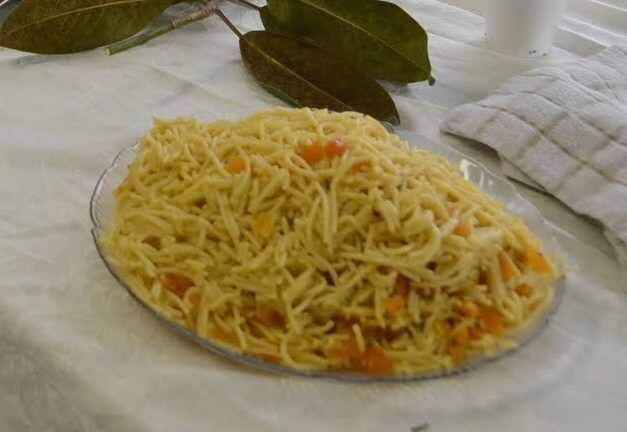
Apricot Pasta
- Apricot Pasta:
- 8 oz. spaghetti broken into small pieces
- 1 Tbsp. salt
- 1/2 Tbs. oil
- 1 c. dried, diced apricots
- 1/2 c. orange juice
- 8 T. (1 stick) butter
- 2 Tbsp. honey
- 3/4 t. cinnamon
- 1 t. ground almonds
Directions:
- Teacher/Parent: Ahead of time, bring water to a boil. Add the salt, oil, & pasta. Boil 8 minutes or until done. Drain.
- Meanwhile, in a separate pan allow children to add the apricots, orange juice, honey, butter, cinnamon and almonds. Heat together for 5 minutes or until butter melts.
- Allow a child to pour the apricot butter over pasta.
- Place pasta on a platter.
- Decorate with fresh herbs if desired.
YOU WILL NEED:
- 1 platter, 1 t. ground almonds, 1 stick of butter, 1 Tbsp. salt, 2 Tbsp. dried or fresh basil, Italian seasoning, or parsley, 8 oz. spaghetti, 1/2 Tbs. oil, 1 c. dried, diced apricots, 1/2 c. orange juice, 2 Tbsp. honey, pot for boiling spaghetti, colander, skillet, measuring spoons
Sliced Cucumbers
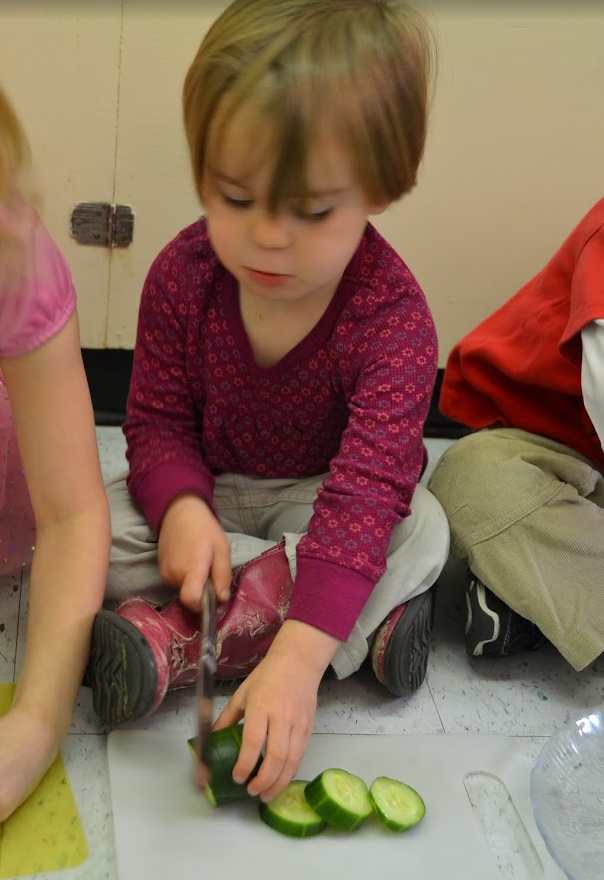
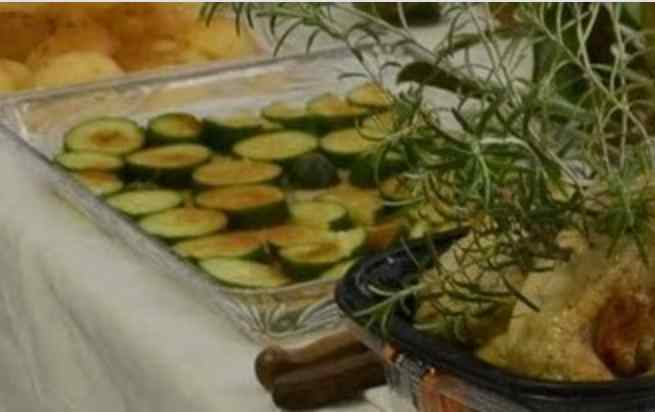
- Sliced Cucumbers:
- Quickly discuss knife safety. Hold the item securely from the top. Never have your fingers under the blade.
- Allow children to slice 2 cucumbers. (If children are very young, you can partially slice the cucumber and then let them finish cutting each slice.)
- Combine 2 t. sugar and 1 t. cinnamon. Sprinkle over cucumbers.
- Arrange cucumbers decoratively on a platter.
YOU WILL NEED:
- 1 small cutting board per child, 1 small knife per child, 2 cucumbers, 1 Tbsp. cinnamon sugar, & 1 platter
Spiced “Baked” Pears
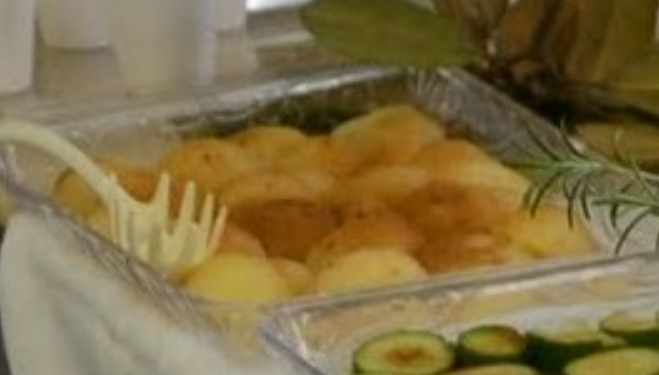
- Spiced “Baked” Pears:
- Explain that canned pears have been cored, peeled, and baked.
- Have children lay the pears decoratively on a platter and sprinkle with cinnamon sugar made from 2 t. sugar & 1 t. cinnamon.
YOU WILL NEED:
- 4 cans of pears (and a can opener if needed), 1 Tbsp. cinnamon sugar, & 1 platter
Rotisserie Chicken

Rotisserie Chicken decorated with rosemary to look like chicken feathers
- Rotisserie Chicken:
- Decorate a cooked rotisserie chicken either with clean feathers or sprigs or rosemary to look like feathers.
YOU WILL NEED:
- Rotisserie chicken (purchased from a store), rosemary sprigs or clean feathers, & serving utensils
Frog Leg Pie (Prepared Ahead of Time)
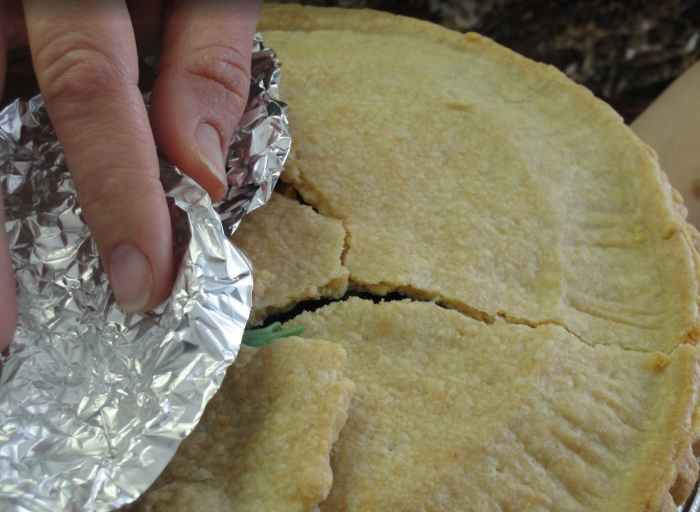
Cooked pie crust with toy frog leg sticking out
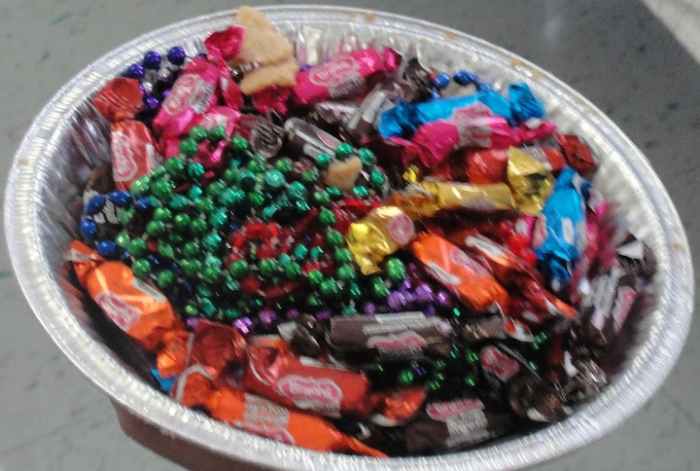
The surprise under the pie crust
- Frog Leg Pie: This should be prepared ahead of time without the children knowing what it is. Just tell the children it is a frog leg pie but do not let them touch it. In order to make it, fill a pie plate with candy. Place a baked pie crust on top. Tell the children this is a frog leg pie.
YOU WILL NEED:
- Frog Leg Pie prepared as directed above
Set out the banquet feast in the banquet hall
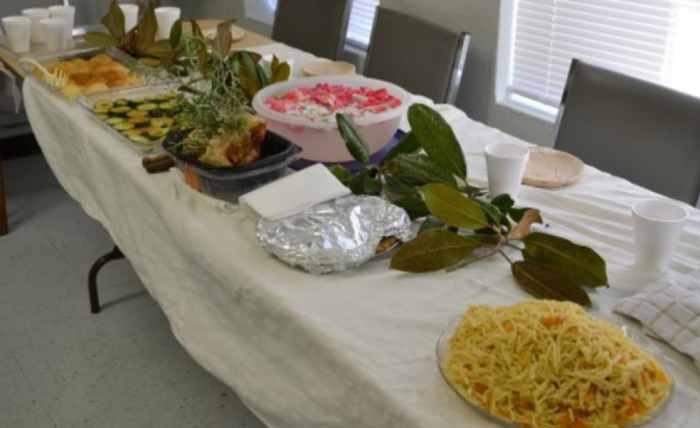
Medieval Feast prepared by preschoolers
- Set out all the food and the cups of wassail in the banquet hall.
Medieval Feast
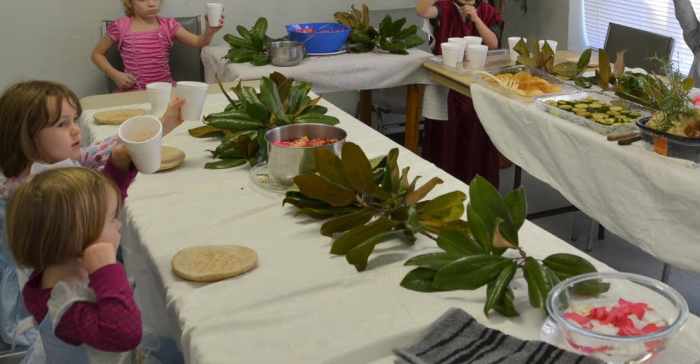
Toasting with wassail
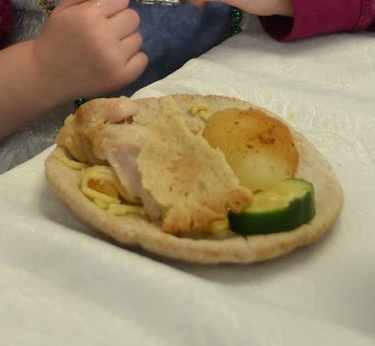
Trencher (pita bread plate) with the meal
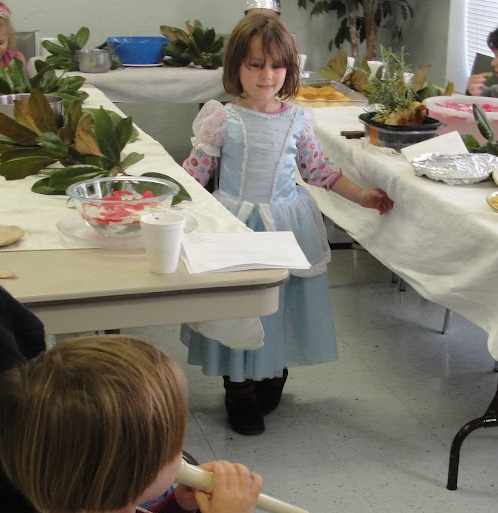
Music, dancing, and other forms of entertainment during the meal
6a. Order of Events for the Medieval Feast:
- Trumpet Entry: Have someone play a toy trumpet and announce each child as they enter. YOU WILL NEED: a toy trumpet
- The herald will announce, “All stand please for their royal highnesses.” The King & Queen of the ceremony will enter.
- Welcome: The king or queen will welcome everyone, saying something like, “Welcome one and all. May God richly bless this sacred occasion with both merriment & peace. You may be seated.”
- Toasts: A child can make a toast saying something like, “Let the festivities begin. It’s time to raise your glass of Wassail, but take heed not to drink until our toasts have been complete” and then, “A toast to your health. May success, prosperity, and the blessings of our Heavenly Father be with you all! Wassail! (Everyone repeats) Once more, please! Wassail! (Everyone repeats)”
- Feast & Entertainment: Intersperse courses with entertainment.
- Each family is in charge of entertaining the group during one of the courses. Ideas include a “minstrel” playing a toy instrument, “acrobats” doing tumbling, “minstrel” singing, showing off sword fighting skills, dancing, “bard” telling the story of Robin Hood, “jester” trying to juggle or tell a joke, a master showing off the skills of his trained dancing “bears” (teddy bears), etc.
- Trumpet to signal end of feast. Clean up.
6b. Order of courses of food:
- Wassail
- Sliced Cucumbers
- Apricot Pasta
- Roasted Chicken with Rosemary
- Frog Leg Pie
- Spiced Pears
Field Trip Ideas
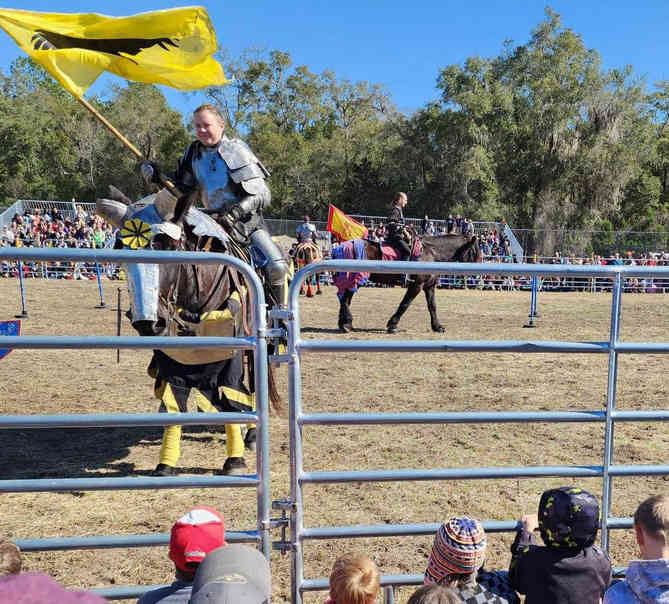
Jousting at our local Medieval Fair
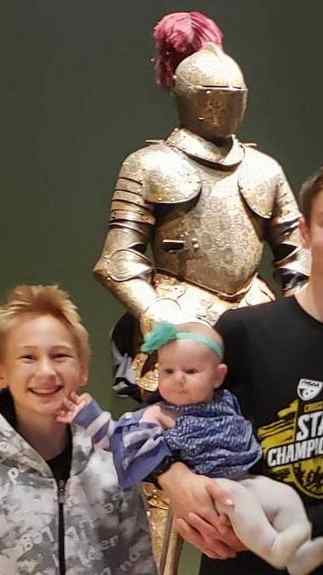
Traveling armor display at our local art museum

Medieval chamber concert
While studying the Medieval Period, we:
- attended our local Medieval Fair (Hoggetowne Medieval Faire)
- visited a traveling exhibit on armor and knights at an art museum.
- attended a Medieval music concert
Ready for the other lessons?
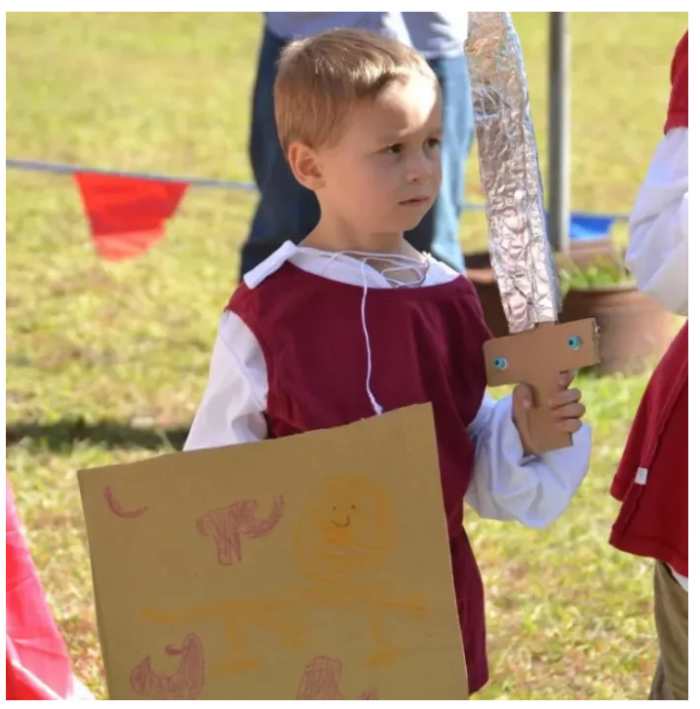
Knighting ceremony and joust from lesson 5: Knights & Ladies Lesson
Bake medieval meals, create a medieval village, design stained glass window cookies, hold a jousting tournament, and more during this fun 5 or 6 week hands-on unit study of the medieval period!
- Medieval Life Lesson – Cook & eat a Medieval meal, play Medieval games, create Medieval crowns, and more! This is part 1 of a 5 (or 6) part hands-on unit on the Medieval Period.
- Castles Lesson – Build model castles, weapons, and more! This is part 2 of a 5 (or 6) part hands-on unit on the Medieval Period.
- Medieval Art Lesson – Mix together and paint with egg yolk paint, design and eat stained glass window cookies, create colorful tapestries, and more! This is part 3 of a 5 (or 6) part hands-on unit on the Medieval Period.
- Cathedral Lesson – This focuses on Cathedral design and architecture. Decorate stained-glass cookies, design a dome using blocks, sketch each type of cathedral, sing about the true foundation of cathedrals, and more in this fun lesson on cathedrals! This is part 4 of a 5 (or 6) part hands-on unit on the Medieval Period.
- Knights & Ladies Lesson – Create a Coat of Arms and swords, hold a jousting tournament, act out a knighting ceremony, and more! This is part 5 of a 5 (or 6) part hands-on unit on the Medieval Period.
- Medieval Feast Lesson Plan (Option A: Learn as a Lesson) – Decorate a banquet hall, prepare the feast (recipes included), provide entertainment, and more while learning about Medieval Feasts. This is part 6 of a 6 (or 6) part hands-on unit on the Medieval Period.
- Medieval Feast and Field Trip Ideas (Option B: Culminating Dinner Event) – This is the culminating activity we did after a 5 week hands-on unit on the Medieval Period. Hold a festive medieval feast dinner complete with entertainment and much merriment. Also included are the field trips we took during our unit.
- My World History Lessons and Unit Studies (8 unit studies & 40 lessons): Tabernacle, Medieval Period, Leonardo da Vinci, Protestant Reformation, Explorers, China, Russia, & Africa
KONOS Curriculum
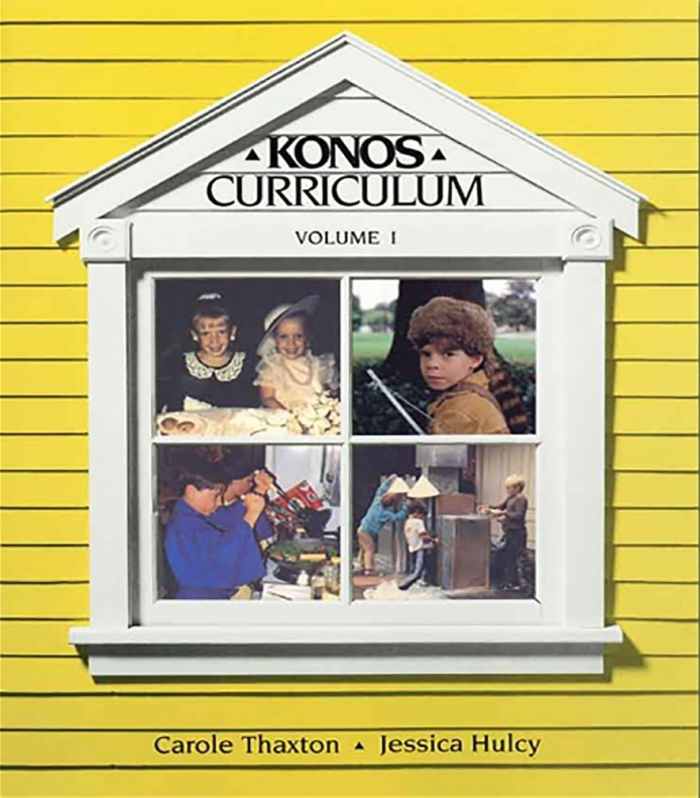
KONOS Curriculum Volume I
Would you like to teach this way every day?
I use KONOS Curriculum as a springboard from which to plan my lessons. It’s a wonderful Christian curriculum and was created by moms with active children! You can even watch free on-line videos as Jessica, one of the co-authors of KONOS, walks you through a unit. (Look for the Explanation Videos tab.)
© 2025 Shannon
Leave a Reply