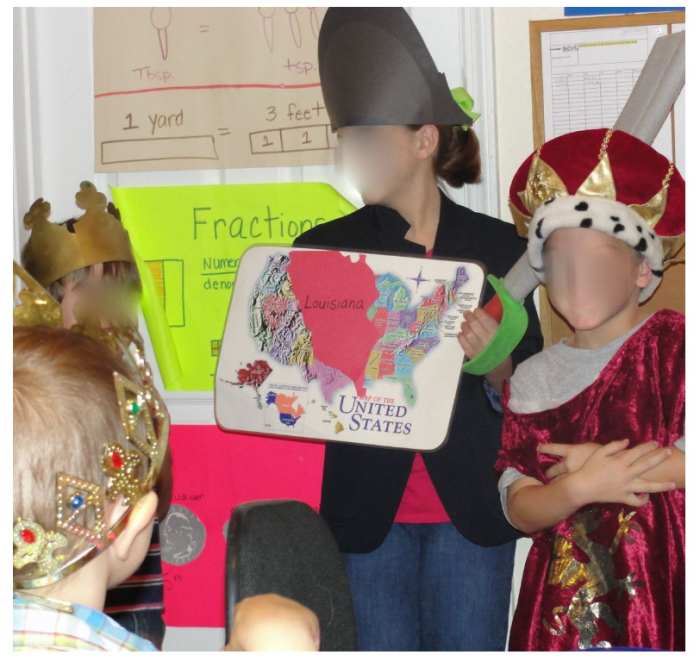
Louisiana Purchase dramatization
This is part 2 of a 4 part hands-on unit study on Westward Expansion and Pioneers. Dramatize the Louisiana Purchase, taste and see some of the plants and animals Lewis & Clark discovered on their journey, visit with Sacajawea and Pomp, create a Lewis and Clark lapbook, and more! These are geared toward 3rd-4th grade level children and their siblings. Some of this lesson was created by another creative mom to do with our weekly homeschool co-op. We meet each week for 2 1/2 hours and have 15 children between the ages of 1-13. Use these fun lessons with your class, family, homeschool co-op group, camp, or after school program!
Joke: What did Lewis and Clark say when they reached the Pacific Ocean?
Long time no sea!
Introduction & Prairie Dog Puppet Show
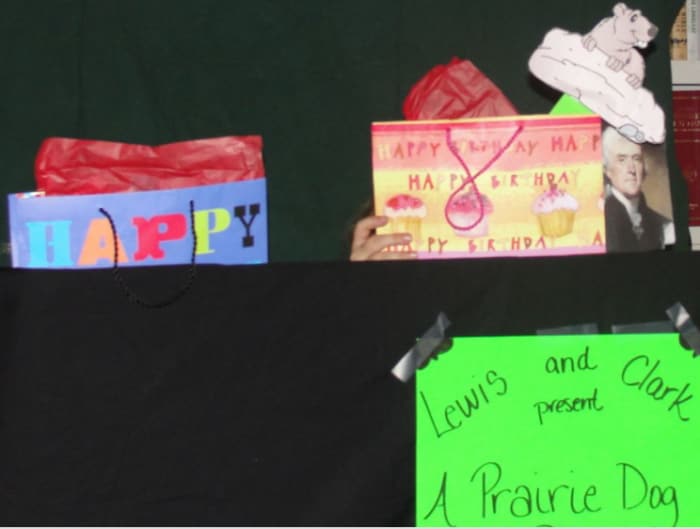
Lewis and Clark Puppet Theater
- Read Luke 9:1-6.
- Ask the children if they have ever gone on a trip. Ask why they went on a trip. Ask what they normally pack when they are going to go on a trip. Tell the children about why you took your most recent trip or why you plan to take a trip soon (to see extended family, to have a family vacation, etc.) Show the children some of the items that you normally pack for a trip.
- In this passage Jesus is sending out His 12 disciples. What is He sending them out to do? What does He tell them to bring? Why do you think Jesus told them to not bring anything? [Allow children to share ideas.]
- When His disciples went out to share about who Jesus was and to heal people, their success or failure did not depend upon what they brought with them. It all depended on Jesus! Something else Jesus later told the people when he sent them out was, “He who listens to you listens to me; he who rejects you rejects me; but he who rejects me rejects him who sent me.” Just as Jesus sent out His disciples, He wants you and me to go to people today and share the good news that the kingdom of God is near. We cannot control their response, whether or not the person responds by becoming a Christian or by laughing at you. We should not become proud and puffed up when people receive the message, and we should not be discouraged when they reject the message. We should just go and tell as if everything depends on Jesus — because it does!
- Today we are going to learn about Lewis and Clark. They were not sent out by Jesus. They were sent out by the President of the United States at the time, Thomas Jefferson. Unlike what Jesus’ disciples did, Lewis and Clark did pack many items with them on their journey and they also brought back some interesting items. Let’s find out what they were.
YOU WILL NEED:
- a suitcase or small bag and a few items you would pack when going on a trip
- Puppet show on Lewis & Clark.
- Ahead of time we created puppets using pictures printed from the Internet & glued them to craft sticks.
- A teacher read “Lewis and Clark: A Prairie Dog for the President” by Shirley Raye Redmond while 2 students hid behind a bed sheet we’d hung over a line that was tied to two pieces of furniture. They held up the appropriate puppets. (The students practiced the puppet show ahead of time.)
- *Alternatively, you can just read the book. “Lewis and Clark: A Prairie Dog for the President” by Shirley Raye Redmond has adorable illustrations, a fun story line, and plenty of historical facts make this a delightful version of Lewis and Clark’s journey!
YOU WILL NEED:
- bed sheet, line/string, appropriate puppets (can be made by printing pictures off the Internet and attaching them to large craft sticks), and Lewis and Clark: A Prairie Dog for the President by Shirley Raye Redmond
Lewis & Clark Lapbooks & Biography Flaps
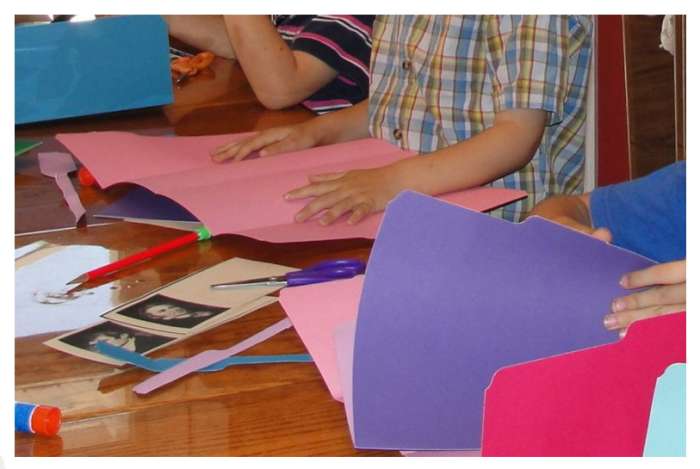
Lewis and Clark Lapbooks
- Lead the children in creating a file folder lapbook as shown at http://www.tinasdynamichomeschoolplus.com/exploring-to-revolution/lewis-and-clark/ . Have children write their names on their file folder lapbook. Have the children write or draw one or more facts about Lewis & Clark and then glue the flaps in their lapbook. Younger children may need assistance.
YOU WILL NEED:
- file folders, biography sheets (pre-cut), writing utensils, & crayons
Louisiana Purchase Performance & Lapbook Page
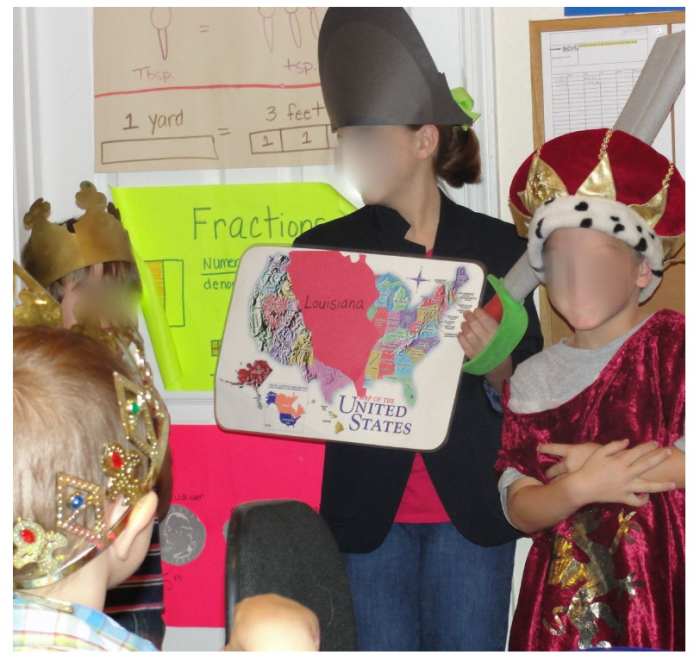
Louisiana Purchase Theater
- Simplified Louisiana Purchase Theater: Dramatize the Louisiana Purchase.
- Prep: Assign everyone a role & give each child an appropriate hat — many of which can be made of construction paper. Staple together a loop of construction paper using strips that are about 1.5 inches thick and 14-16 inches long. (Use your own children’s heads to gauge the size.) After you have the loops, print off needed hats such as a coonskin hat) from the Internet, cut it out, and staple it to the front of the headband. If you have a small group, you can cut out many of the characters. Napoleon & Jefferson are the only 2 you really need.
- Costumes/Props: For our performance we have the Kings of Russia, Spain, and England each wearing crowns. The King of Spain holds a map of America with a piece of construction paper in the middle that is shaped like the Louisiana Purchase. Napoleon has a black hat, a jacket (so he can shove his hand inside), and a foam sword. Talleyrand has a jacket and a white scarf. Livingston & Jefferson have white wigs. Jefferson holds a quill pen (a feather) and a bag of “gold” coins. Lewis & Clark have black hats. Lewis can hold a stuffed dog, Seaman. Everyone else gets a top hat (military-style army hat of that time period), pioneer hat (cowboy hat), or coonskin hat and they are the crew of the Corps of Discovery. Two crew members can hold canoe paddles and 2 can hold rope.
- Procedure: The Mom Narrator feeds the children their lines & they repeat after her.
- Scene 1:The Kings & Napoleon stand up front. A sign that says “Europe” is taped to the wall behind them.
Narrator: In 1800 the rulers of Europe all wanted to rule the world.
Kings & Napoleon: We want to rule the world!
Narrator: Some were more determined than others.
King of Spain: Here, Napoleon, you can have Louisiana in America, but don’t sell it to anyone.
Napoleon: Okay.
Narrator: Napoleon’s fingers were crossed inside his jacket. He wouldn’t keep that promise.
- Scene 2:Livingston and Jefferson are on the other side next to a sign that says, “America.”
Narrator: (show a map of the US) Americans living in the interior of America could trap animals and grow corn, but they needed to sell these items. There weren’t roads over to the East coast. They had to float them down the Mississippi River into the Gulf of Mexico and then over to the East Coast of America of to Europe. There was a problem, though. There was only one way out of the Mississippi River, New Orleans, and America didn’t own New Orleans. Who owned New Orleans? Spain and now France! If France decided they didn’t want Americans to sail through New Orleans, Americans living in the interior would be in big trouble! President Thomas Jefferson knew that Americans needed access to New Orleans. To where?
Everyone: New Orleans
Jefferson: Livingston, I want you to sail to France and offer them up to $10 million to buy New Orleans.
Livingston: Okay!
(Jefferson hands Livingston a bag of coins.)
Narrator: Livingston jumps in a ship (we used a laundry basket) and sails to France. Where does he go?
Everyone: France!
- Scene 3:
Narrator: In France Robert Livingston meets with Talleyrand who works with Napoleon.
Livingston: (to Talleyrand)We would like to buy New Orleans.
Talleyrand: (to Napoleon) America wants to buy New Orleans.
Napoleon: Will they give us $15 millions for all of Louisiana?
Talleyrand: But Napoleon, you’ll lose your land in America. Don’t you want to rule the world?
Napoleon: If I sell America Louisiana, they will become a powerful enemy of England. I hate England! Plus, I need money for weapons for my wars here in Europe. [Hand Talleyrand the map of Louisiana Territory.]
Talleyrand: (to Livingston) Will you give us $15 million for all of Louisiana?
Livingston: I was only supposed to buy New Orleans, but this is such a good deal! Yes, I will purchase all of Louisiana for $15 million.
Narrator: How much?
Everyone: $15 million!
Narrator: Let’s all count out the gold coins together as Livingston gives them to Napoleon’s minister: 1, 2, 3, 4, ..
[Talleyrand hands Livingstone the map of the Louisiana Territory, and Livingstone gets back in his “boat” to sail back to America.]
- Scene 4:
Narrator: Livingston jumps back in the boat and sails back to America. He hands Jefferson the deed to Louisiana.
Jefferson:/Now I need someone to explore this new land. Meriwether Lewis, will you explore this land?
Lewis: Yes, and I’ll get my friend, William Clark to join me.
Clark: And we’ll get a group together to explore all the way to the Pacific Ocean. Who will go with us?
Crew: We will! It’s 1803, so let’s explore to the sea! In 1804 we’ll head out the door!
Narrator: In 1804 the Corps of Discovery, led by Captains Lewis and Clark, explored the Louisiana Territory traveling all the way to the Pacific Ocean and back.
YOU WILL NEED:
- props for play: options include: a sign that says “Europe” & 1 that says “America,” 3 crowns, a map of America with a piece of construction paper in the middle that is shaped like the Louisiana Purchase, (can be made from construction paper), 2 jackets, a foam sword, a white scarf, 2 white wigs (or print off from the Internet and make like you would the hats), a quill pen (a feather), a bag of “gold coins” (fake money or yellow beads), 2 canoe paddles or sticks that can be like oars, 2 pieces of rope, a stuffed dog (preferably black), & hats (3 crowns, 5 black Napoleon-style hats, & 12 top hats) – either toy ones or ones made as follows: Staple together a loop of construction paper using strips that are about 1.5 inches thick and 14-16 inches long. (Use your own children’s heads to gauge the size.) After you have the loops, print off needed hats such as a coonskin hat) from the Internet, cut it out, and staple it to the front of the headband.
- Show children how to fold the Louisiana Purchase Activity Sheet from the lapbook pages. Tell them to write or draw the answers to the questions and then paste the sheet in their lapbooks. Younger children may need assistance.
YOU WILL NEED:
- Louisiana Purchase Activity Sheet (pre-cut), glue sticks, and pencils or crayons
Walking the Trail Journal
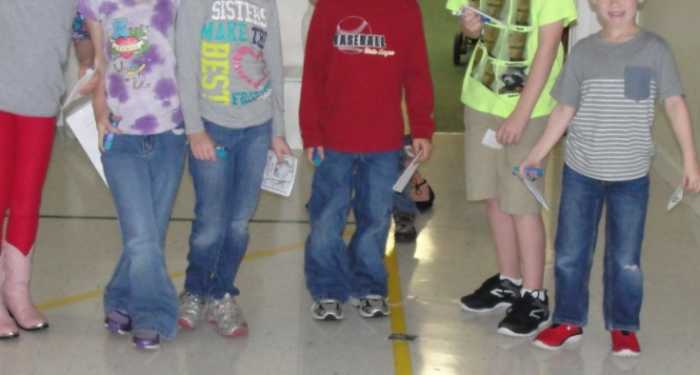
Exploring the Louisiana Purchase with journals
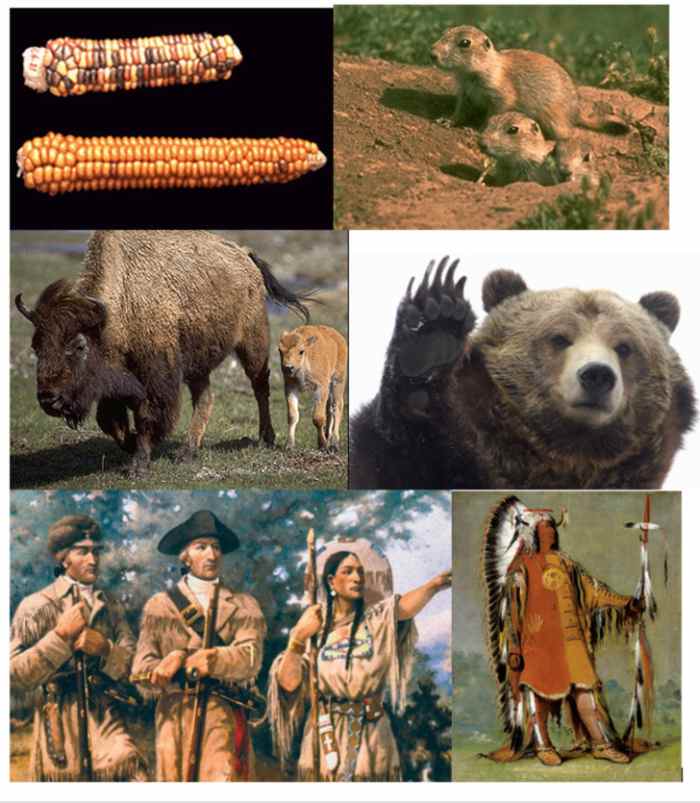
Set 1 of pictures for journal

Baby Carrier and Doll for Sacagawea and Jean Baptiste (Pomp) (optional)
- Pass out a blank journal (computer paper folded together and stapled) to each child. Have them bring along the journal & a glue stick as we follow the trail that Lewis & Clark took. At each “station,” I talk a bit about what Lewis & Clark said & did. Then the children each paste a picture into their travel journal.
- December 1803 – [Paste the picture of the corn.] Lewis & Clark, sent by President Thomas Jefferson to explore the Louisiana Purchase land all the way to the Pacific Ocean, recruit & train their men. You have all been recruited and trained and are now part of the Corps of Discovery. We have to load lots of supplies. Some food we’ll take. Sometimes we’ll trade for food from the Native Americans. [Optional: Have one child carry a bag of snacks and another child carry a canoe oar to pretend you’re in a boat.] —> Walk to next station.
- September 1804 – [Paste the picture of prairie dogs.] We saw a new animal: prairie dogs. We tried to capture them by pouring water down their holes. It didn’t work. —> Walk to next station.
- October 1804 – [Paste the picture of a Mandan man & of Sacajawea.] We will spend the winter with the Mandan Native Americans in North Dakota. We built a fort called Fort Mandan. Charbonneau and his wife, Sacajawea, join the expedition as interpreters and guides.
- December 1804 – [Paste the picture of buffalo/bison.] We had our first buffalo hunt & were able to shoot some for food & clothing.
- February 1805 – [No picture – Just say as you’re walking] Sacagawea gives birth to a baby boy, Jean Baptiste. She calls him “Pompy.” [Optional: Put on a baby backpack & carry a baby doll in the backpack.]
YOU WILL NEED per child:
- blank paper notebook (I used plain copy paper, folded them in half, cut them in half, stapled them together, & punched with holes so it can go in the history notebook.)
- a picture of each of the above animals, people, & places printed & cut out . The pictures came from these 3 websites:
http://teacher.scholastic.com/activities/lewis_clark/prepare.htm , https://www.tinasdynamichomeschoolplus.com/exploring-to-revolution/lewis-and-clark/ , & https://www.sierraclub.org/sites/www.sierraclub.org/files/endangered_species.pdf
- glue stick
- Optional props: bag of snacks, canoe oar(s), baby backpack with a baby doll
Sacajawea Presentation & Lapbook Page
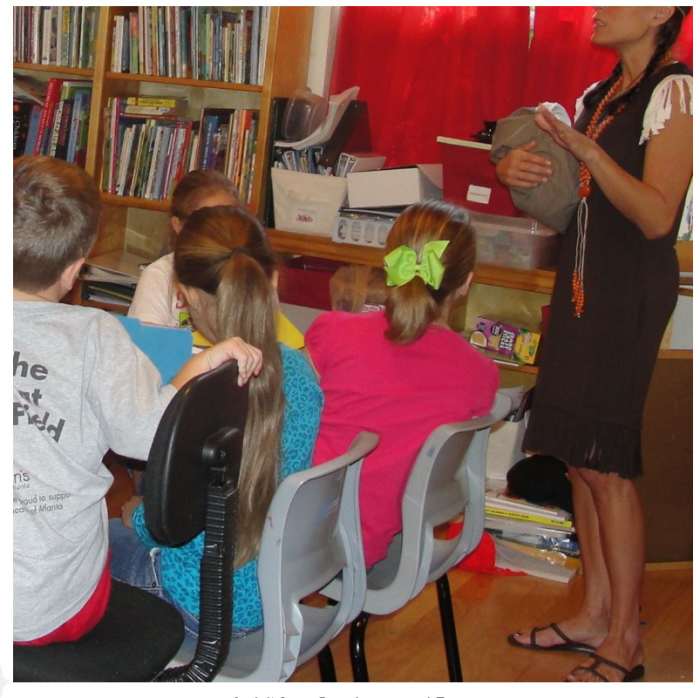
Meeting Sacajawea and Pomp
- Meet Sacajawea. While children are gluing the above notebook trail sheets, have a parent/teacher dress in a Native American costume and pretend to be Sacajawea. She can tell the children about “her” adventures with Lewis and Clark. Don’t forget to include a toy doll to be your baby, Pomp. (Good book for background info: “The Value of Adventure: The Story of Sacagawea” by Ann Donegan Johnson)
YOU WILL NEED:
- Native American costume & a toy doll
Continuing on the Trail

Set 2 of pictures for journal
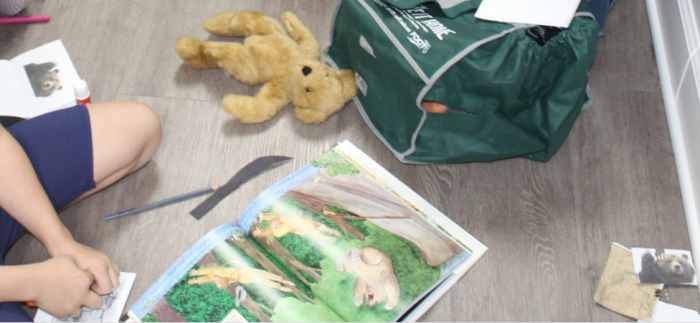
Bag of snacks, canoe oars, & “grizzly bear” teddy bear with construction paper 7-inch claws
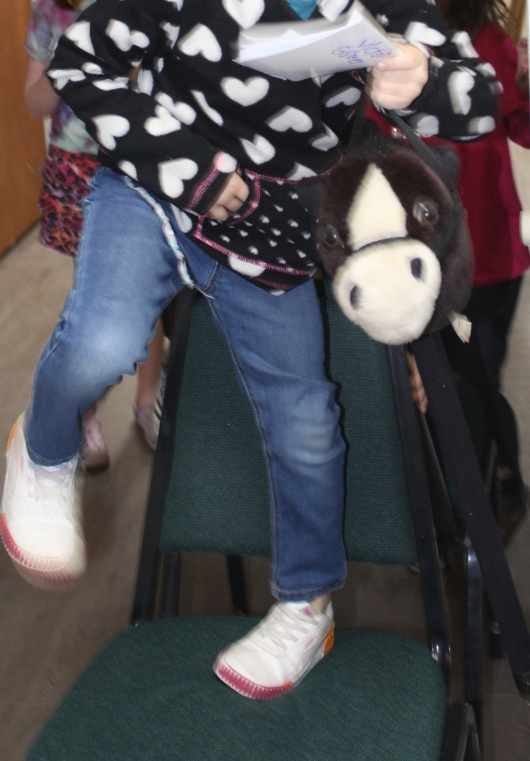
Shoshone stick horses used to cross the “Bitterroot Mountain” chairs
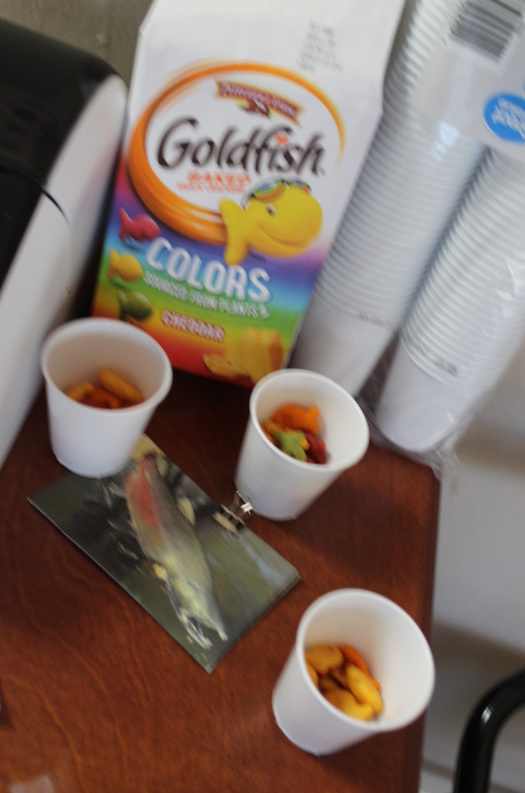
Goldfish cracker “salmon” snack
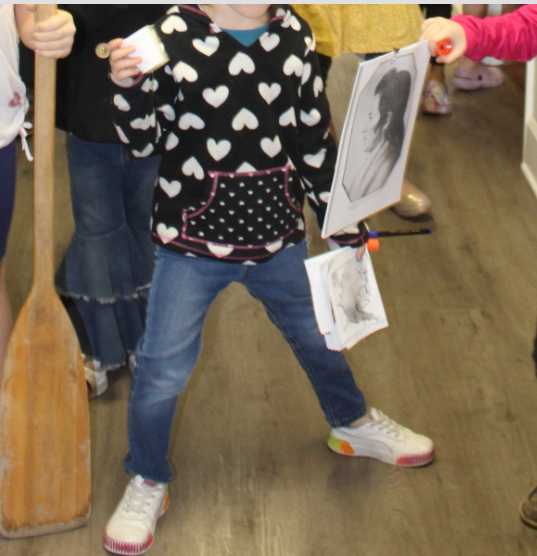
Return trip by boat (using oars) with a photo of the Mandan chief that joined them
- Continue on to the next stop on the “trail.”
- August 1805 – [Paste the picture of a Shoshone man.] We meet a group of Shoshone Native Americans. Their chief, Chief Cameahwait, turns out to be Sacagawea’s brother. Sacagawea helps us trade for horses to get us across the mountains. [Optional: Lay down canoe oar & pick up stick horses.] —> Walk to next station.
- September 1805 – [Paste the picture of the map of the Bitterroot Mountains.] We have to cross the snowy Bitterroot Mountains. We’ll pretend these chairs are the mountains. We almost run out of food. In order to not starve to death, we have to eat a horse, which we really don’t want to do. [Optional: Pretend to eat one of the stick horses.] —> Walk to next station.
- September 1805 – [Paste the picture of a Nez Perce man & salmon.] Thankfully a group of Nez Perce Native Americans give us fresh salmon and new clothes. [Optional: Eat some goldfish crackers as the “salmon”.] —> Walk to next station.
- November 1805 – [No picture – Just say as you’re walking – I had this stop be at the bathroom & turned on the water faucet] – We arrived at the Pacific Ocean! After spending the winter at Fort Clatsop we headed back home & arrived in St. Louis, Missouri in September 1806 with out journals to report on all they we did & saw. [Optional: Go outside & draw a picture in the journal of something you see on the other “coast” of the house.]
- Walk back to the main meeting room, including stepping over the “Bitterroot Mountain Chairs”. If desired, also switch out the horses for the canoe oar and pick up a picture of Big White (the Mandan Chief) when passing the Fort Mandan stop as the chief went back with the Corps of Discovery to visit Thomas Jefferson.
- If parents or other children are around, ask them to cheer for you all as you return from your journey since the the Corps of Discovery was welcomed with cheers when they returned to St. Louis. Many people had believed they’d died and would never return.
New Plants and Animals
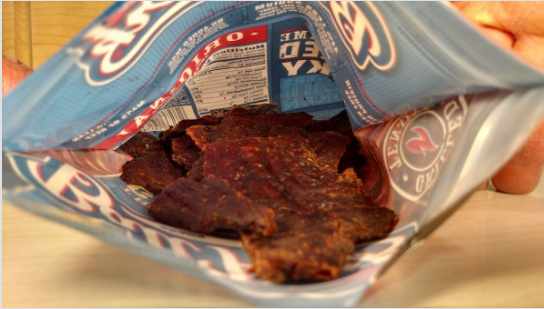
“Dried Bison” beef jerky
- When Lewis & Clark returned from exploring, they gave a report on what they discovered. They not only shared about the land and Native Americans, they also discussed the new plants and animals they saw.
- Ask the children to share about some of the animals they “saw” while on the trail.
- Share about more new ones they came across. Some good resources include http://en.wikipedia.org/ , “Plants on the Trail with Lewis and Clark” by Dorothy Hinshaw Patent, and “Animals on the Trail with Lewis and Clark” by Dorothy Hinshaw Patent.
- If you have stuffed animals/puppets of some of the animals and/or specimens of some of the plants, show those as well.
- Some of the animals to mention are: bison, prairie dogs, grizzly bears, elk, wolves, coyotes, salmon, etc.
- Some of the plants to mention include: Osage orange (the first plant Lewis collected on his expedition), chockcherry trees (it was used by Lewis as a medicine on the expedition), wild Jerusalem artichokes (gathered by Sacagawea to feed the Cops of Discovery, coneflower (sent back to St. Louis as an example of a plant used for medicine by Native Americans), ponderosa pine trees (used by the expedition to make canoes — burning out the centers as shown to them by the Nez Perce), blue camas (its bulbs fed to the starving Corps of Discovery by the Nez Perce), etc.
YOU WILL NEED:
- Photos of some of the new animals and plants Lewis & Clark saw
- Tasting some of the foods with Lewis & Clark.
- Sanitize/wash children’s hands.
- Mention how the men not only recorded all these species, but they also made meals out of many of them.
- Give each child a napkin. Let them taste a bit of alfalfa sprouts, sage, & dried deer meat (or beef or turkey jerky). If you come across other plants and/or animals that Lewis & Clark came across while on their journey, feel free to bring them to show and/or feed the children.
YOU WILL NEED:
- alfalfa sprouts, dried sage (an herb), deer/beef/turkey jerky, napkins, your computer to show pictures (optional), stuffed animals/puppets of animals Lewis & Clark saw (prairie dog, bear, skunk, woodpecker, eagle, etc.) (optional), & examples of plants they saw (juniper, alfalfa, sage, etc.) (optional)
- Show children how to fold the Plants Activity Sheet & the Animal Activity Sheet from the initial lapbook page. Have children complete them either by writing in them or drawing on them. Have them paste the sheets in their lapbooks. Younger children may need assistance.
YOU WILL NEED:
- Plants Activity Sheet, Animals Activity sheet (pre-cut), glue sticks, and pencils or crayons
Review
- 5 minute review of what we learned: What is something you learned about Lewis or Clark today? [Allow a few children to answer.] Who sold the Louisiana Territory to America? (France/Napoleon) Who was the President of the United States at the time who purchased the Louisiana Territory? (Thomas Jefferson) Why did Napoleon want to sell America that land? (He doesn’t want England to get it and he needs money to buy more weapons for his battles in Europe) How much money did America pay for the Louisiana Territory? ($15 million) What year did they buy it? (1803) What new plants did Lewis and Clark find as they explored this new area? [Allow a few children to answer] What new animals did Lewis and Clark find as they explored this new area? [Allow a few children to answer] Who was the Native American woman guide and translator who went with them? [Sacajawea] What was something you learned about Sacajawea? [Allow a few children to answer.] What was your favorite activity from today? [Allow all the children to answer.]
- Allow children to select their assigned person for the end of the unit presentations.
Our Favorite Children’s Books
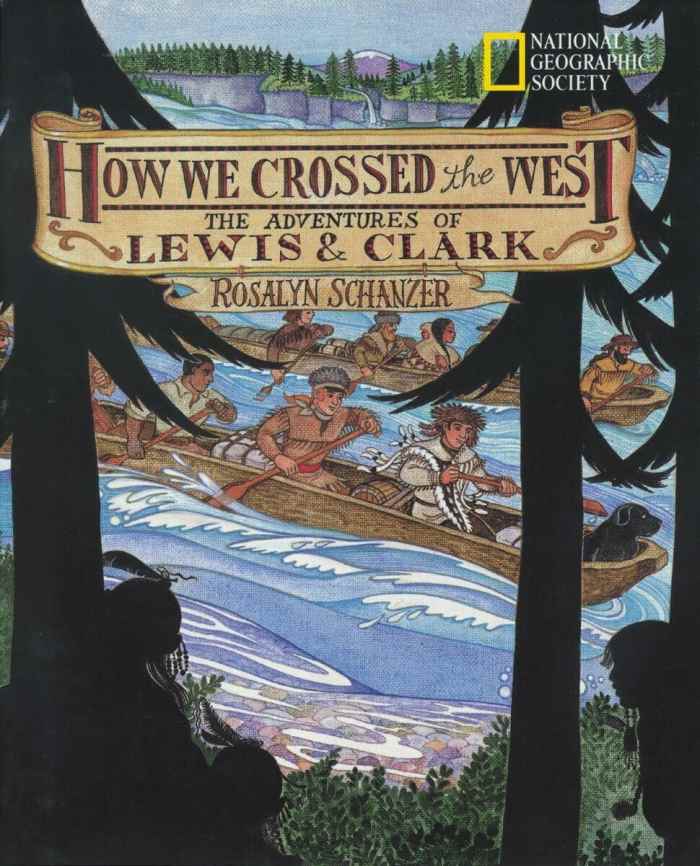
How We Crossed The West: The Adventures Of Lewis And Clark by Rosalyn Schanzer – Book image is from amazon.com
We read through a huge stack of books, and these were our favorites (in addition to the one we used in the above lesson):
- Seaman’s Journal: On the Trail With Lewis and Clark by Patti Reeder Eubank which is a 32 page book that has delightful illustrations and is all the more interesting because it is told from the perspective of Lewis’ Newfoundland dog, Seaman. Both my boys loved this book. Even my 2 year old sat through much of it as she enjoyed seeing the “doggie” on every page.
- How We Crossed The West: The Adventures Of Lewis And Clark by Rosalyn Schanzer was our a favorite picture book. It has great, historically accurate illustrations and information. My boys laughed at some of the scenes. It also includes a nice map of where they went.
- Thomas Jefferson’s Feast (Step Into Reading: Level 4) by Frank Murphy
- Women Who Broke the Rules: Sacajawea by Kathleen Krull
- Sacajawea: Her True Story (Penguin Young Readers, Level 4)
- Thomas Jefferson: Life, Liberty and the Pursuit of Everything by Maira Kalman
- Lewis and Clark for Kids: Their Journey of Discovery with 21 Activities (Volume 9) (For Kids series) is great if you’d like to extend your study on Lewis and Clark by adding more activities or getting more in depth information.
Our Bible Study Book During This Unit
Ready for the next lesson?
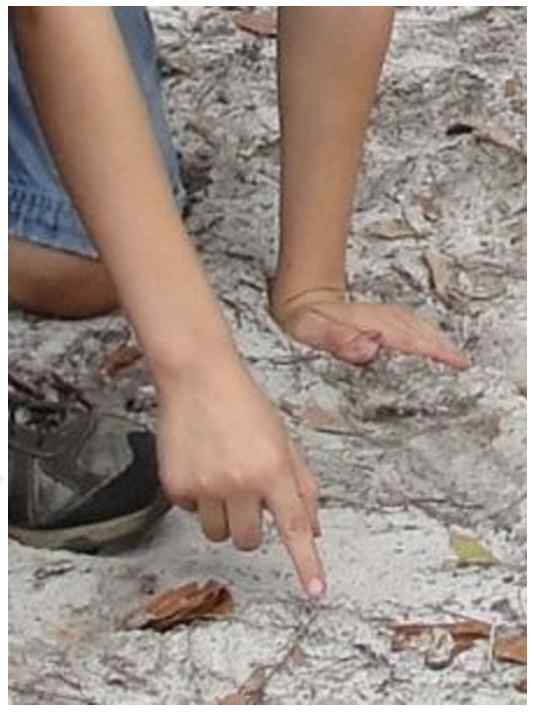
Tracking expedition from Lesson 1: Daniel Boone, Frontiersmen, & Tracking Lesson
Fry up Daniel Boone’s favorite fried chicken recipe and talk a walk outdoors in search of tracks and you study frontiersmen and tracking. Dramatize the purchase of Louisiana from France and more as you study Lewis and Clark! Build a pioneer wagon and the transcontinental railroad. Pan for “gold” and deliver mail on the pony express (using bicycles rather than horses). Wrap up the unit on Westward Expansion and pioneers with a wagon roundup dinner and presentations on various frontiersmen and pioneers.
- Daniel Boone, Frontiersmen, & Tracking Lesson – This is part 1 of a 4 part hands-on unit study on Westward Expansion and Pioneers. Go on a nature walk to practice tracking, cook Daniel Boone’s favorite fried chicken recipe, create salt maps of the US, and more!
- Lewis and Clark Lesson – This is part 2 of a 4 part hands-on unit study on Westward Expansion and Pioneers. Dramatize the Louisiana Purchase, taste and see some of the plants and animals Lewis & Clark discovered on their journey, visit with Sacajawea and Pomp, create a Lewis and Clark lapbook, and more!
- California Gold Rush, Pony Express, & Transcontinental Railroad Lesson – This is part 3 of a 4 part hands-on unit study on Westward Expansion and Pioneers. Pan for “gold,” bake Gold Rush Sourdough Biscuits, race to deliver mail on the Pony Express, build the Transcontinental Railroad out of craft sticks, and more!
- Oregon Trail Lesson – This is part 4 of a 4 part hands-on unit study on Westward Expansion and Pioneers. Build prairie schooner, head out on a scavenger hunt using only landmarks to navigate, bake Pioneer Persimmon Pudding, practice pioneer children’s chores, and more!
- Westward Expansion & Pioneers Presentations & Field Trip Ideas – The end of the unit activity and presentations for our 4 part hands-on unit on Westward Expansion and Pioneers was a Pioneer Wagon Roundup Dinner. Children dressed as various famous frontiersmen or pioneers and presented on their assigned person. Afterward we had a pioneer themed dinner around a campfire. Also included are the field trips we attended while studying this unit.
KONOS Curriculum
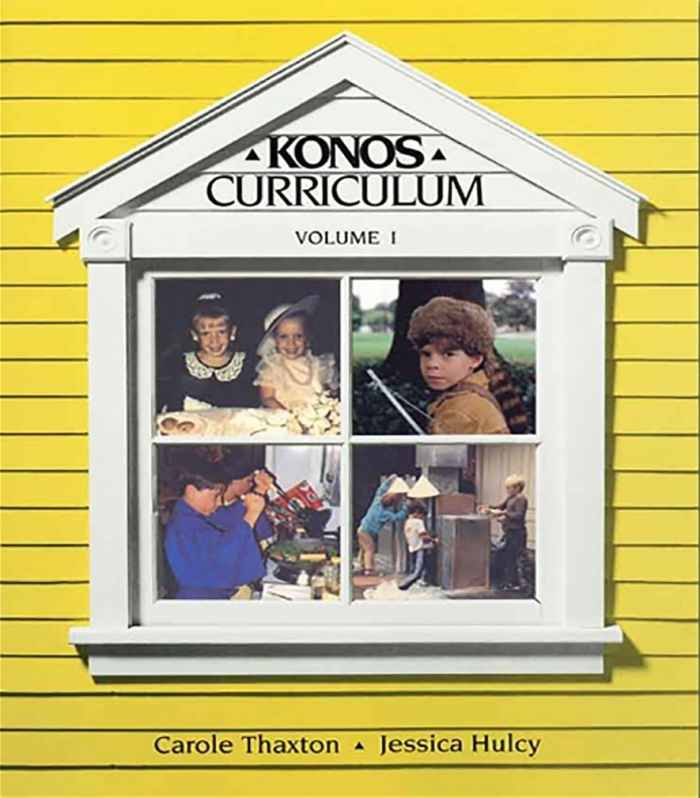
KONOS Volume I
Would you like to teach this way every day?
I use KONOS Curriculum as a springboard from which to plan my lessons. It’s a wonderful curriculum and was created by moms with active boys!
© 2011 Shannon
Would you have joined the Corps of Discovery? – Or just leave me a note. I love getting feedback from you!
anonymous on January 22, 2012:
Your creative lesson plans will certainly be great reinforcements for children who will love learning about the Lewis and Clark expedition, it was a favorite of mine as a child and made my imagination work over time.
Jeanette from Australia on June 30, 2011:
What creative ideas! Well done.
JoyfulPamela2 from Pennsylvania, USA on June 25, 2011:
This is wonderful! Next time we study L&C, we will do your activities. Thanks for adding my Lewis & Clark lens here, I will add yours to mine. : )
Leave a Reply