Hands-on American History Lesson Plan on Immigrants Coming to America from 1820-1930
This is the 30th lesson in a series of 35 hands-on lessons covering U.S. American History. This lesson focuses on immigrants coming to America in the late nineteenth and early twentieth centuries. I used this plan while teaching a 45 minute history class for children in Kindergarten, 1st, & 2nd grades. Each lesson includes a biography report, history notebook page, history song, our favorite children’s books, YouTube video, a history joke, & a variety of hands-on activities to make each lesson engaging & memorable. Use these fun lessons with your classroom, homeschool, after-school program, or co-op!
Joke: Why does the Statue of Liberty stand in New York Harbor?
Because she’s a statue and can’t sit down!
Student Biography Presentation: Andrew Carnegie
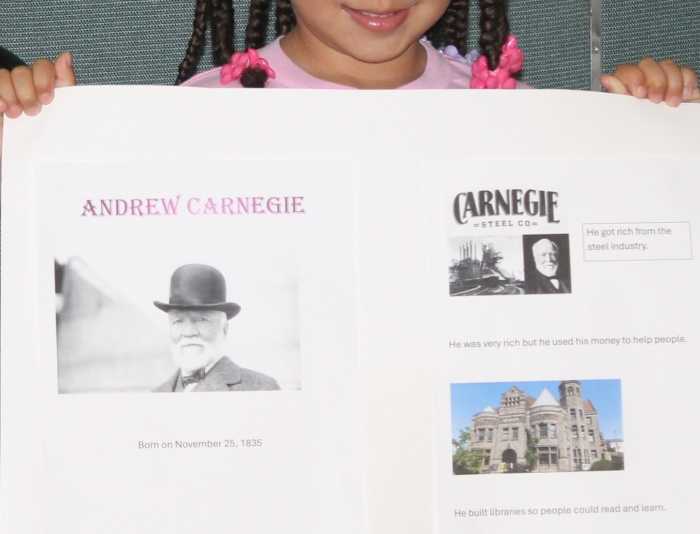
Student Biography Presentation on Andrew Carnegie
- Student biography presentation on Andrew Carnegie
- Mention that in 1848, when he was 12 years old, Andrew Carnegie immigrated with his parents from Scotland to present day Pittsburgh, Pennsylvania. He was one of the many immigrants that came to America who created a better life for themselves, for their families, and for our nation.
Review & Presidents Song
- Review questions: When the Southern states broke away from the Union after Abraham Lincoln was elected, what did they call their new country? (The Confederate States of America) In what proclamation did Abraham Lincoln freed the slaves in the Confederate States of America? (Emancipation Proclamation) Abraham Lincoln gave a famous speech to commemorate/remember the brave soldiers who fought at the Battle of Gettysburg; what is is famous speech called? (The Gettysburg Address) Who surrendered to Ulysses S. Grant at the Appomattox Courthouse? (General Robert E. Lee) What is the time period we studied today that happened after the American Civil War? (Reconstruction) George Washington Carver tried to convince poor Southern farmers to stop growing cotton and to start growing which plant? (Peanuts) George Washington Carver was a professor at the Tuskegee Institute; who started Tuskegee Institute at which ex-slaves and children of slaves could get a college education? (Booker T. Washington) In the “Wild West”, what were cowboys moving North to get to cities or train stations? (Cattle) Who started a famous Wild West Show to introduce the Wild West to the rest of America and the world? (Buffalo Bill Cody) Who was the famous young lady who starred in his show by her accurate shooting? (Annie Oakley)
- Sing through the entire President’s Song 2 times while either showing the video or flipping through pictures of the Presidents. (We add in “Trump, Biden, Trump” at the end of the song.)
You will need:
- Screen to show the below video or a book showing Presidents or point to their pictures on a President place mat
Irish Famine Immigrants
- In the mid-1800s, around the time the Civil War was about to start, many people from Europe sailed to American in search of a better life.
- People who move from one country to live in a different country are called immigrants.
- Many of them came to America because they heard there was plenty of land and plenty of opportunities, which was very different from where they were living in Europe, where they were very poor.
- One of the biggest groups that came at the time were the Irish from Ireland. [Point to Ireland on a map.]
- [Show a potato if you have one.] Potatoes grow well in Ireland, so they grew lots of potatoes and at lots of potatoes….until a disease struck the potatoes and made them rot instead of grow. Have you ever seen or smelled a rotting potato? Can you imagine if your entire field of potatoes was like that? What would you do?
- Some of them stayed and many of them died because they didn’t have enough food. Some of them came to America.
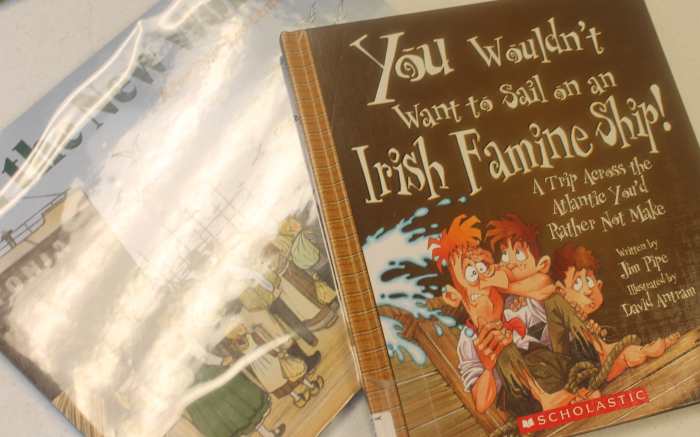
- Flip through and summarize You Wouldn’t Want to Sail on an Irish Famine Ship by Jim Pipe. (Note: They initially land in Canada but eventually go to America.)
You will need:
- Map for showing Ireland
- You Wouldn’t Want to Sail on an Irish Famine Ship by Jim Pipe or other book on Irish immigrants
- Potato (optional)
Statue of Liberty Introduction
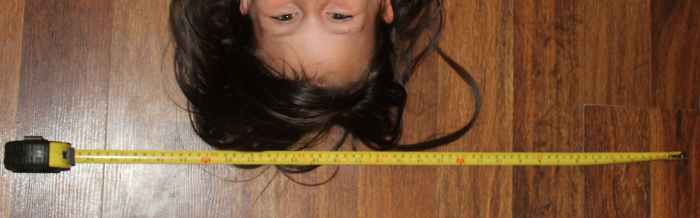
Comparing the length of an eye of the Statue of Liberty with the length of an eye of a student
- After the Statue of Liberty was finished in 1886, the Statue of Liberty was the welcoming symbol to the immigrants coming to America through the New York City port.
- Flip through and summarize (or read) The Story of the Statue of Liberty by Betsy Maestro.
- Discuss the dimensions of Statue of Liberty. Use a tape measure to show some of the different dimensions. For example, the width of one eye is 2ft 6 in. Pull out the tape measure that distance and hold it up next to one of the children’s eyes to give them an idea of her massiveness.
You will need:
- The Story of the Statue of Liberty by Betsy Maestro or other book on the Statue of Liberty
- At least 1 tape measure
Statue of Liberty Play-doh Models
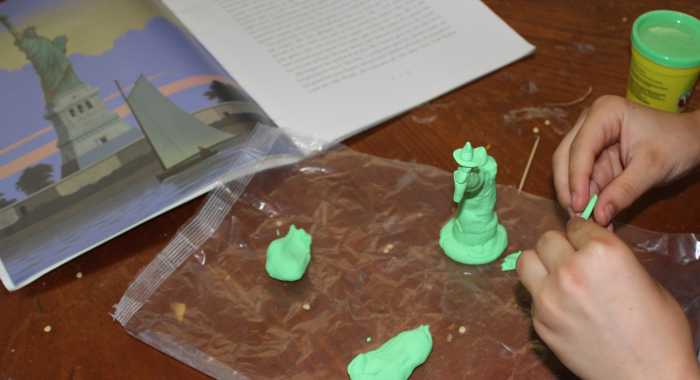
Creating a model of the Statue of Liberty using green Play-doh
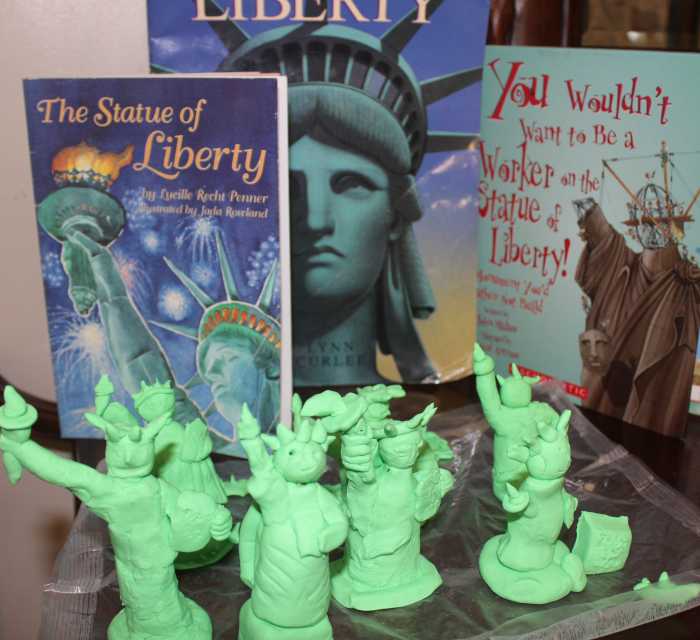
A few of the Statue of Liberty models
- All students to create a model of the Statue of Liberty using green Play-doh and toothpicks.
- Make sure they have copies of the Statue of Liberty to look at while they create their models. Students can work in pairs if they would prefer.
- After most of the students have finished, line the models around a table and have the children walk around to admire each one (while the last few children finish up).
You will need:
- green Play-doh (I gave each child or pair of children their own container)
- toothpicks
- wax paper, paper plates, or other cover for the table
- pictures or illustrations showing the Statue of Liberty (enough so each pair has one to view)
Immigrants Coming to America
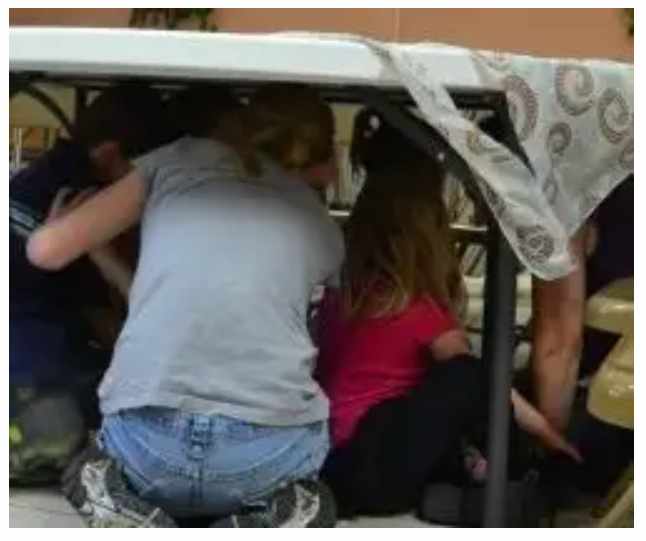
Cramming together in the “steerage” while dramatizing arriving at Ellis Island
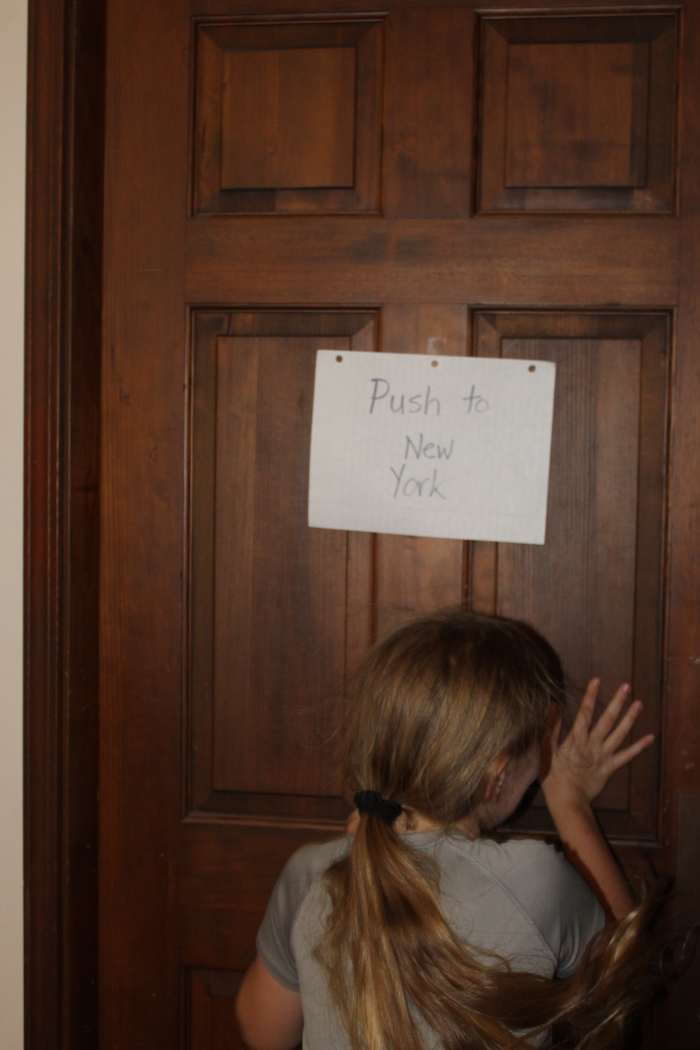
Dramatizing an immigrant pushing the door to enter America
- Flip through and summarize (or read) Coming to America : The Story of Immigration by Betsy Maestro.
You will need:
- Coming to America : The Story of Immigration by Betsy Maestro or other book on immigrants coming to America through Ellis Island
- Dramatize the immigration process.
- Tell the children that they are going to pretend to be immigrants heading to Ellis Island. Have them each grab their backpack (their “luggage”) and head to the “ship” (a table) that will take them to America.
- Because they’re poor, they will have to travel in steerage (below deck). They should sit under the table. We pretended that one table was our ship, so everyone squished in under the table.
- I told the children to rock back and forth like they were on a ship as they crossed the Atlantic Ocean.
- Point out that we can finally see the Statue of Liberty. (Use one of the clay models they made earlier.)
- After everyone “arrives” at Ellis Island and gets out from under the table, have them line up.
- One teacher/parent will pretend to be a custom’s agent and the other will be a doctor. The custom’s agent will ask them SOME questions such as, “What is your name? Your birthplace? Your birthday? Do you have a criminal record? Who paid for your passage? Where will you live? (Many of them can say, “The YMCA” or mention a relative they will be living with.) Can you read and write? *** Ask younger children fewer questions. *** If desired, give a few children new Americanized names.
- The doctor will use a flashlight to quickly look in their mouth, will tell them to turn around, and will tell them to cough. You can pretend to listen to them using a stethoscope.
- I had 2 papers with an X on them and the rest of the papers were blank. Each child selected a paper. If a child selected a paper with an X, they have to pretend to have TB and cough. They will be sent to the hospital or forced to return to their native country. (Note: Make sure especially sensitive children do not get the papers with an X on it.)
- Everyone else will get to go to America by pushing or opening a door that says, “Push to New York.”
You will need:
- a flashlight (optional)
- a small piece of paper for each child, most of them blank and 2 with an X on it
- tape and a sign that says, “Push to New York”
Review
- Review: What do we call people who move from one country to live in a different country? (immigrants) What is something you learned about Irish Immigrants? (Answers can vary) After 1886, what statue greeted immigrants when they arrived in New York (Statue of Liberty) What is something you learned about the Statue of Liberty? (Answers can vary) What is the name of the island in New York at which many immigrants arrived? (Ellis Island) Describe what it was like for immigrants to arrive on Ellis Island. (Answers can vary)
- Assign next week’s biography report on Teddy Roosevelt.
A Book to Read Each Day
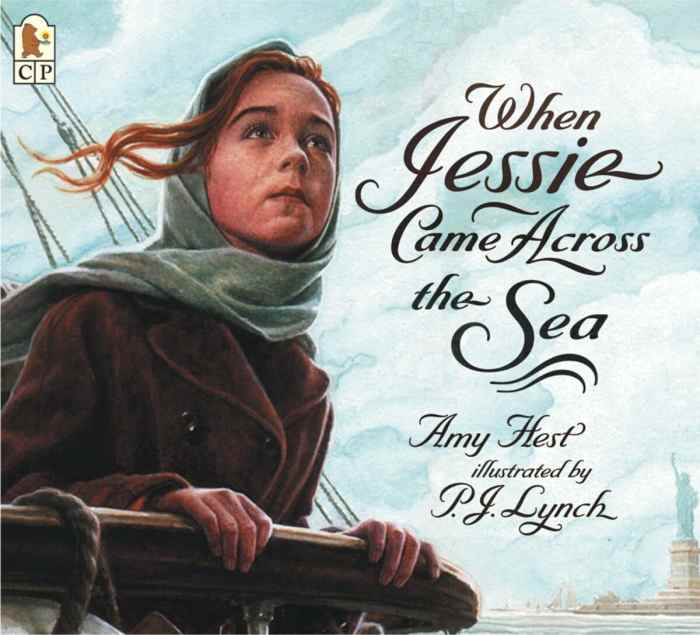
When Jessie Came Across the Sea by Amy Hest (Image is from amazon.com)
We read through a large stack of books. In addition to the book used in this lesson, these were our top 7 favorites:
- When Jessie Came Across the Sea by Amy Hest
- The Man Who Loved Libraries : The Story of Andrew Carnegie by Andrew Larsen
- If Your Name Was Changed At Ellis Island by Ellen Levine – This is a long picture book that we read over a few days. We learned so much from reading it.
- The House That Jane Built : A Story about Jane Addams by Tanya Lee Stone
- You Wouldn’t Want to Be a Worker on the Statue of Liberty! : A Monument You’d Rather Not Build by John Malam
- Gittel’s Journey: An Ellis Island Story by Lesléa Newman
- Her Right Foot by Dave Eggers – This looks like a really long book because it has lots of pages but most pages don’t have many words.
History Song to Memorize About Immigrants Coming to America
Looking for all my lessons?
AMERICAN HISTORY FOR EARLY ELEMENTARY:
Native Americans & Columbus Lesson
Jamestown Lesson
Pilgrims Lesson
Thirteen Colonies Lesson
French and Indian War Lesson
Colonial Period & Revolution Rumblings Lesson
Boston Massacre & Boston Tea Party Lesson
First Shots & Declaration of Independence Lesson
American War for Independence Battles Lesson
Valley Forge & Battle of Yorktown Lesson
American Literature Lesson & American War for Independence Review
Colonial Christmas Party
Constitution Lesson
Three Branches of Government Lesson
President George Washington Lesson
Louisiana Purchase Lesson
War of 1812 Lesson
Monroe Doctrine Lesson
Trail of Tears Lesson
Oregon Trail & Battle of Alamo Lesson
California Gold Rush & Pony Express Lesson
American Industrial Revolution Lesson
Underground Railroad Lesson
Abolitionists & Women Suffragists Lesson
Civil War: The Confederate States & Abraham Lincoln Lesson
Civil War Battles Lesson
Civil War Party & End of Year Review Game
BONUS LESSONS (if you have room for a few extra classes):
Reconstruction Lesson
Wild West Lesson
Immigrants Lesson
Tycoons & Theodore Roosevelt Lesson
World War I Lesson
Roaring Twenties Lesson
Great Depression and the 1930s Lesson
World War II Lesson
ALL MY LESSONS:
Fun, Free Hands-on Unit Studies (My Lessons in All Subjects)
© 2025 Shannon
Leave a Reply