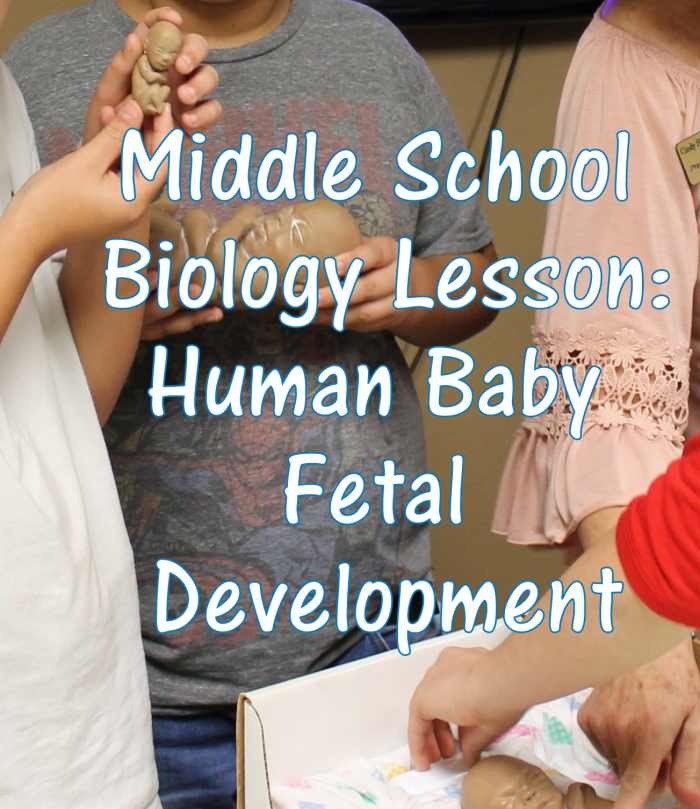
Middle School Biology Lesson on Human Baby Fetal Design & Development
This is the 9th lesson in a series of 32 hands-on lessons covering middle school biology. This lesson focuses on the amazing development and design of a human baby. A guest speaker from our local pregnancy care center spoke with our class. If this isn’t an option, I included the material she presented so that you can simply present the same material to your class. I also made a few alternative guest speaker suggestions. I used this plan while teaching a 55 minute middle school biology class. Each lesson plan includes homework assignments and a variety of hands-on activities to make each lesson engaging & memorable. Use these fun lessons with your classroom, homeschool, after-school program, or co-op!
These lessons are written for a class that meets once a week. If your class meets 5 days a week, simply do this lesson one day a week and use the homework assignments (at the bottom of the page) for the work for the other days of the week.
Homework Review
- Hand out extra credit tickets to anyone who did the extra credit.
- Ask each student to share one change they healthier change they made this past week.
- Quickly go over the homework questions. (I give out tickets for students who answer the questions.)
- For those students who did the extra credit, ask them something they thought was interesting from what they learned by looking at their ultrasound picture or from talking with their parents.
Pregnancy Care Center Guest Speaker & Alternative Options
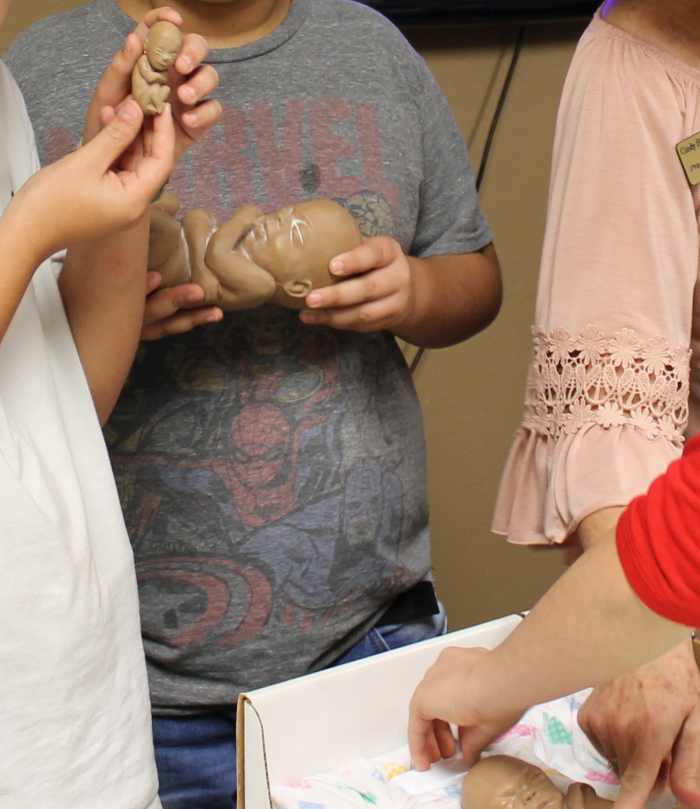
Comparing the size and development of model babies. The smallest one is modeled after a 12 week old baby.
For today’s class we invited a local pregnancy care center counselor and sonographer to speak to our class about the amazing design and fetal development of a baby.
If this isn’t an option, you could just do what she did with our class, which I listed below. Alternately, you could ask someone else to speak to your class such as a physical trainer, dietitian (our local 4-H program has one on staff), pediatrician, or other person who works in the medical field. If you have a small enough group, you could instead tour a pregnancy care center, fitness club, or doctor’s office.
Vocabulary & Overview of Pregnancy
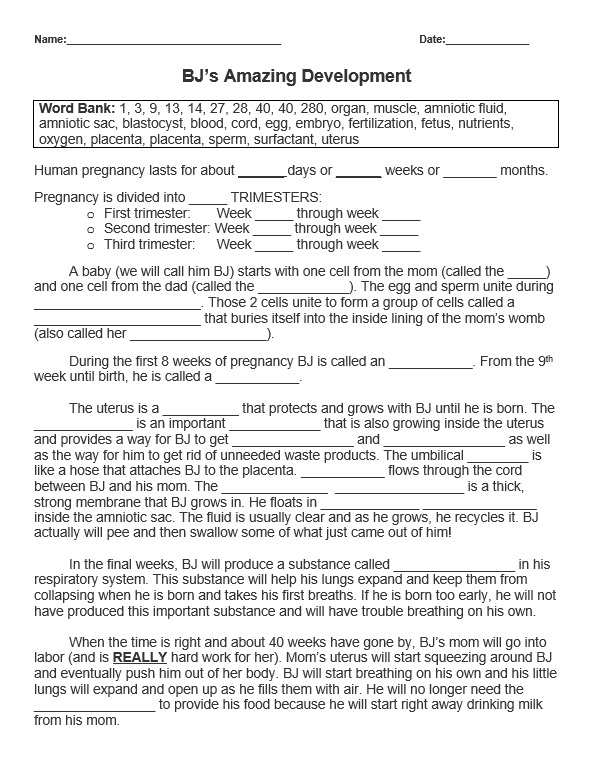
Worksheet for Activity 5 (The answers are below.)
- Introduce the guest speaker.
- Have a student read Psalm 139:13-17 & briefly discuss what it means.
- Quickly go over what each of the vocabulary words written on the board mean: amniotic fluid, amniotic sac, blastocyst, blood, cord, egg, embryo, fertilization, fetus, nutrients, oxygen, placenta, sperm, surfactant, uterus. Add in a few stories as you discuss some of the words.
- Have students guess at the answers as you work together to complete the above fill-in-the-blank worksheet about the development of Baby BJ.
You will need:
- copies of the above worksheet
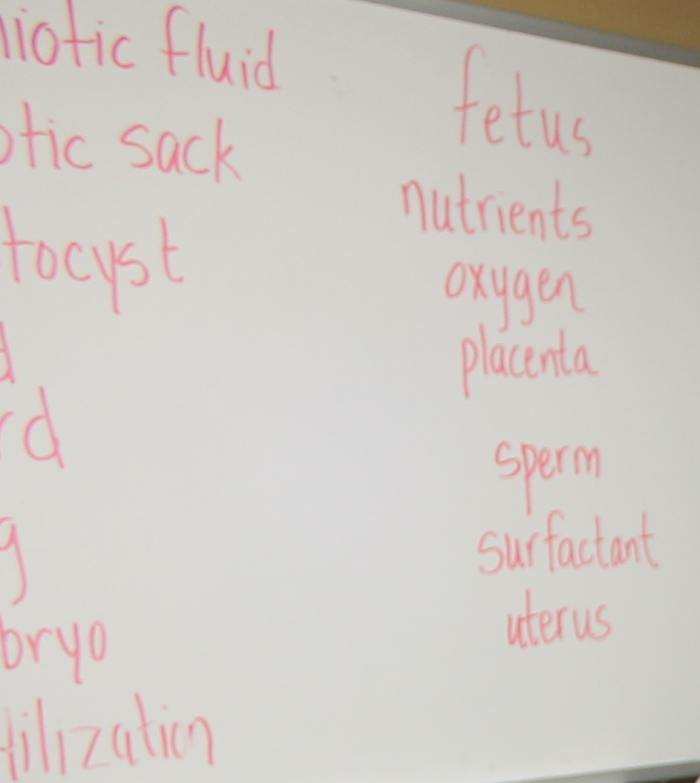
Word bank on the board for fill-in-the-blank worksheet on human babies
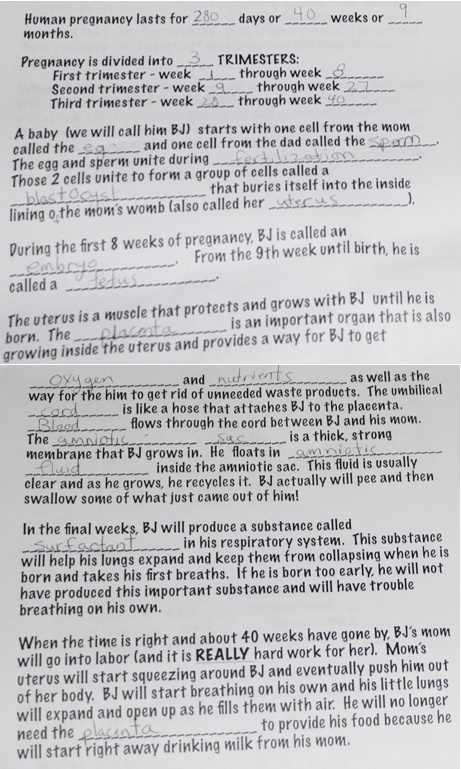
A student’s Fill-in-the-Blank Worksheet on the development of Baby BJ – ***Note that Trimester 1 ends at 13 weeks and Trimester 2 begins at 14 weeks.
Fetal Development
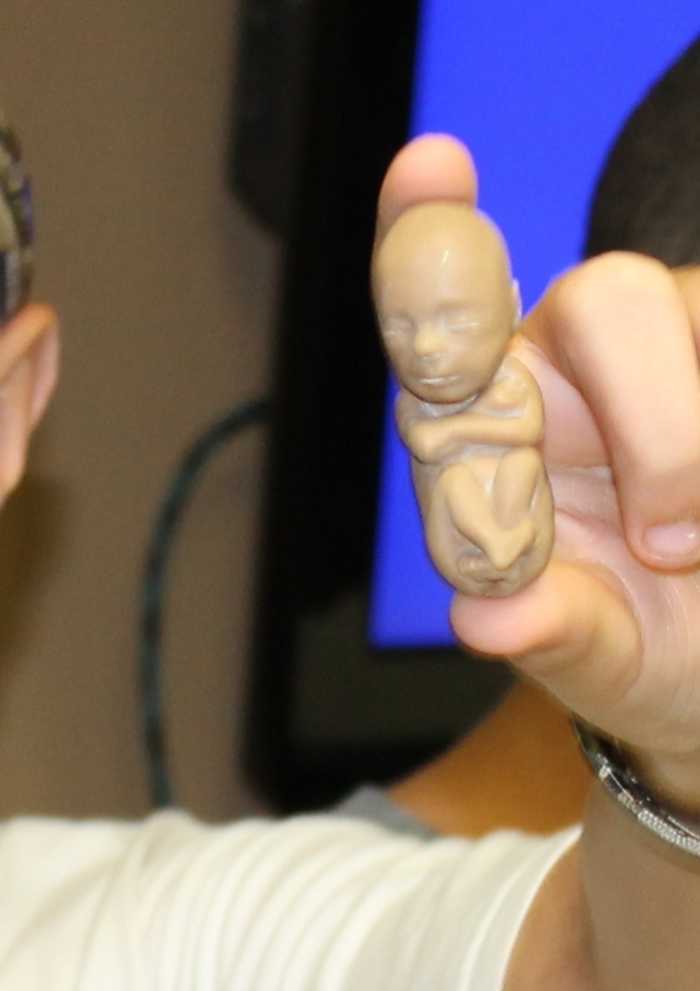
A 12 week old baby model
- Show fetal baby models. Allow students to hold them. Point out how perfectly formed a 12 week old baby looks.
You will need:
- fetal baby models (Our local pregnancy care center gives out the 12 week old models, so you could contact your local center to see if they have any.)
- Watch a video about the week by week development of a baby. We watched a DVD with similar info as the below video, though the one we watched had realistic-looking babies.
You will need:
- a laptop or TV to play the below video or other video showing the development of a baby
Fetal Development Matching Game
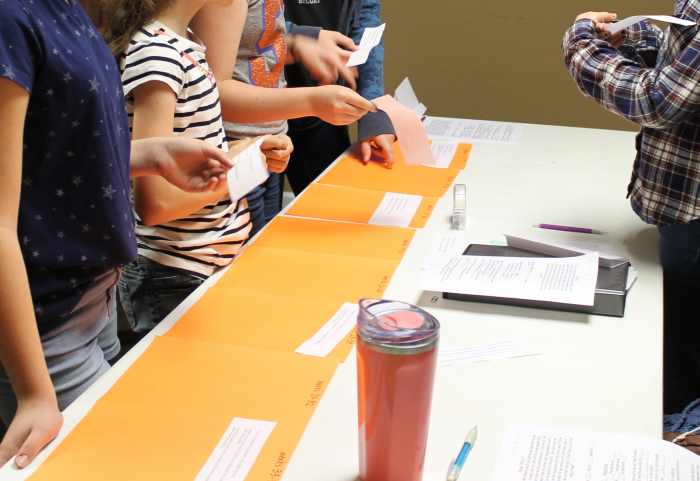
Fetal Development Matching Game
- Divide the students into groups. Give each group a set of slips of paper that tell the main fetal developments of each week. Have each student group work together for 5 minutes to match the developments with the correct section of weeks.
You will need per group of about 5 students:
- sheets with the following week numbers on them: Weeks 3-7, Weeks 8-11, Weeks 12-15, Weeks 16-19, Weeks 20-23, Weeks 24-27, Weeks 28-32, Weeks 33-36, Weeks 37-40
- strips of paper listing out the main developments of each week (which can be found at https://www.babycenter.com/fetal-development-week-by-week .)
- Go over the correct answers. See which group got the most correct. If desired, pass out a prize to the winning team.
You will need:
- a prize such as candy (optional)
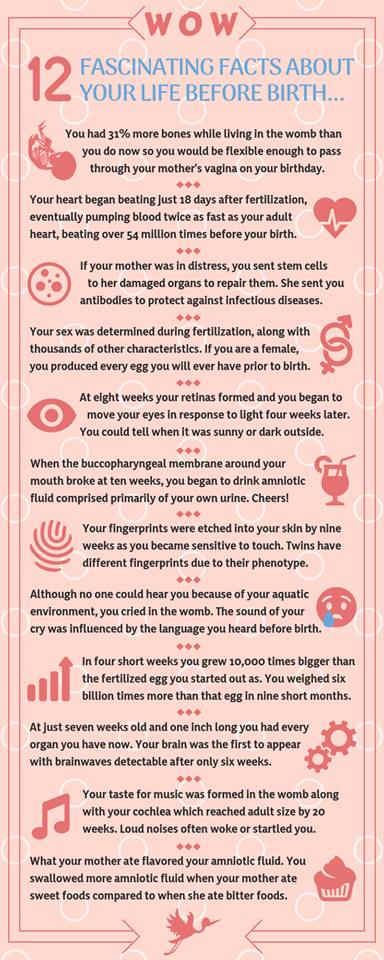
- Pass out the below worksheet, 12 Fascinating Facts About Your Life Before Birth. If you have enough time, have students take turns each reading one of the facts.
You will need:
- 12 Fascinating Facts About Your Life Before Birth worksheets
Homework
A Beka’s Science: Order & Design
Page numbers refer to the pages in A Beka’s Science: Order & Design.
- Friday: Introduction to Creation Science: Read pp. 158-164 & Three View of Life on pp. 166-167. Answer 5 questions of your choice from Section Review 5.1 on p. 167. (Skip Science Investigation & Math Connection on pp.164-166.)
- Monday: A Christian’s Faith: Read A Closer Look on pp. 167-169. Answer 4 questions of your choice on p. 170 (the top questions).
- Tuesday: Foundations for the Age of Science: Read pp. 171-177. Also read Technological Timetable on the bottom of p. 179. Answer 5 questions of your choice on p.181. (Skip Development of Modern Science on pp. 174-175, Science Investigation & Math Connection on pp.178-179, & Inventions & Technology on p. 180.).
- Wednesday: Select one scientist mentioned from your readings from pp.175-177 & find out a bit more about him. Either write a short paper (1 page or less) or create a mini-poster (the size of a sheet of computer paper) sharing some information about his life, ideas, and work. Include at least one quote for him that includes a reference to God or the Bible.
Looking for all my lessons?
- First Day of Class & Plant Identifications
- Parts of a Flower
- Amazing Plants (Horticulturist Guest Speaker)
- Seeds and Flower Families
- Photosynthesis and Plant Parts
- Cardiovascular, Respiratory, & Digestive Systems
- Skeletal, Muscular, & Integumentary Systems
- Endocrine & Nervous Systems and Healthy Living
- Human Baby Fetal Development (Pregnancy Care Center Guest Speaker)
- Creation and Science
- Creation, Evolution, & the Eyes of Faith
- Classifying Plants & Animals
- Amazing Mammals
- Mammal Dissection
- Semester Review & Winter Party
- Bird Anatomy
- Bird Features
- Bird Watching (Birding Guide Guest Speaker)
- Fish Anatomy and Dissection
- Invertebrates Anatomy and Dissections
- Frog Dissection
- Reptiles Show and Tell
- Insect Anatomy
- Singing & Social Insects
- Beneficial Insects (Entomology Guest Speaker)
- Arthropods (Crayfish & Grasshopper) Anatomy and Dissections
- Crustaceans & Arachnids
- Cells, Algae, and Fungi
- Protozoa and Bacteria
- Trees
- Ecology
- Semester Review & End of Year Party
- My Middle School American History Lessons
- All of My Hands-on Lessons & Unit Studies
© 2018 Shannon
Leave a Reply