
World Empires, World Missions, World Wars by Diana Waring
“World Empires, World Missions, World Wars” by Diana Waring, part of the History Revealed curriculum series is a great option for a homeschool co-op world history class! Look below to see the lesson plans on how I implemented this curriculum while teaching a fun and engaging High School Modern World History class at a Christian-based homeschool co-op class that meets weekly. Our class time is 50 minutes. Below is the lesson plan for first day of class.
I’m also including the field trips we took for the first unit on the Napoleon and Early Missions.
Welcome and Snacks

French Macarons for the first day of class
- Begin by welcoming the students with some delicious macaron cookies as we’ll be focused on Napoleon this first unit. Napoleon was from France and macaron cookies are a popular delicacy from France.
YOU WILL NEED:
- napkins and macaron cookies (I purchased mine from the frozen dessert section of my grocery store.)
Name Placards and Student Introductions
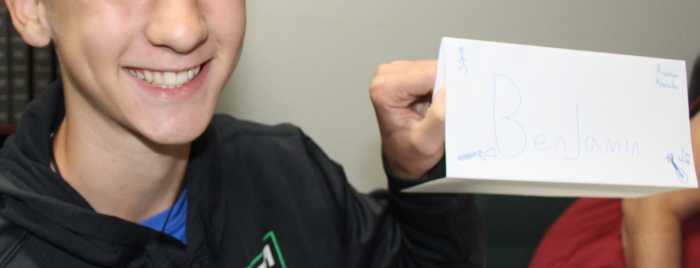
Name placard with areas of interest
- Have students fill out a name placard.
- Pass out a blank sheet of paper to each student and have them fold it into 3 parts.
- On the middle part have students write their name in large letters.
- On each of the four corners have students draw (or write) something about themselves: an activity they love to do, their favorite book, their favorite time period, and a fun fact.
YOU WILL NEED:
- paper and markers (or colored pencils) brought by students
- As students finish, have them introduce themselves by sharing what is on their name placard.
Envelopes and Tickets
Each student gets an envelope to hold their tickets
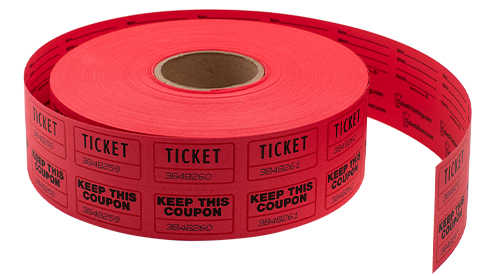
The tickets I use instead of grades
- Pass out an envelope to each student and have them write their name on the envelope. This will be used to hold their tickets.
YOU WILL NEED:
- envelopes and tickets
- Explain the ticket system:
- How to get tickets: To encourage students to participate in discussions and to do their work, I will hand out tickets to reward them for completing homework, answering questions, and doing projects.
- How to redeem tickets: At the end of the semester, everyone will bring gifts that are $10 or less. Students who earn the most tickets will get to select first and and the selections will continue down depending on how many tickets students have earned.
What to Expect Each Class
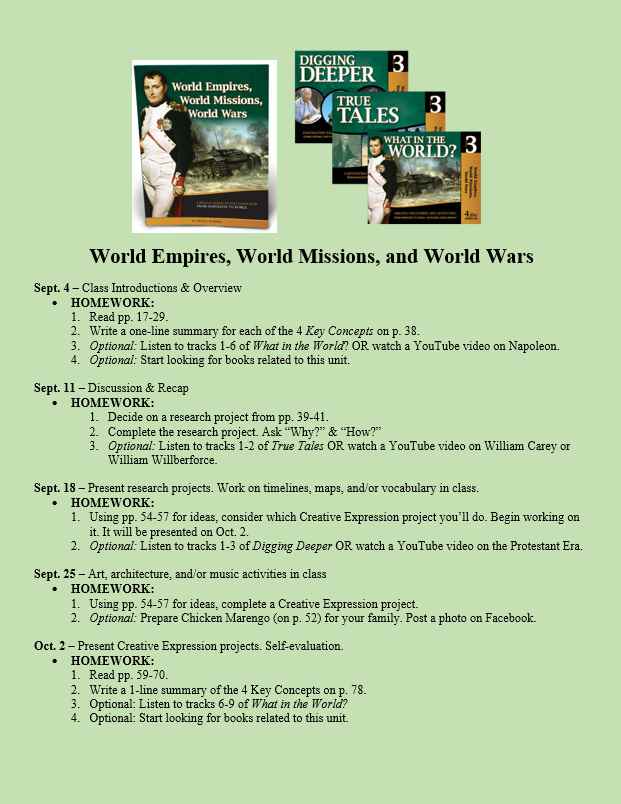
Student hand-out page on what to expect each week in the class
- Have students pull out their student textbooks. Pass out the above worksheets. As students flip through Unit 1, go through each phase and what will be expected of them each week.
YOU WILL NEED:
- World Empires, World Missions, World Wars by Diana Waring student textbooks (brought by students) and the above worksheets
Information on the Above Sheet:
World Empires, World Missions, and World Wars
Sept. 4 – Class Introductions & Overview
- HOMEWORK:
- Read pp. 17-29.
- Write a one-line summary for each of the 4 Key Concepts on p. 38.
- Read through the questions on pp. 31-32. Put a check mark next to at least 3 that you could answer.
- Optional: Listen to tracks 1-6 of What in the World? OR watch a YouTube video on Napoleon.
- Optional: Start looking for books related to this unit.
Sept. 11 – Discussion & Recap
- HOMEWORK:
- Decide on a research project from pp. 39-41.
- Complete the research project. Ask “Why?” & “How?”
- Optional: Listen to tracks 1-2 of True Tales OR watch a YouTube video on William Carey or William Wilberforce.
Sept. 18 – Present research projects. Work on timelines, maps, and/or vocabulary in class.
- HOMEWORK:
- Using pp. 54-57 for ideas, consider which Creative Expression project you’ll do. Begin working on it. It should be on a different person/event than your research project. It will be presented on Oct. 2.
- Complete one or both of the maps on pp. 47-48. The directions are on p. 46. (You’ll get 4 tickets per map you complete.)
- Optional: Listen to tracks 1-3 of Digging Deeper OR watch a YouTube video on the Protestant Era.
Sept. 25 – Art, architecture, music, and science activities in class
- HOMEWORK:
- Using pp. 54-57 for ideas, complete a Creative Expression project to present in class. Tip: Don’t forget to check the rubrics I passed out last week to see what should be included in your presentation.
- Optional Extra Credit (4 tickets): Prepare Chicken Marengo (on p. 52) for your family and post a photo on Facebook OR prepare it for class to share with us next week.
- Optional Extra Credit (4 tickets/dish): Prepare or purchase French food to share with us next week in class.
Oct. 2 – Present Creative Expression projects. Self-evaluation.
- HOMEWORK:
- Read pp. 59-70.
- Write a 1-line summary of the 4 Key Concepts on p. 78.
- Read through the questions on pp. 72-73. Put a check mark next to at least 3 that you could answer.
- Optional: Listen to tracks 6-9 of What in the World?
- Optional: Start looking for books related to this unit.
Name Game Ball Toss
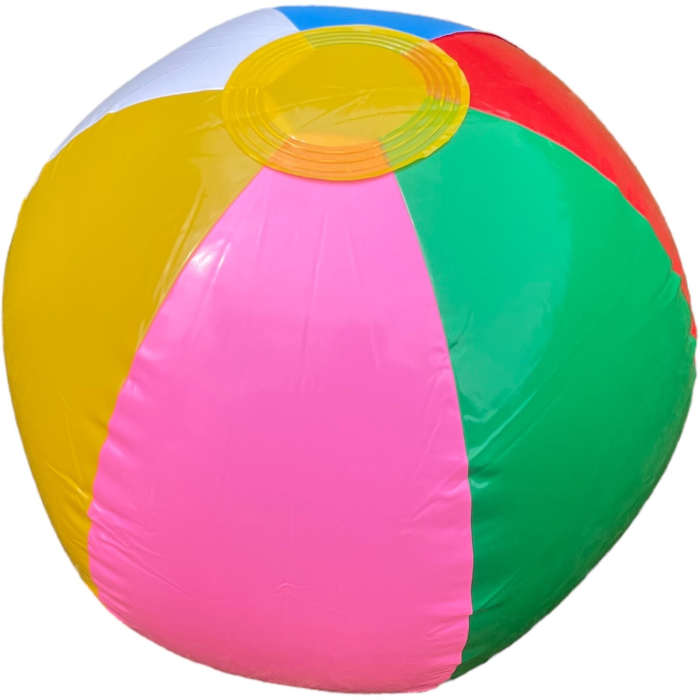
Toss around a ball to learn names
- Name Game Ball Toss:
- Have students toss around a ball. They should first say their name, then say the student’s name to whom they’ll toss the ball, and then toss the ball to that person. Continue until students have gone multiple times.
- If there is still extra time, have students add something they did over the summer.
YOU WILL NEED:
- a ball (such as a beach ball)
Review Homework for This Week
- Read pp. 17-29 from World Empires, World Missions, World Wars.
- Write a one-line summary for each of the 4 Key Concepts on p. 38.
- Read through the questions on pp. 31-32. Put a check mark next to at least 3 that you could answer.
- Optional: Listen to tracks 1-6 of What in the World? OR watch a YouTube video on Napoleon.
- Optional: Start looking for books related to this unit.
Field Trip Ideas for Unit 1: Napoleon and Early Missions
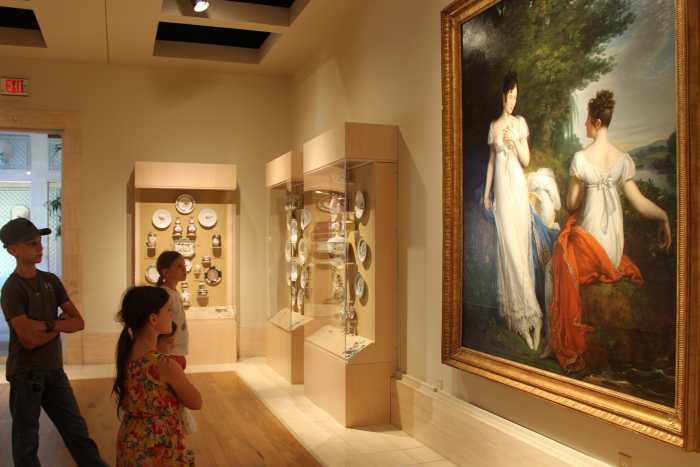
Painting of Princess Pauline Borghese, youngest sister of Napoleon Bonaparte,by French painter Rene-Theodore-Bertlon, 1812 – Cummer Museum in Jacksonville, FL
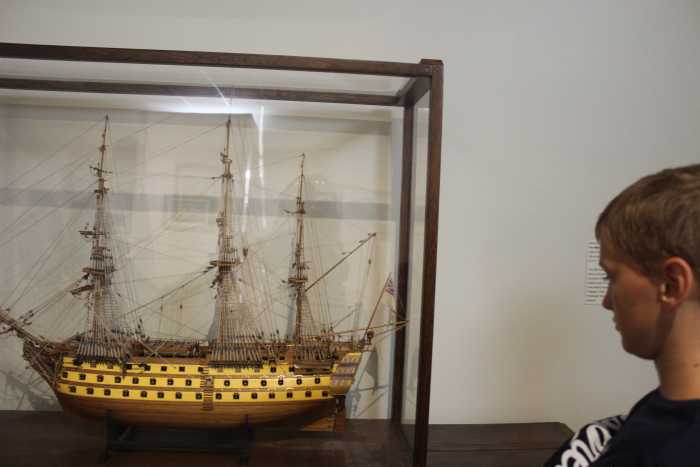
The HMS Victory (model), Admiral Nelson’s flagship during the Battle of Trafalgar – Appleton Museum of Art in Ocala, FL
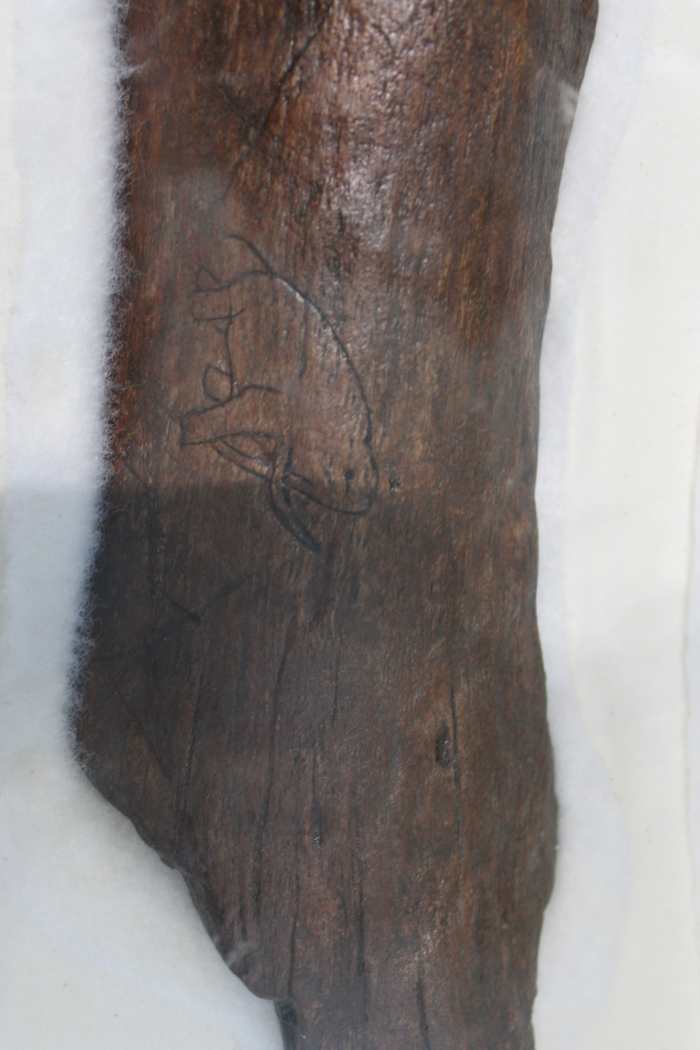
Mammoth engraving on a mammoth/mastodon/giant sloth bone – Florida Museum of Natural History in Gainesville, FL

Indian textiles display at the Museum of Fine Arts in Houston, TX – A trip we took over the summer
(I live in North Florida, so our field trips during the school year are usually around North Florida. We have family in Atlanta and Houston, so over the summers we try to visit museums there to view what’s related to what we just finished learning.)
Napoleon:
- Art Museums: Look for Napoleonic Era art or Neoclassical Art
-
- In North Florida we found one painting in the Cummer Museum of Art in Jacksonville and a few paintings and ship models in the Appleton Museum of Art in Ocala
- In Atlanta, visit the High Museum of Art
- In Houston, visit the Museum of Fine Arts
- Science Museums: Look for fossils while discussing George Cuvier
-
- In North Florida the Museum of Natural History (under renovation in 2025) has plenty of fossils
- In Atlanta, visit the Fernbank Museum of Natural History or the Tellus Museum
- In Houston, visit the Museum of Natural History
William Carey:
- Look for anything related to India (art, artifacts, grocery stores, temples, etc.)
-
- In North Florida visit the Annual Experience Asia Festival in Tallahassee, an Indian grocery store in Tallahassee or Gainesville, and/or the Indian temple near La Chua Trail
- In Atlanta, GA, visit the Michael C. Carlos Museum on the Emory campus (with a room dedicated to India & Hinduism) and/or the BAPS Shri Swaminarayan Mandir Hindu temple
- In Houston, TX, visit the Museum of Fine Arts (with a large room dedicated to India & Hinduism) and/or the BAPS Shri Swaminarayan Mandir Hindu Temple
Looking for all my History Revealed Lessons?

World Empires, World Missions, World Wars
UNIT 1: NAPOLEON & EARLY MISSIONS
- Napoleon Lesson Plan (Unit 1: Phase 1)
- Napoleon Exploration and Discovery Lesson Plan (Unit 1: Phase 2)
- Napoleon Art, Music, Architecture, and Science Hands-on Lesson Plan (Unit 1: Phase 3)
© 2025 Shannon
Leave a Reply