This is part 3 of a 4 part hands-on unit on Early American Settlers. Make butter, bake authentic Dutch Christmas cookies, set up a beaver trading post, build log cabins out of craft sticks, and more! My lessons are geared toward 2nd-3rd grade level children and their siblings. These are lessons I created to do with a weekly homeschool co-op. We meet each week for 2 1/2 hours and have 14 children between the ages of 0-12. Use these fun lessons with your classroom, family, homeschool co-op group, after school program, or camp!
Introduction & Making Butter
Enjoying freshly made butter
- Stretch. Pray.
- Discuss Proverbs 6:10-11
- Sing Psalm 23B (in preparation for Thanksgiving Presentation).
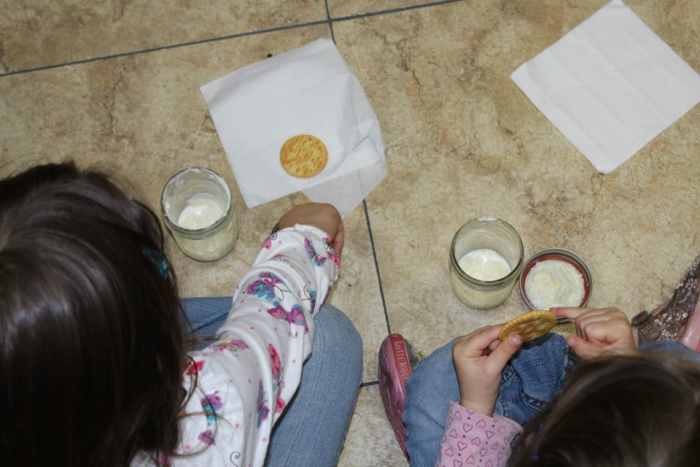
- Start making butter: Pour 1/4 cup (or less) of whipping cream (at room temperature) & a pinch of salt in glass baby jars or any small jar with a tight lid. If possible allow each child to have one, or let children work in pairs or groups and take turns. Keep shaking back and forth until the cream thickens, and then turns into butter. This will take 5-10 minutes. *Shake jar while we review the history of the Dutch in America.*
- YOU WILL NEED: 1/2 pint of whipping cream (at room temperature), pinch of salt, various small glass baby jars or larger glass jars with tight fitting lids (such as small canning jars)
Dutch Settlers: Henry Hudson & Tulips
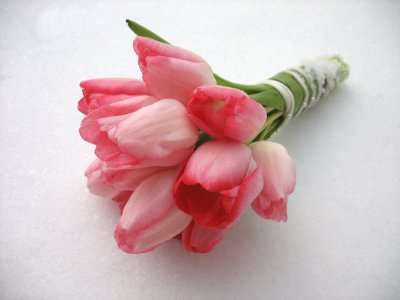
Image credit: http://www.wedding-flowers-and-reception-ideas.com/tulip-wedding-bouquets.html
Do the following while the children shake their butter jars.
- Review Dutch history while passing around the butter jar to shake:
- Show Holland on a map.
- Talk about Dutch settling North America, reminding them of Henry Hudson. Show pictures of Half Moon and Hudson from Beyond the Sea of Ice: The Voyages of Henry Hudson by Joan Elizabeth Goodman and Fernando Rangel or from a laptop computer. Show the Hudson River on a map.
- Ask from where the Pilgrims came. Read Tulip Time in Holland from A Child’s Book of Children of the World by E. Joseph Dreany. Mention how some of the girls who came over on the Mayflower may have carried tulip bulbs and flower seeds with them. Point out the importance of cleanliness to the Dutch.
- (Optional) Let the children pass around a tulip and/or tulip bulb.
- YOU WILL NEED: Beyond the Sea of Ice: The Voyages of Henry Hudson by Joan Elizabeth Goodman and Fernando Rangel or other book on Henry Hudson, a map showing the Hudson River, A Child’s Book of Children of the Worldby E. Joseph Dreany or other book on tulips in Holland, anda tulip and/or tulip bulb (optional)
Dutch Settlers: Cows
Gouda and crackers
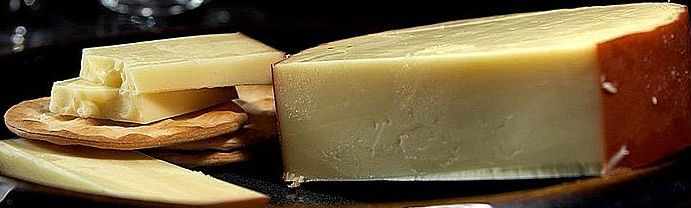
- Talk about the arrival of the Cow, Sheep, and Horse ships. The Dutch were the first to bring cows to America. What do we use cows for? Let kids try a piece of Gouda cheese on a cracker. (Children did not like Gouda so keep the pieces small.) Discuss how they used to churn butter. Show a picture of a butter churn. This is why we’re making butter.
- YOU WILL NEED: small pieces of Gouda cheese [Aldi is a great place to get it] and 1 box of crackers (We’ll use more crackers for tasting butter.)
Dutch Settlers: Peter Stuyvesant & Sinterklass
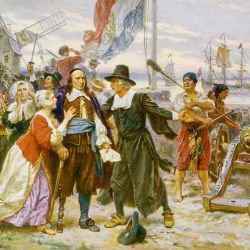
Peter Stuyvesant and the Fall of New Amsterdam
- Mention the purchase Manhattan Island by Peter Minuit for $24 (worth about $800,000 in today’s money). Show the sketch of New Amsterdam from History of the World: The Americas in the Colonial Era by Monica Dambrosio and the picture from The Golden Book History of the United States: Volume 1 by Earl Miers.
- Show the picture of Peter Stuyvesant from The Golden Book History of the United States: Volume 1 and ask the kids to describe what kind of man he might have been from that picture.
- Read about Peter Stuyvesant: Old Silver Leg Takes Over! A Story of Peter Stuyvesant by Robert Quackenbush.
- YOU WILL NEED: Sketches of New Amsterdam such as the ones from History of the World: The Americas in the Colonial Era by Monica Dambrosio and The Golden Book History of the United States: Volume 1, a picture of Peter Stuyvesant such as the one from The Golden Book History of the United States: Volume 1, and a children’s biography on Peter Stuyvesant such as Old Silver Leg Takes Over! A Story of Peter Stuyvesant by Robert Quackenbush.
Book for Activity h: Peter Stuyvesant Biography
Sinterklass

- Show the picture from History of the World: The Americas in the Colonial Era by Monica Dambrosio of what New Amsterdam looked like after Stuyvesant ruled. Compare it to the picture of New Amsterdam in The Golden Book History of the United States: Volume 1 showing what it looked like before he arrived.
- Read Sinterklass – The Netherlands from UNICEF’s Festival Book by Judith Spiegelman.
- Have children compare the Dutch celebration of Christmas with how we celebrate. The Dutch were the ones to introduce Saint Nicholas to America. He gives out cookies called Pepernoten on December 5.
- YOU WILL NEED: books or pictures showing New Amsterdam such as History of the World: The Americas in the Colonial Era by Monica Dambrosio and The Golden Book History of the United States: Volume 1 and a picture or book showing Sinterlkass such as UNICEF’s Festival Book by Judith Spiegelman or World Book’s Christmas in The Netherlands
Make Pepernoten Cookies & Taste Butter
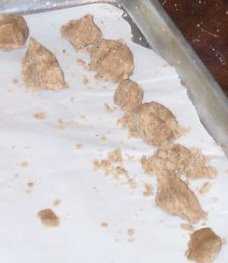
Unbaked Pepernoten Cookies
- Divide into 3 groups to make Pepernoten. Each group will make the recipe below. (Everyone loved these cookies, so you wouldn’t be sorry if you have each group double the below recipe so they have extras to take home.)
1 cup all-purpose flour
1 1/2 teaspoons baking powder
1/2 teaspoon salt
1 teaspoon ground nutmeg
1 teaspoon ground cloves
1 teaspoon cinnamon
1/2 teaspoon ground aniseed or allspice
1/2 teaspoon ground ginger
5 Tbsp. butter, softened
1/2 cup brown sugar
1/2 cup white sugar
1 tablespoon milk
Whisk together flour, baking powder, salt, & spices. In a separate bowl cream the butter and sugar. Add the milk and flour mixture and make very very small marble sized balls. Bake for 10-15 minutes at 325 F until golden.
- YOU WILL NEED: 3 cups flour, 1 1/2 c. brown sugar, Spices, 2 mixing bowls per group, a mixing spoon per group, 1 cup measure per group, 1 teaspoon per group, 1 baking sheet per group, 1 1/2 Tbsp. baking powder, 1 1/2 tsp. salt, 1 1/2 c. sugar, 2 sticks butter, 3 Tbsp. milk
- Butter should be ready. Try it with crackers.
Beavers & Fur Trading
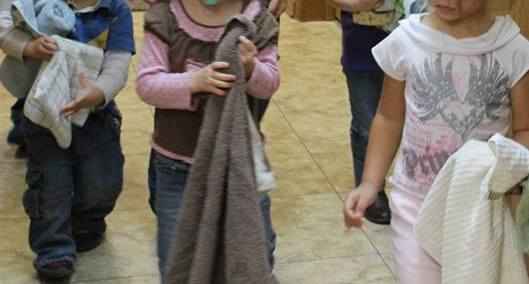
Finding “beaver fur” towels
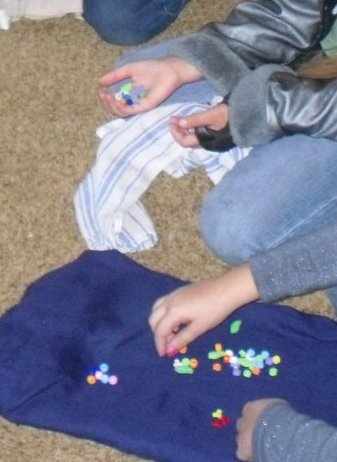
Trading Post
Trading Post
- Discuss beavers & fur trading. Show pictures from The North American Beaver by John Becker and p. 70 of The Wild Shores: America’s Beginnings by Tee Loftin Snell or other books you have on beavers.
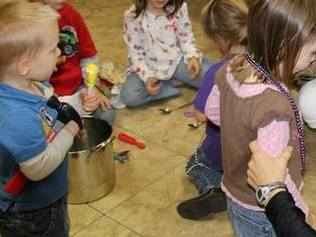
- Trade for beaver felt: (Ahead of time in the living room hide 20 kitchen or hand towels that have been rolled up.) Quickly discuss beaver trapping and trading. Ask what types of items Native Americans would like to receive. Divide group into older and younger children.
- Younger children get to be the Native Americans. They will hunt around the room to find all the “beavers” (rolled up kitchen towels). After finding all the “beavers,” they will unroll their towels to make them into “pelts” and then bring them to the Dutch trading post to trade with the Dutch.
- While the younger group is hunting for beavers, the older group, representing the Dutch traders, will each select 10 trinkets (silverware, toy tools, toy weapons, beads/necklaces, & blankets). Each child will get to select 1 item and then the second item, and so forth.
- After all the “beavers” have been found, the “Native Americans” will bring their “pelts” to trade with the “Dutch.” Remind the children that trading does not need to be a 1:1. See which “Dutch” person gets the most pelts and which Native American appears to come out the best.
- YOU WILL NEED: Beavers by Helen H. Moore or other book on beavers, 20 rolled up kitchen towels or hand towels & 50 “trinkets” (such as 10 compact mirrors, 10 toy tools, 10 toy knives, 10 beads/necklaces, 10 pots, 10 spoons (metal not plastic), & 10 small blankets) — mostly craft beads
Swedish Setters & Log Cabins
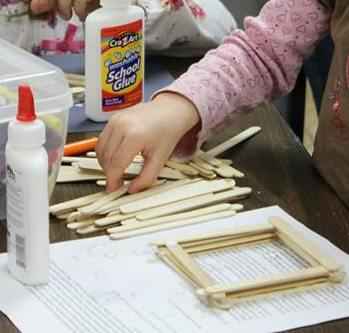
- Briefly discuss Peter Minuet & Swedish settlers including their log cabins. Show pictures from The Golden Book History of the United States: Volume 1 and Delaware by Deborah Kent. (“Delaware” by Deborah Kent wasn’t a great book. Use any book you can find on Delaware.)
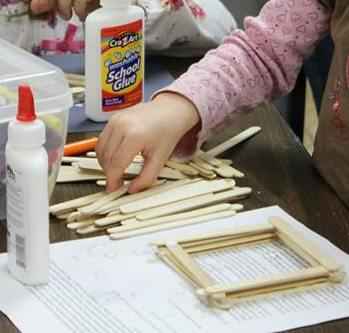
- The Swedish made the first log cabins in America. Compare these to the houses the British made. Make log cabins out of craft/popsicle sticks. If doing this for a smaller group, you can use Lincoln Logs.
- YOU WILL NEED: large box of craft/popsicle sticks, liquid glue, and sheets of paper (for protecting the table)
Snack & Review
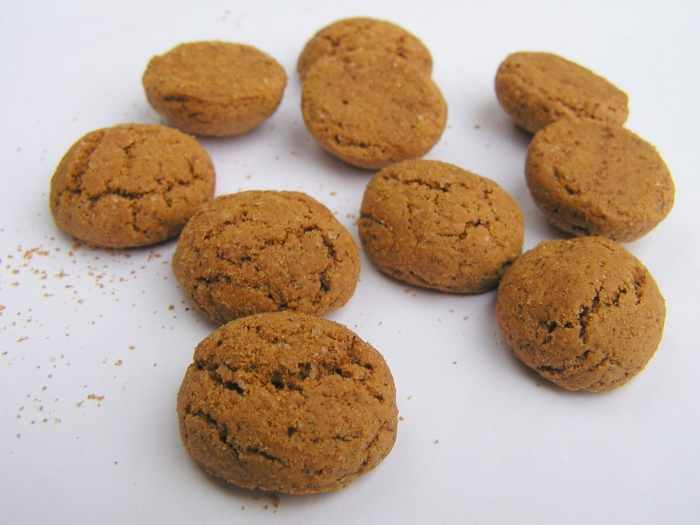
Pepernoten cookies
- Serve Pepernoten cookies and water as children finish making their log cabins.
- YOU WILL NEED PER CHILD: napkins, cups for water, baggies for extra cookies to go home
- Sing Psalm 23B
- 5 Minute Review of what we learned.
Looking for great children’s books to go with this lesson?
Our Favorite Children’s Books on New Amsterdam


The Legend of New Amsterdam by Peter Spier
1 / 7
- The New Americans: Colonial Times: 1620-1689 by Betsy Maestro is the best book that is in print that covers the Dutch and Swede Colonial settlers in America. It includes a page spread about each colony, not just the ones in this lesson, and has colorful illustrations. It doesn’t go into depth about any of them but is great for an overview and is easily available.
- Peter of New Amsterdam (Yesterday’s Classics) by James Otis is available free as an audio book on HooplaDigital.
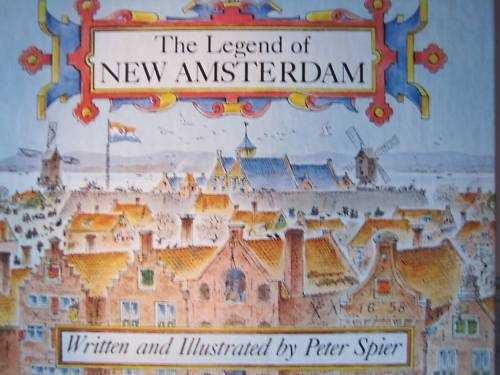
- The Legend of New Amsterdam by Peter Spier is a 32 page storybook about what life was like in New Amsterdam. It does include a part about the children enjoying mocking a poor widow, which we skipped, but it could also provide an opportunity to discuss being kind. It is a colorful picture book. This is out of print, but you can find borrow a free virtual copy from https://archive.org/ .
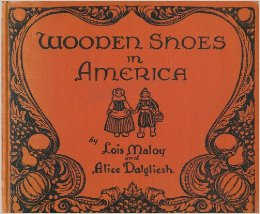
- Wooden Shoes in America by Lois Maloy and Alice Dalgliesh is 32 pages. It shows what early New Amsterdam family life was like by telling the story of 2 grandchildren who come with their family to New Amsterdam to live with their grandparents. My children (ages 3-11) all enjoyed this book and learned more about the Dutch culture from it. This is out of print, but it’s worth finding!
- The Wishing Pear by Elizabeth Jane Coatsworth has illustrations every few pages. I used it as a reader for my 1st grader. A pear seed planted on a girl’s birthday inspires her to learn about Stuyvesant. It is 64 pages. Lysbet and the Fire Kittens by Marietta Moskin is 46 pages. It is a cute picture book about a Dutch colonist child.
- The Golden Book History of the United States Volume 1: The Explorers by Earl Schenck Miers has great drawings and has American history written in an interesting format from a more historically-conservative perspective! I own then entire set of these books and love using them when I can’t find good story books on an American History topic. It is out of print, but it is worth purchasing.
- A Maxton Book About Children of the World by E. Joseph Dreany has nice, short stories about children from around the world. It focuses on their traditional way of life rather than on their modern way of life. It has drawings and writing that appeal to children. It is out of print but probably not worth purchasing if you can find something better.
- UNICEF’s Festival Book by Judith M. Spiegelman has nice, short stories on various holiday traditions from around the world and is set in a storybook format. It focuses on traditional life rather than modern life. It has one page discussing a traditional Christmas in the Netherlands
- If you’re looking for chapter books, Peter Stuyvesant of Old New York, (Landmark Books) by Anna & Russel Crouse and A Colony Leader: Peter Stuyvesant” by Adele Louise De Leeuw (64 pages with a drawing every few pages) are both good options.
Ready for the next lesson?
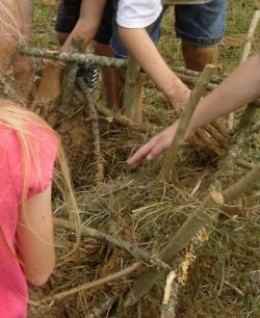
Building a Jamestown-style waddle and daub house during Lesson 1: Jamestown Lesson
Build a waddle and daub house like they did in Jamestown, create pilgrim costumes, set up a beaver trading post as you study Dutch settlers, cook a batch of William Penn’s applesauce, perform a play on the Pilgrims, eat a semi-authentic Thanksgiving feast, and more during this fun 4 lesson unit study on Early American Settlers.
- Jamestown Lesson – This is part 1 of a 4 part hands-on unit on America’s Early Settlers. Build a waddle and daub house like they did in Jamestown, dress as cavaliers and hunt for gold, cook and taste gruel, and more!
- Pilgrims Lesson – This is part 2 of a 4 part hands-on unit on America’s Early Settlers. Create pilgrim costumes, make stewed pompion (pumpkin), plant corn, and more!
- Dutch and Swede Settlers of Early America Lesson – This is part 3 of a 4 part hands-on unit on Early American Settlers. Make butter, bake authentic Dutch Christmas cookies, set up a beaver trading post, build log cabins out of craft sticks, and more!
- William Penn and Thirteen Colonies Lesson – This is part 4 of a 4 part hands-on unit study on Early American Settlers. Cook a batch of Dutch applesauce, match up the Thirteen Colonies, and make costumes to prepare for the Thanksgiving Presentation.
- Thanksgiving Feast, Children’s Play, & Authentic Recipes – This is the end of the unit activity for a 4 week hands-on unit on Early American Settlers. Eat a feast (complete with authentic dishes), perform a fun Thanksgiving play, and sing a Psalm (just as the Pilgrims did for their Thanksgiving feasts). Authentic and semi-authentic recipes are included!
- Fun, FREE Hands-On Unit Studies – Over the years I have posted over 35 science and social-studies based unit studies, compromised of more than 170 lessons. The unit studies include the Human Body, Simple Machines, Earth Science, Medieval Period, American Revolution, Pioneer Life, Countries of the World, and many more! For each lesson I have included activities (with photos), our favorite books and YouTube video clips, lapbook links, and other resources.
YouTube Clips We Enjoyed
KONOS Curriculum
KONOS Volume II (Responsibility)
Would you like to teach this way every day?
- I use KONOS Curriculum as a springboard from which to plan my lessons. It’s a wonderful curriculum and was created by moms with active boys!
- If you’re new to homeschooling or in need of some fresh guidance, I highly recommend KONOS’ HomeSchoolMentor.com program! Watch videos on-line of what to do each day and how to teach it in this great hands-on format!
© 2011 Shannon
Leave a Reply