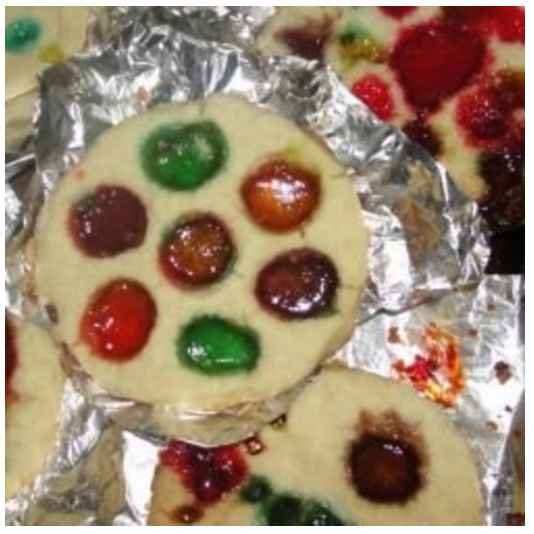
Stained glass window cookies
Decorate stained-glass cookies, design a dome using blocks, sketch each type of cathedral, sing about the true foundation of cathedrals, and more in this fun lesson on cathedrals! Use this lesson on its own, or add it to the Medieval Unit, Architecture/Bridge Lessons, or the Honor Unit. This lesson is geared toward elementary-age level children and should take about 2 1/2 hours. Use this fun lesson with your classroom, family, or homeschool co-op group!
Introduction & Cathedral Floor Plan
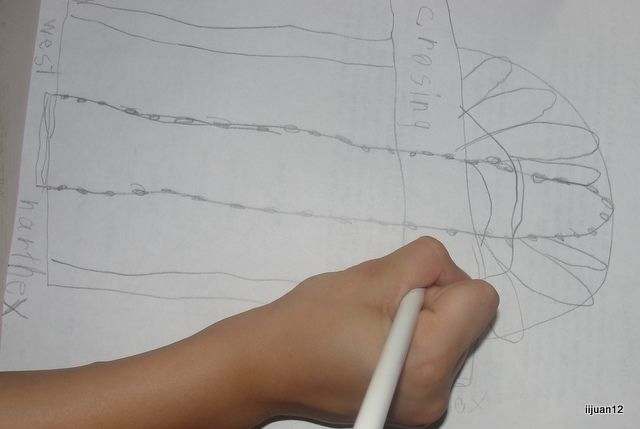
Drawing and labeling the parts of a cathedral (as done by a 7 year old student)
- Pray. Read and discuss Psalm 29.
- Ask children what a cathedral is. Ask if they have ever been to a cathedral. Allow children to describe what they saw. Ask how a cathedral is different from a church. Read Cathedrals by Maurice Pommier, which we really enjoyed. It’s short and simple so that even my toddler can read along with us, yet it provides enough information to give a good general overview of cathedrals. My children also really enjoy the see-through pages.
YOU WILL NEED:
- Cathedrals by Maurice Pommier or other overview book on cathedrals
- Introduce the parts of a cathedral: nave, aisle, crossing, transept, choir, apse, ambulatory, chapel. Using a picture from a book or the Internet, show each of the parts and briefly mention what purpose they served. (If you need a refresher course, you can find a floor plan and definitions at en.wikipedia.org.)
- Cover up the picture. Have each children get their notebook and a writing utensil. Give children 1 1/2 minutes to draw as much of the shape of the floor plan as they can remember. Have children show the group what they drew. Allow children to add to their drawings.
- Write out the parts of a cathedral on a whiteboard. Give the children 2 minutes to label as many parts of the cathedral as they can on their drawing. *If you have many younger children, hand out slips of paper that have each of the parts written on them already, and have the children place the strips of paper on the various parts on their drawings. After the time is up, see who labeled the most parts correctly. If desired, give that child a small prize.
YOU WILL NEED:
- the floor plan of a cathedral (from a book or the Internet), a notebook with paper or sketchpad & writing utensils for each child, & a small prize (optional)
Catacombs & Basilicas
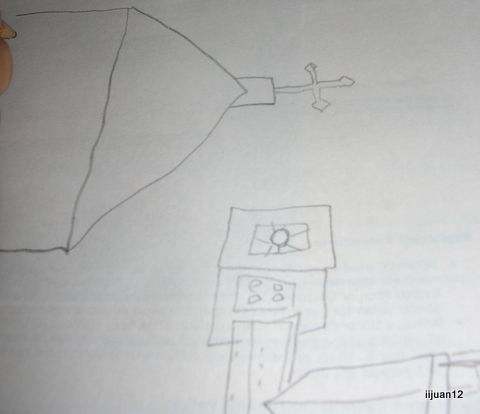
Sketching the Basilica of Saint Paul Outside the Walls
- Have children sketch the Basilica of Saint Paul Outside the Walls while you read about catacombs and basilicas from Ch. 9: Early Christian in A Child’s History of Art by V. M Hillyer and E. G. Huey, which is a wonderful resource for teaching your children about art! The author has a wonderful way of sharing information just as if he were talking with the child. There are black and white photographs throughout the book. If you are not able to find this book that is out of print, you can find “Child’s History of Art: Architecture” by V. M. Hillyer, which is only part of the book but is still being published.
- After you finish reading, have the children draw a small floor plan of a basilica on the page. Have them write “Basilica” at the top of the page.
- If you would prefer to have your children color in the cathedrals rather than draw them freehand, use Cathedrals of the World Coloring Book (Dover Coloring Books), which has nice coloring pages and descriptions of a wide variety of different cathedrals.
YOU WILL NEED:
- “A Child’s History of Art” by V. M Hillyer and E. G. Huey or other book with information on catacombs and basilicas, a notebook with paper or sketchpad per child and writing utensil and a picture of the Basilica of Saint Paul Outside the Walls (from a book or the Internet)
Byzantine Cathedrals
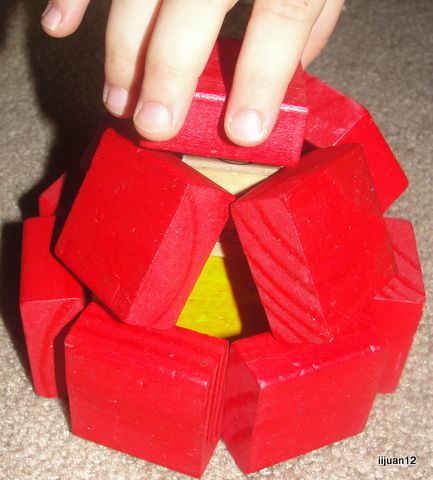
Using blocks to build a dome
- Have children sketch St. Mark’s Basilica while you read from Ch. 10: Eastern Early Christians in A Child’s History of Art by V. M Hillyer and E. G. Huey.
- (If you have older children, you can have them also sketch St. Sophia Museum Istanbul, Turkey.)
- Have children write “Byzantine” at the top of the page.
- Have them also write: dome made from bricks or tiles, Greek cross, pendantives, buttress, & mosaics.
YOU WILL NEED:
- A Child’s History of Art by V. M Hillyer and E. G. Huey, a notebook with paper or sketchpad per child and writing utensil and a picture of St. Mark’s Basilica (from a book or the Internet)
- If you are not limited by time, have children create mosaic pictures using foam pieces or construction paper pieces. (The Dollar Tree might have kits that already have stick-on foam pieces to create a mosaic picture.)
YOU WILL NEED:
- mosaic picture foam kits (sold at the Dollar Tree or at a craft store) or pieces of construction paper, glue, and scissors
- Let children attempt to make a dome using wooden blocks. If you don’t have enough blocks, have children work as teams.
YOU WILL NEED:
- wooden blocks
Good video clip on St. Sophia Museum in Turkey
Romanesque Cathedrals
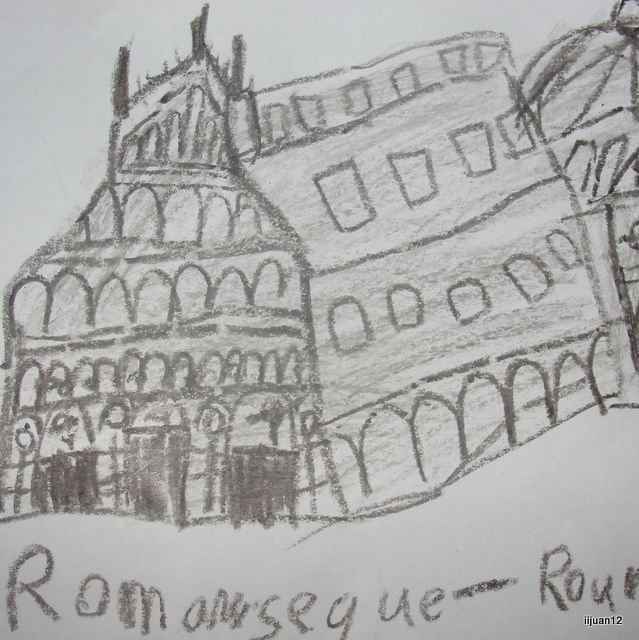
Sketching the Baptistery and Cathedral in Pisa
- Have children sketch the Baptistery and Cathedral in Pisa, Italy while you read from Ch. 12: Round Arches in A Child’s History of Art by V. M Hillyer and E. G. Huey.
- Have children write “Romanesque” at the top of the page. Have them also write: Latin cross, round arches, arcades.
YOU WILL NEED:
- A Child’s History of Art by V. M Hillyer and E. G. Huey, a notebook with paper or sketchpad per child and writing utensil and a picture of the Baptistery and Cathedral in Pisa (from a book or the Internet)
Stained Glass Windows
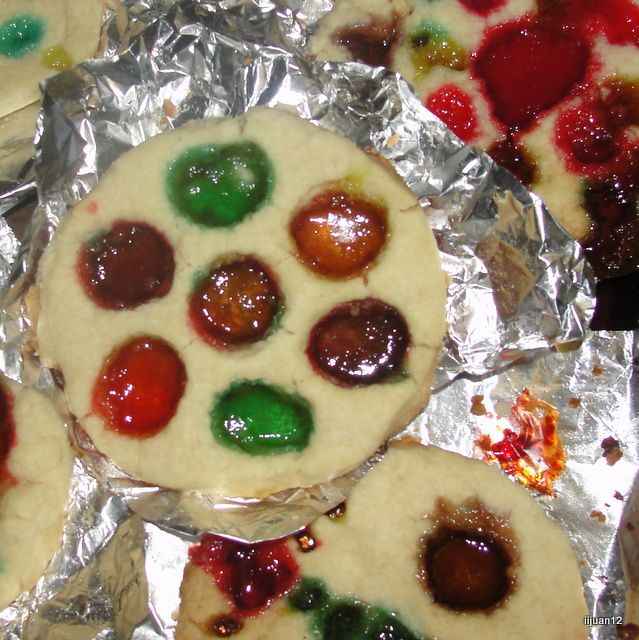
Stained glass window cookies
- Tell children that next we will learn about Gothic Cathedrals, which are well known for their beautiful stained-glass windows.
- Use books or the Internet to show pictures of stained glass windows in Cathedrals. (We use photos of the windows at Notre Dame Cathedral in Paris.)
- Read The Story of Stained Glass by Nancy E Krulik which describes how stained glass is made. It has photographs rather than illustrations. The text is interesting enough that it kept the attention of even my toddler and preschooler. The book also has a few fun art-related activities your children to do to create stained glass.
YOU WILL NEED:
- pictures of stained glass windows in Cathedrals (from books or the Internet) and The Story of Stained Glass by Nancy E Krulik
- Have children make stained-glass window cookies.
- Ahead of time, lay out a sheet of aluminum foil (about 7″x7″) for each child. Use a sharpie marker to write their names on the edges.
- If you are not limited by time, allow children to create the “stained glass materials.” Place jolly rancher candies of similar colors in plastic bags. Have the children take turns using a hammer or other heavy object to whack each jolly rancher candy a few times. They should be coarse like pebbles and preferably not like a fine powder (though any size will be usable.) Place the unwrapped broken pieces in separate bowls depending on the colors. If you are limited by time, do this ahead of time.
- Have children clean/sanitize their hands. Have each group of 5-6 children mix together 3/4 cup of butter, 1/4 cup of sugar, and 2 cups of flour. (This makes enough dough for 6 children.)
- Give each child a ball of dough. Have them flatten it out with the palm of their hands. Allow children to use cookie cutters or round objects (such as drinking glasses, jar caps, straws, the larger end of a frosting piping tip, etc.) to cut out a large circle and then remove smaller circles or other geometric shapes from the dough. Have them put their leftover dough back into the bowl in order to make shortbread cookies with the leftovers.
- After children have made their holes, allow them to sprinkle the broken pieces of jolly rancher into the holes.
- Place the cookies on baking sheets and bake at 350 for 20-25 minutes. This dough will not move or spread at all, so the window cookies can be close to each other.
- While children are working, you (the adult) can roll the leftover dough into walnut-sized balls. Flatten them a bit on a baking sheet (use aluminum foil or parchment paper if desired.) Prick each cookie a couple times with a fork. Bake at 350 for 20-25 minutes.
- *The shortbread cookies are delicious. They don’t taste especially wonderful combined with the taste of jolly ranchers, though. The kids enjoyed making them and eating the pieces separately.*
YOU WILL NEED PER GROUP OF 6 CHILDREN:
- aluminum foil, sharpie marker (only 1 is needed), baking sheet, mixing bowl, mixing spoon, measuring cups, 3/4 cup of butter, 1/4 cup of sugar, 2 cups of flour, 24 jolly ranchers, cookie cutters or round objects (such as drinking glasses, jar caps, straws, the larger end of a frosting piping tip, etc.), & a fork
Gothic Cathedrals
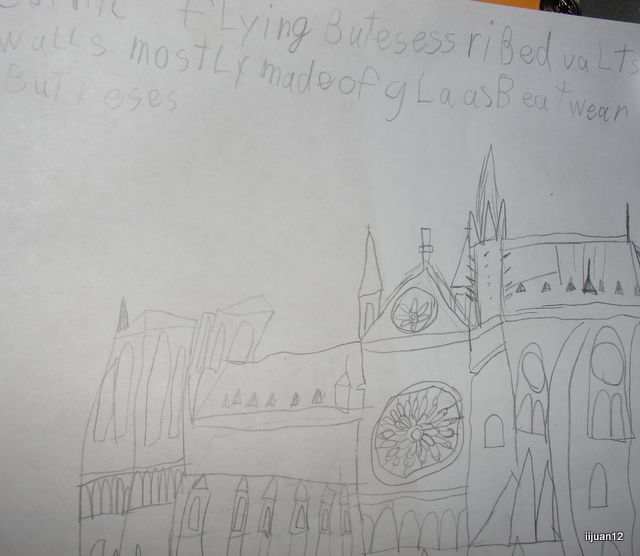
Sketching the Notre Dame Cathedral
- Have children sketch the Notre Dame Cathedral while you read from Ch. 14: Pointing Toward Heaven and Ch. 15: In Praise of Mary in A Child’s History of Art by V. M Hillyer and E. G. Huey.
- Have children write “Gothic” at the top of the page. Have them also write: vertical, pointed arch, flying buttresses, stained glass, walls mostly glass.
- If you’re not limited by time, read “You Wouldn’t Want to Work on a Medieval Cathedral!”, which my children loved as it sprinkles in lots of humor amid plenty of information told as if you were a worker doing the job in the story. This book places you as a worker on the Canterbury Cathedral and follows you through the years of apprenticeship, journeyman, and master stonemason.
YOU WILL NEED:
- A Child’s History of Art by V. M Hillyer and E. G. Huey, a notebook with paper or sketchpad per child and writing utensil and a picture of Notre Dame Cathedral (from a book or the Internet), and You Wouldn’t Want to Work on a Medieval Cathedral! (You Wouldn’t Want to…: History of the World) (optional)
Foundation, Forces, Review, & Snack
Singing “The Church’s One Foundation”
- As the book (A Child’s History of Art) compares Greek and Roman buildings with Gothic cathedrals on p. 346, it mentions how Greek and Roman buildings were solidly set on the ground, but a Gothic cathedral has balance from various directions and forces.
13. If you are not limited by time, go through the force activities and keystone/arch activity from this Bridge Lesson.
- Briefly discuss what a foundation is. Pass out the words to the hymn The Church’s One Foundation and sing at least the first verse together.
YOU WILL NEED:
- words to the hymn The Church’s One Foundation for each pair of children
- Five minute review what we learned about cathedrals.
- If time allows, let children wash their hands and eat Stained Glass Window cookies and drink water. (*Don’t put the cookies on napkins. They might stick to the napkin!*) If there is not enough time, allow them to take home the cookies in sandwich baggies.
YOU WILL NEED: cups for water & sandwich baggies
More of Our Favorite Children’s Books on Cathedrals



Cathedral: The Story of Its Construction, Revised and in Full Color by David Macaulay
1 / 8
In addition to the books we used during the lesson, we also enjoyed reading:
- Cathedral: The Story of Its Construction, Revised and in Full Color by David Macaulay is probably the best book about cathedrals written for children. It is a long picture book (80 pages). Every time we have read this book I though there was no way we’d be able to read it in one sitting. I am always wrong. My children (even my littles) always beg me to continue reading until we finish. Even though it is a longer picture book, most pages do not have lots of words. It shows how many different people were involved in the creation of a cathedral and how it was a slow process.
- Pippo the Fool by Tracey E. Fern – Frequently we just take for granted the engineering feats that were employed to create these magnificent structures. This is a really good picture book that describes the building of Brunelleschi’s Dome on Cathedral of Santa Maria del Fiore in Florence. All of my children enjoyed this book.
- “Filippo’s Dome” by Anne F. Rockwell
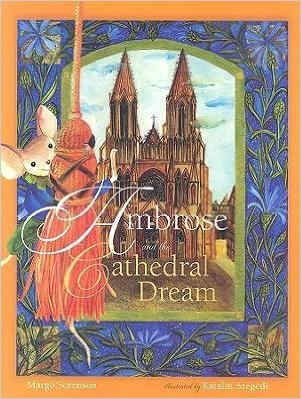
- Ambrose and the Cathedral Dream (Ambrose the Mouse Books) by Margo Sorenson is a really cute book about mice who scurry around a cathedral to keep the workers alert. It focuses on one mouse, Ambrose, who spends too much time daydreaming about helping the master builder and how his dream might come true.
- Cathedral Mouse by Kay Chorao is a cute, simple picture book about a mouse who finds a home in a cathedral. You follow him as he explores the cathedral, enjoys the stained glass windows, and befriends the stone carver. Also look for the picture books
- Cathedrals: Stone upon Stone by Brigitte Gandiol-Coppin
- Gargoyles, Girders & Glass Houses by Bo Zaunders
- A Medieval Cathedral by Fiona Macdonald. Famous Cathedrals and Their Stories by Edwin Rayner is a neat out-of-print book of photographs of various cathedrals and interesting stories about how the cathedrals were built, what they house (such as bones from the magi), etc.
- The Hunchback of Notre Dame (A Stepping Stone Book) Abridged Edition by Marc Cerasini is a good option if you’re looking for a family read aloud book. This is an abridged version written for ages 8+. It’s probably not the best option to let your child read by themselves, though, because it does contain some cruelty and ends sadly.
- Cathedral Stained Glass Coloring Book (Dover Stained Glass Coloring Book) – If you have a child who loves to color, this coloring book has wonderful reproductions of gorgeous stained glass windows from various periods for your child to color.
Looking for More Medieval Lessons?
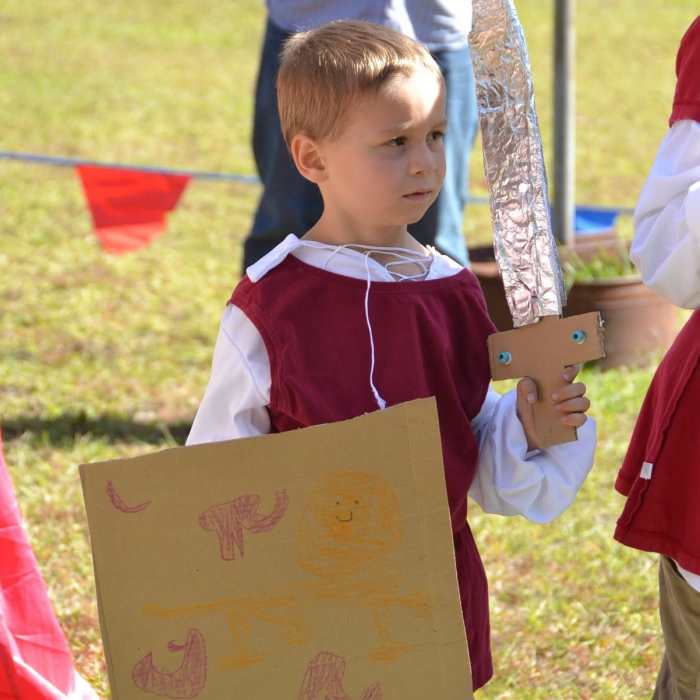
Knighting ceremony and joust from part 4 (or 5): Knights & Ladies Lesson
Bake medieval meals, create a medieval village, design stained glass window cookies, hold a jousting tournament, and more during this fun 5 or 6 week hands-on unit study of the medieval period!
- Medieval Life Lesson – Cook & eat a Medieval meal, play Medieval games, create Medieval crowns, and more! This is part 1 of a 5 (or 6) part hands-on unit on the Medieval Period.
- Castles Lesson – Build model castles, weapons, and more! This is part 2 of a 5 (or 6) part hands-on unit on the Medieval Period.
- Medieval Art Lesson – Mix together and paint with egg yolk paint, design and eat stained glass window cookies, create colorful tapestries, and more! This is part 3 of a 5 (or 6) part hands-on unit on the Medieval Period.
- Cathedral Lesson – This focuses on Cathedral design and architecture. Decorate stained-glass cookies, design a dome using blocks, sketch each type of cathedral, sing about the true foundation of cathedrals, and more in this fun lesson on cathedrals! This is part 4 of a 5 (or 6) part hands-on unit on the Medieval Period.
- Knights & Ladies Lesson – Create a Coat of Arms and swords, hold a jousting tournament, act out a knighting ceremony, and more! This is part 5 of a 5 (or 6) part hands-on unit on the Medieval Period.
- Medieval Feast Lesson Plan (Option A: Learn as a Lesson) – Decorate a banquet hall, prepare the feast (recipes included), provide entertainment, and more while learning about Medieval Feasts. This is part 6 of a 6 (or 6) part hands-on unit on the Medieval Period.
- Medieval Feast and Field Trip Ideas (Option B: Culminating Dinner Event) – This is the culminating activity we did after a 5 week hands-on unit on the Medieval Period. Hold a festive medieval feast dinner complete with entertainment and much merriment. Also included are the field trips we took during our unit.
- My World History Lessons and Unit Studies (8 unit studies & 40 lessons): Tabernacle, Medieval Period, Leonardo da Vinci, Protestant Reformation, Explorers, China, Russia, & Africa
Looking for More Resources on Catherdals?
Looking for Free Cathedral Lapbooks?
Click on the below links for find free lapbooks based on:
Our Favorite DVD’s on Cathedrals
Nova: Building the Great Cathedrals
1 / 2
- Nova: Building the Great Cathedrals is a 60 minute video on the Gothic cathedrals. It was especially interesting because it showed clips of a work in France where they are building a castle using only the tools that would have been used during the Medieval period. Cathedrals would have been built in a similar fashion. It shows how flying buttresses work and how some cathedrals are getting renovated to prevent a collapse. It also talks about how many cathedrals were built using measurements from Solomon’s Temple and more.
- We did watch Disney’s version of The Hunchback of Notre Dame. We did watch Disney’s version of “The Hunchback of Notre-Dame.” While my children enjoyed watching it, they said they learned nothing from it. Not surprisingly, it does vary from the original story quite a bit. Basically, it is fine to watch for purely entertainment purposes. It does take place in a cathedral, so your children will see the cathedral floor plan, stained glass windows, gargoyles, crypts, etc.
Great YouTube Clips on Cathedrals
We also watched the video at http://www.engineering.com/Videos/VideoPlayer/tabi… .
My children really enjoyed the PBS movie by David Macaulay that follows the construction of a Gothic cathedral and intersperses real footage with an animated st
© 2014 Shannon
Leave a Reply