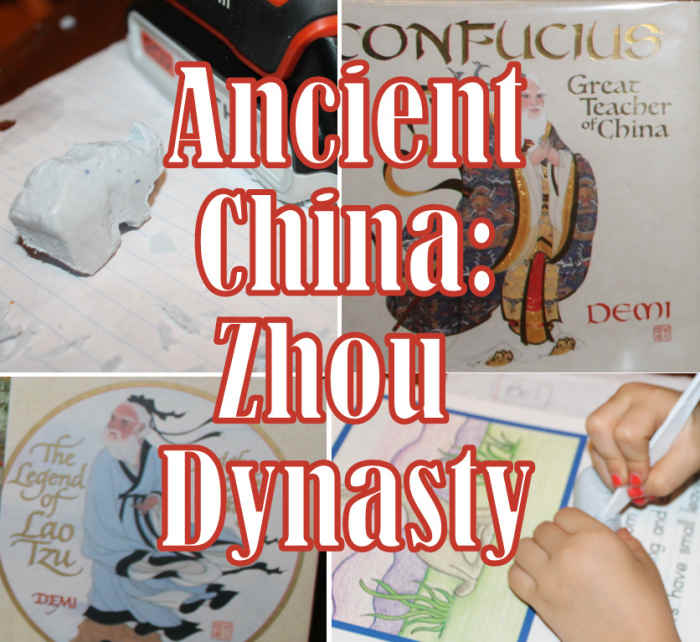
Hands on Lesson Plan on Ancient China & the Zhou (Chou) Dynasty
This is part 3 of a 12 part a hands-on unit study on China. Carve “jade” sculptures from soap, create a “bamboo” scroll using craft sticks, compare Chinese religions, & more while learning about Ancient Chinese History and the Zhou Dynasty (also spelled Chou). Also included are our favorite Children’s books and YouTube video clips. Use these ideas with your class, family, or homeschool co-op group!
Zhou Dynasty
(1122-221 BC)
*Lao Tzu/Lao Zi & Confucius, Science & Astronomy, Literature, Chariots, Feudal Lords, Roads & Canals, Iron, Multiplication Tables*
Zhou Dynasty Map

States of the Western Zhou dynasty
- During the Zhou Dynasty, the land was divided into 21 individual states with 5 strong ones: Chin, Tsi, Sung, Tsin, and Chu.
- Locate Chin, Tsi, Sung, Tsin, and Chu on a map.
- Tsin because the strongest state since it had so military experience since they were constantly fighting the Tartars. Who were the Tartars? Locate where they lived on a map.
YOU WILL NEED:
- a map with the above locations
Lao-Tzu

The Legend of Lao Tzu and the Tao Te Ching by Demi
- By the Zhou Dynasty, many people stopped thinking about a god and relied more on their own actions to earn a place in heaven. Lao-Tzu was one of the first major Chinese philosophers. He founded Taoism/Daoism, focusing on living each day spontaneously.
- Read SOME of The Legend of Lao Tzu and the Tao Te Ching by Demi, which is filled with more legends than facts. I only read parts of this and changed some words.
- Discuss how his beliefs compare with what the Bible teaches, in particular whether there is eternal life and how someone can achieve it.
YOU WILL NEED:
- The Legend of Lao Tzu and the Tao Te Ching by Demi or other book on Lao Tzu
Bamboo Scrolls
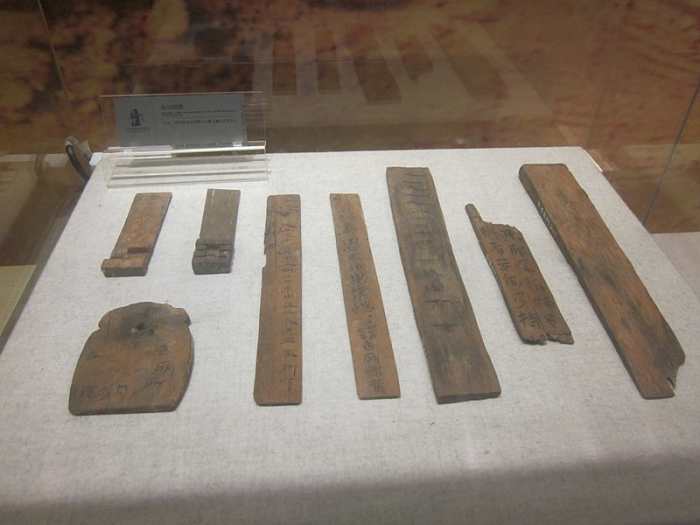
Bamboo slips from the Changsha Jiandu Museum
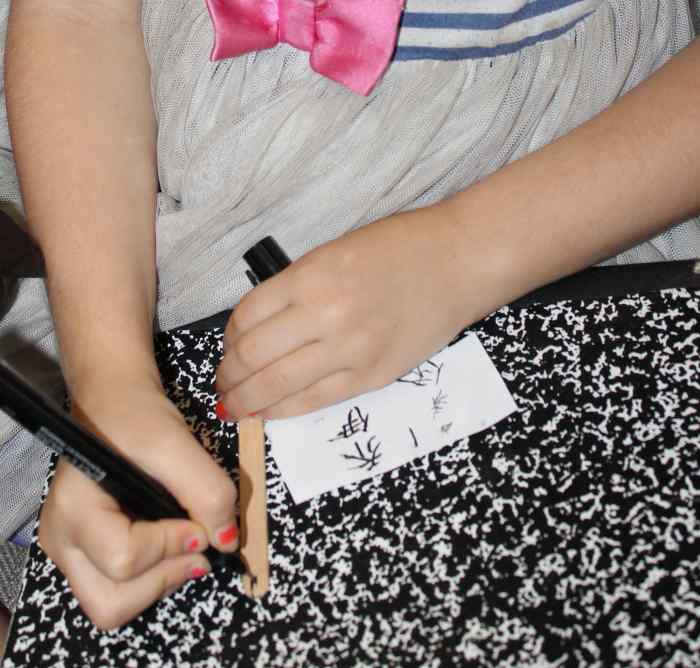
Each child attempted to write their name in Chinese characters on their “bamboo” slip made from a craft/popsicle stick.
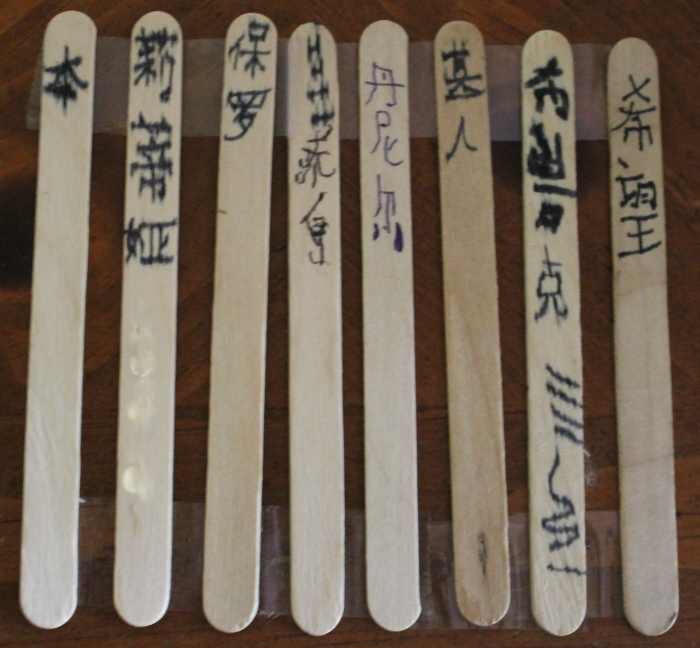
The finished bamboo scroll – We used tape to attach them, but you can use string if you want it to look more authentic.
- These bamboo scrolls were used in China before they invented paper. The bamboo strips were tied together into a mat, which made them easy to roll up. Chinese characters were written from top to bottom.
- The most famous Zhoug Dynasty emperor was Wu Wang, who became ill. His brother, Tan, wrote a prayer for healing on a bamboo scroll and locked it in an ancestral box. The bamboo scroll was later used as evidence to get Tan out of jail.
- Create a “bamboo” scroll by having each child use a thin-tipped sharpie or black pen to write their name in Chinese characters on a craft/popsicle stick. (If you’re doing this for a smaller group, they can create multiples sticks with other Chinese characters.
- Use scotch tape to tape the “bamboo slips tips together, leaving some space between the sticks so you can roll it up into a scroll.
- If you want to make it more authentic, you can use string instead of tape, following the directions simplelivingcreativelearning.com.
YOU WILL NEED:
- craft/popsicle sticks, fine-tipped black Sharpies or black pens, and tape or string
Confucius
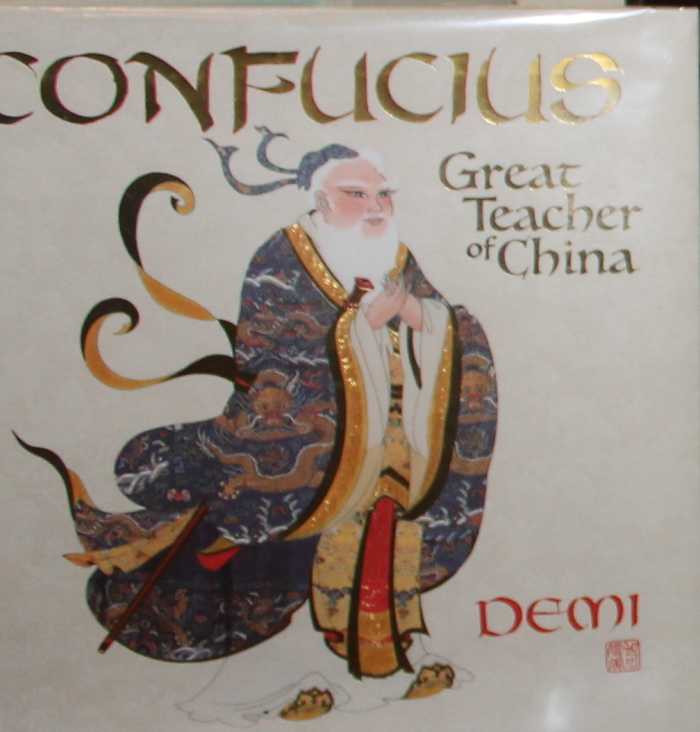
Confucius: Great Teacher of China by Demi
- Confucius was another Chinese philosopher, who focused on helping people live together in harmony and peace. Lao Tzu and Confucius lived at the same time, but Lao Tzu was much older.
- Read about life of Confucius using Confucius: Great Teacher of China by Demi.
- How do the beliefs of Confucius compare to the beliefs in the Bible? Are in similar?
- If you’d like to spend more time discussing Confucius’s philosophies, KONOS History of the World II has good topics for discussion on pp. 529-531.
YOU WILL NEED:
- Confucius: Great Teacher of China by Demi or other book on Confucius
“Jade” Soap Carvings

A “jade” rhinoceros sculpture made from Irish Spring soap by a high school aged child. — I accidently got the blue kind of soap, but I’d meant to get the green kind of soap (which is the original).
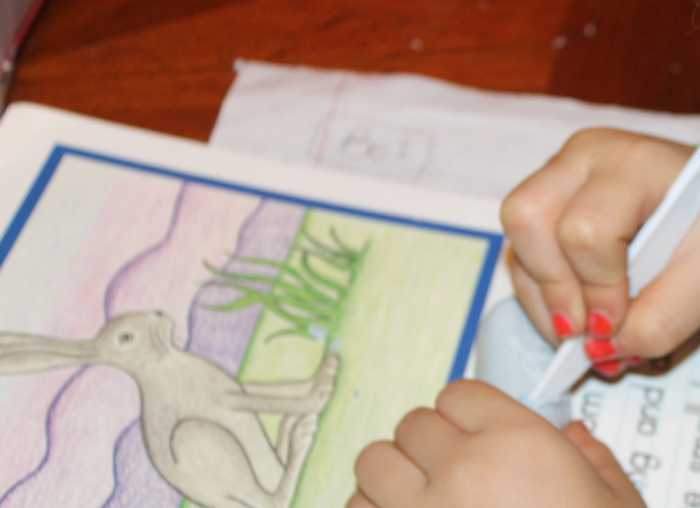
A kindergarten-aged child carving a “jade” hare from Irish Spring soap
Option for Younger Children: Play-dough
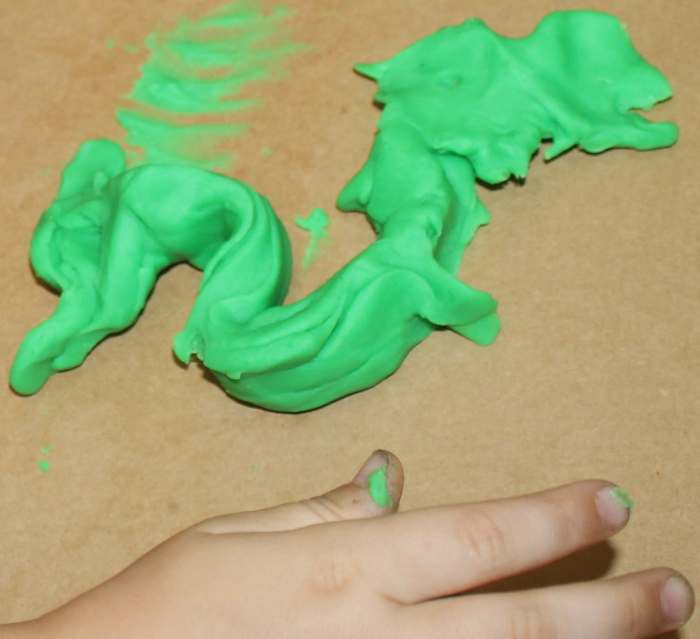
Younger children (preschool & kindergarten age) might prefer to instead form a “jade” sculpture using green play-dough. This is a “jade” dragon created by a preschooler.
- The ancient Chinese considered jade the most precious and most beautiful natural stone and used it for a variety of purposed (weapons, jewelry, ornaments, etc.) during the Shang Dynasty. During the Zhou Dynasty, Confucius changed the focus from the practical uses of jade to the “virtues” of jade, using it as a symbol of purity and goodness.
- Watch the below video on jade.
- Give each child 1/3 of a bar of Irish Spring soap (the green kind — don’t make my mistake & grab the kind that is blue). Allow them to use whatever materials they’d like to carve something. My younger children used plastic knives, vegetable peelers, and toothpicks. My older child used an electric drill. Make sure they work over a covered surface (wax paper or newspaper) for easier clean-up.
- If you have only younger children, they can instead mold something from green play-doh as it can be challenging (and frustrating) to carve soap.
YOU WILL NEED:
- 1/3 of a bar of green Irish Spring soap per child (or a whole bar if you’d like) & carving tools (plastic knives, vegetable peelers, toothpicks, paring knives*, electric drills*, etc.) *Use with caution & extra supervision
This does show Michelangelo’s David (nude) at the beginning, so skip that part if it’s an issue for you.
If you’re not limited by time, also watch 2,000 Years of Chinese History
Zhou Dynasty Books for Children
(1122-221 BC)
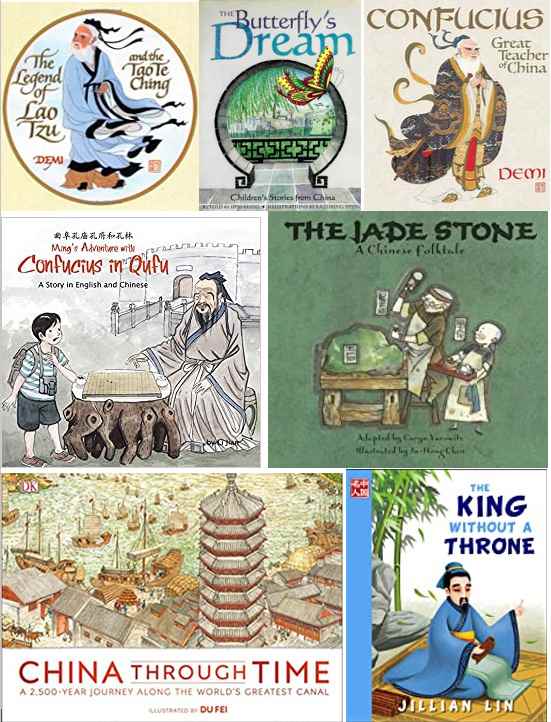
Zhou Dynasty Children’s Books
Zhou Dynasty Books
Used in the above lesson (so the links are above):
- Confucius: Great Teacher of China by Demi
- The Legend of Lao Tzu and the Tao Te Ching by Demi
More of our favorites:
- The Butterfly’s Dream by Ippo Keido
- Ming’s Adventure with Confucius in Qufu by Li Jian
- The Jade Stone: A Chinese Folktale by Caryn Yacowitz
- The King Without A Throne: Confucius by Jillian Lin
- China Through Time: A 2,500 Year Journey Along the World’s Greatest Canal by Edward Aves (includes multiple dynasties)
Ready to Study the Next Dynasty?
- Xia Dynasty (2205-1766 BC)
- Shang Dynasty (1766-1122 BC)
- Zhou Dynasty (1122-221 BC)
- Qin Dynasty (221-206 BC)
- Han Dynasty (206 BC-220 AD) & Six/Southern Dynasties Period (220-589)
- Sui Dynasty (589-618) & Tang Dynasty (618-907)
- Five Dynasties (907-960) & Song Dynasty (960-1279)
- Yuan or Mongolian Dynasty (1279-1368)
- Ming Dynasty (1368-1644)
- Qing/Manchu Dynasty (1644-1911)
- Revolutions in China (1911-1976)
- Modern China (1977-Present)
- Chinese New Year Celebration
Looking for All My Lessons?
Over the years I have posted over 40 science and social-studies based unit studies, compromised of more than 170 lessons. The unit studies include the Human Body, Simple Machines, Earth Science, Medieval Period, American Revolution, Pioneer Life, Countries of the World, and many more! For each lesson I have included activities (with photos), our favorite books and YouTube video clips, lapbook links, and other resources. I posted links to all of my unit studies and lessons at Fun, FREE Hands-on Unit Studies .
© 2021 Shannon
Leave a Reply