Ancient China Lesson Plan on Sui Dynasty & Tang Dynasty
This is part 6 of a 12 part a hands-on unit study on China. Dig a miniature “Grand Canal”, create woodblocks, participate in a tea ceremony, & more while learning about Ancient Chinese History and the Sui Dynasty and Tang Dynasty. Also included are our favorite Children’s books and YouTube video clips. Use these ideas with your class, family, or homeschool co-op group!
Sui Dynasty
(589-618)
*Grand Canal*
Grand Canal
- At 1,104 miles in length, the Grand Canal is the longest canal in the world. It connects the Yellow River and Yangtze River.
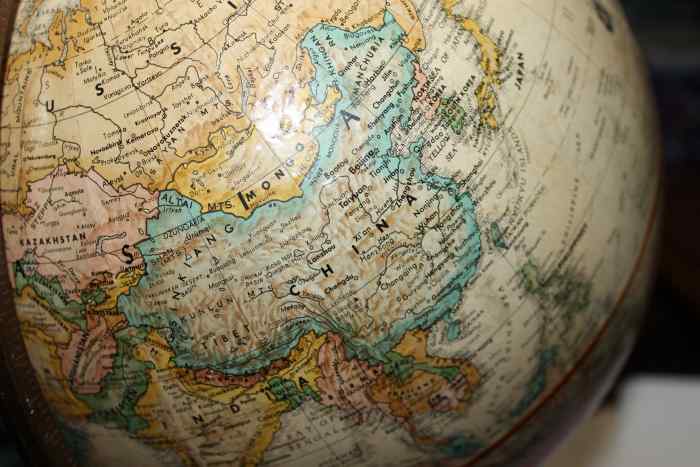
- Find the rivers and the Grand Canal on a map.
- Just like with the Great Wall of China, various sections of the canal were built before the Sui Dynasty, but they were connected during the Sui Dynasty.
- This canal was especially important during the Tang Dynasty (and later dynasties) as it allowed for rice and grain to be more easily transported from the Yangtze River Delta to northern China. This contributed to the Tang Dynasty becoming known as the Golden Age of China, even during a period of drought.
- Read the first half of China Through Time : A 2,500 Year Journey Along the World’s Greatest Canal by DK.
- Watch the below video on the Grand Canal.
YOU WILL NEED:
- China Through Time : A 2,500 Year Journey Along the World’s Greatest Canal by DK or other book on the Grand Canal
Digging the Grand Canal
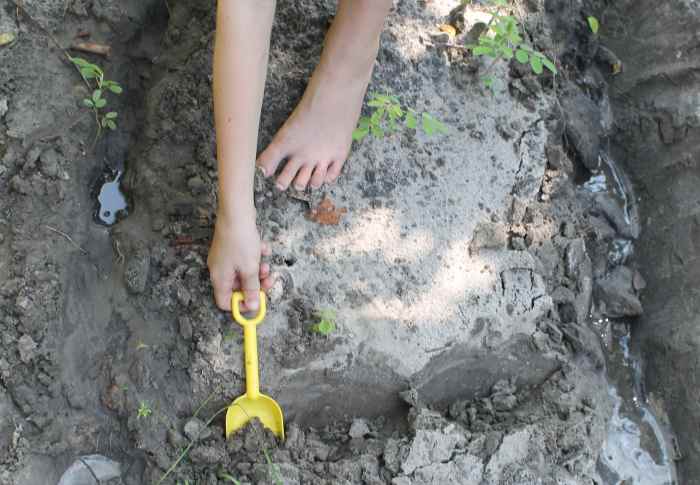
Digging the “Grand Canal”
- If you have space for digging, allow children to dig 2 lines to form the Yellow River & Yangtze River. Add water. Then have them dig a line connecting the two “rivers” to create the “Grand Canal.” You can do this in your yard, sandbox, or in a 9×13 casserole dish.
YOU WILL NEED:
- Space to dig (a pan of sand or dirt, outdoors, at the beach, etc.), digging tools (spoons, shovels, etc.), and water
Tang Dynasty
(618-907)
“Golden Age of China”
*Tea drinking, Gunpowder, Bronze/silver/gold/copper, Hanging Scroll, Music & dancing, Tri-colored painted pottery, Opera, Fancy hats, Silk robes*
Woodblock Printing

Part of the Diamond Sutra from Tang Dynasty, the world’s earliest dated printed book, AD 868
- One of the most significant inventions during the Tang Dynasty was the invention of woodblock printing, which allowed for the widespread publishing of books. During the Tang Dynasty, most of the woodblock prints were mainly related to religious texts. Remember that it wasn’t until around 1440, that Johannes Gutenberg invented the printing press in Germany.
- Read about moveable-type printing from Fantastic Inventions and Inventors by Zhu Kang.
YOU WILL NEED:
- Fantastic Inventions and Inventors by Zhu Kang or other book on moveable-type printing
Creating a “Woodblock”
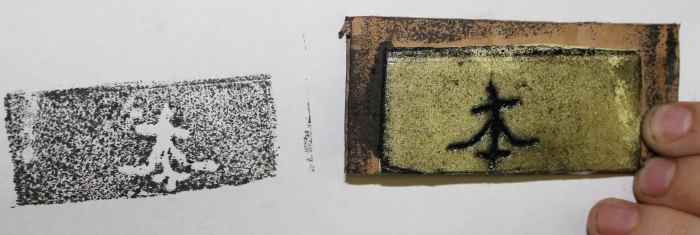
Woodblock printing by an elementary-aged student
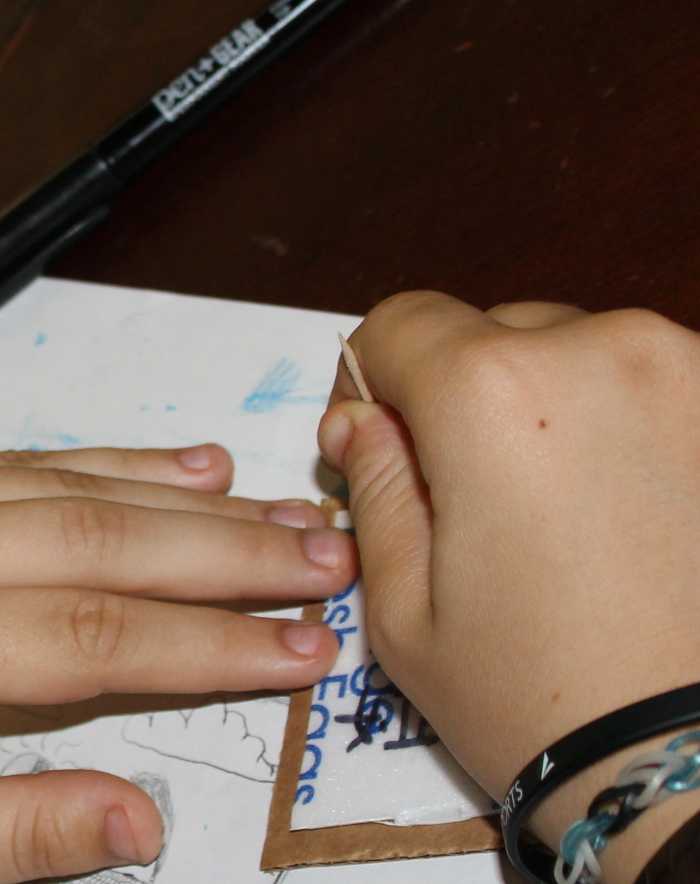
We created the woodblock prints using Styrofoam glued to cardboard. After using a Sharpie marker to draw on the Chinese character or other deign, the children then poked or carved the design out using a toothpick.
- Create a “woodblock” print.
- Ahead of time glue a small square of cardboard (from a box) to a piece of Styrofoam (such as a piece of an egg carton).
- Pass out sharpie markers and toothpicks and allow children to draw a simple design on the piece of Styrofoam and then poke/carve it out using a toothpick. (I printed off their names in Chinese characters so they could carve one of the characters from their name if they wanted to.)
- Allow children to stamp their woodblock print using an inkpad and paper.
YOU WILL NEED:
- glue, small squares of cardboard (from a box), Styrofoam (such as a piece of an egg carton or vegetable tray), sharpie markers, toothpicks, inkpads, and paper
Tang Dynasty Music & Dancing
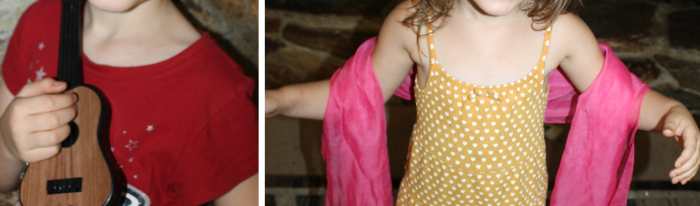
Tang Music & Dancing
- The Tang Dynasty was known as the Golden Age of China. During this time music was played for banquets and dancing. The flute became a popular instrument.
- Learn about some of the main instruments of China by watching the below video.
- Watch traditional Tang Dynasty dancing.
Tang Performance
- Give children a few minutes to collect musical instruments & costume pieces. Put on an impromptu banquet by having children play instruments and/or dance in a Tang era fashion. *The instruments and costumes are optional. If you don’t have toy instruments, just use your phone to play the music. *
YOU WILL NEED: toy instruments (such as toy flutes/recorders, ukuleles, etc.) and costume pieces (such as men’s long-sleeved dress shirts and scarves)
Learn About the Chinese Tea Ceremony
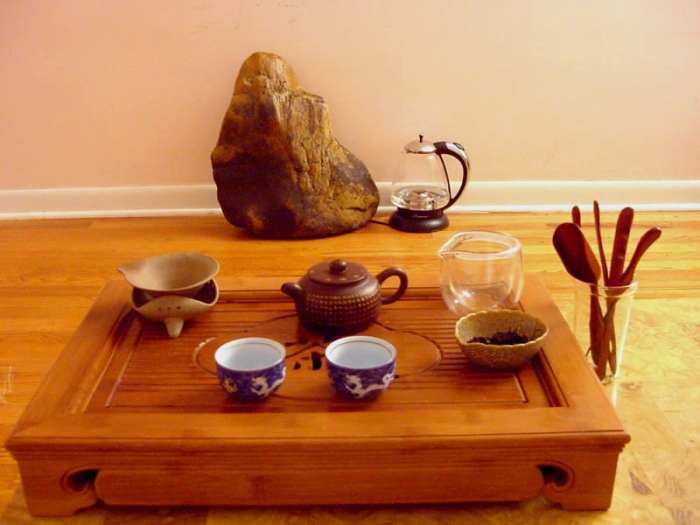
Chinese gongfu tea ceremony set
- While tea was enjoyed by the Chinese for hundreds of years before the Tang Dynasty, it was during this time that tea drinking became popular among all social classes and was even considered an art form. Interestingly, many monasteries cultivated tea fields as the caffeine in tea helped Buddhist monks stay awake during long hours of meditation.
- Watch the below videos the history of tea and on the Chinese tea ceremony.
Chinese Tea Ceremony
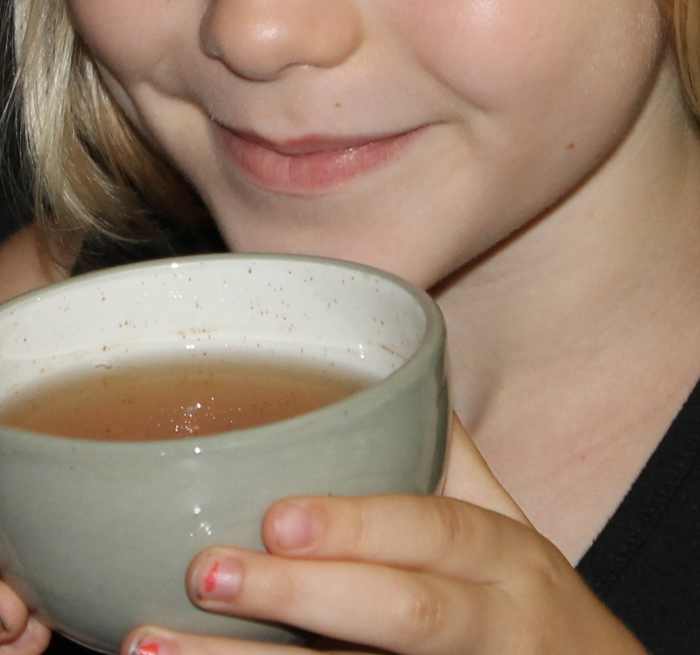
Chinese Tea Ceremony
- Hold a traditional Chinese tea ceremony.
- Sit on the floor. Use a tray to work from. (It’s considered impolite to stand while drinking tea during social settings.)
- Prepare Oolong or green tea. (Don’t add sugar or milk.) If possible, use loose-leaf tea. Alternatively, tear open the tea bags.
- Mix the tea using a wooden (not metal) whisk or spoon.
- Boil water. Pour the hot water into each cup and then dump out the water.
- Ask, “Why might they do this?” [To clean out the cup, to warm the cup so the tea stays warm longer, etc.]
- Pour the tea into cups. If possible, use cups that don’t have handles.
- Enjoy your tea.
YOU WILL NEED:
- tea (green tea or oolong tea), a tea pot or holder for tea, a wooden tray (optional), wooden (not metal) whisk or spoon, & tea cups (preferably without handles – You could use small bowls instead if needed.)
- While sipping tea, mention a few of the times traditional Chinese tea ceremonies are still done in China today:
- Sometime around a wedding, the bride and groom will serve their parents and grandparents tea to show their gratitude and respect as as a way to symbolize the joining of the two families.
- Younger people may show elders respect by offering them tea during holidays.
- Offering tea may also be a way of offering an apology and showing submission by a child to his or her parents.
More Videos We Watched
Tricolor Pottery
Gunpowder
- China Part Two – Ancient China 2 is a free video covers the Han Dynasty, the Three Kingdoms, Buddhism in China, the Jin Empire, the Sui, the Tang, and the dynastic cycle and corruption. https://www.youtube.com/watch?v=fgXnJk0YK20
- Tang Women’s Fashion (You can just watch the first 3 minutes.): https://youtu.be/xxpCL-hVp08
- Wu Zetian – 48 Minutes – It has some kissing: https://youtu.be/aeZ7esmQcm4
Tang Dynasty Books for Children
(618-907)
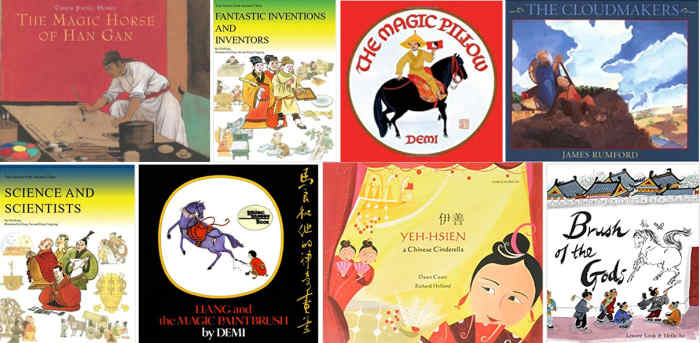
Tang Dynasty Books (Images are from amazon)
Books we used in the above lesson (so the links are above):
- China Through Time : A 2,500 Year Journey Along the World’s Greatest Canal by DK
- Fantastic Inventions and Inventors by Zhu Kang (Moveable-type printing & gunpowder)
More of our favorites:
- The Magic Horse of Han Gan by Chen Jiang Hong
- The Magic Pillow by Demi
- Science and Scientists by Zhu Kang (Yi Xang and the Calendar)
- Brush of the Gods by Lenore Look
- The Cloudmakers by James Rumford
- Yeh-Hsien : [a Chinese Cinderella] by Dawn Casey
- Empress of China: Wu Zetian by De Yuan Xu
- The Girl Emperor Of China: The Story Of Wu Zetian – in English & Chinese by Jillian Lin
Ready to Study the Next Dynasty?
- Xia Dynasty (2205-1766 BC)
- Shang Dynasty (1766-1122 BC)
- Zhou Dynasty (1122-221 BC)
- Qin Dynasty (221-206 BC)
- Han Dynasty (206 BC-220 AD) & Six/Southern Dynasties Period (220-589)
- Sui Dynasty (589-618) & Tang Dynasty (618-907)
- Five Dynasties (907-960) & Song Dynasty (960-1279)
- Yuan or Mongolian Dynasty (1279-1368)
- Ming Dynasty (1368-1644)
- Qing/Manchu Dynasty (1644-1911)
- Revolutions in China (1911-1976)
- Modern China (1977-Present)
- Chinese New Year Celebration
Looking for All My Lessons?
Over the years I have posted over 40 science and social-studies based unit studies, compromised of more than 170 lessons. The unit studies include the Human Body, Simple Machines, Earth Science, Medieval Period, American Revolution, Pioneer Life, Countries of the World, and many more! For each lesson I have included activities (with photos), our favorite books and YouTube video clips, lapbook links, and other resources. I posted links to all of my unit studies and lessons at Fun, FREE Hands-on Unit Studies .
© 2021 Shannon
Leave a Reply