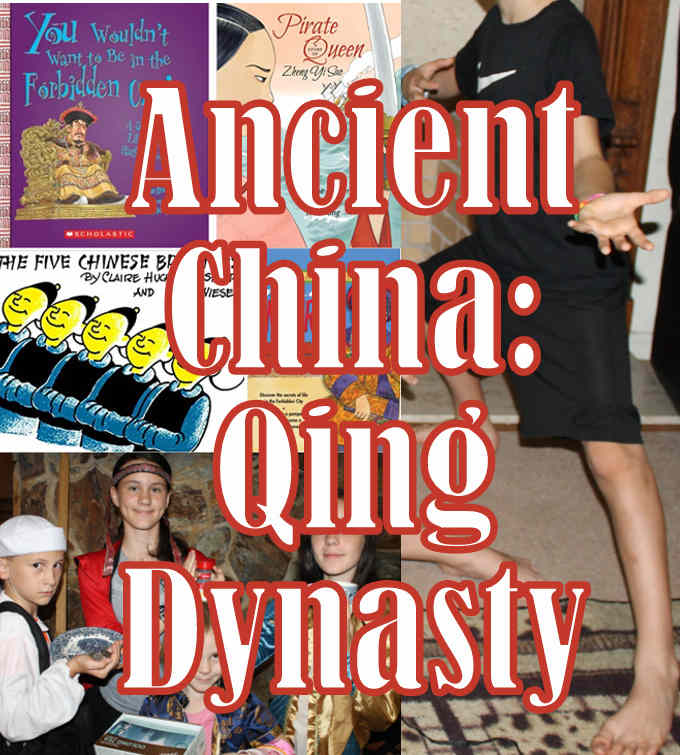
Hands on, activities based lesson on the Qing Dynasty and Ancient China
This is part 9 of a 12 part a hands-on unit study on China. Practice Kung Fu, compose Chinese poetry, dramatize the Opium Wars, sketch Pekingese, & more while learning about Ancient Chinese History & the Qing Dynasty. Also included are our favorite Children’s books and YouTube video clips. Use these ideas with your class, family, or homeschool co-op group!
Quin/Manchu Dynasty
(1644-1911)
*Forbidden City, The Last Emperor, Opium Wars, Boxer Rebellion, Mandarin, Cricket pets*
Qing Dynasty: Emperor Kangxi
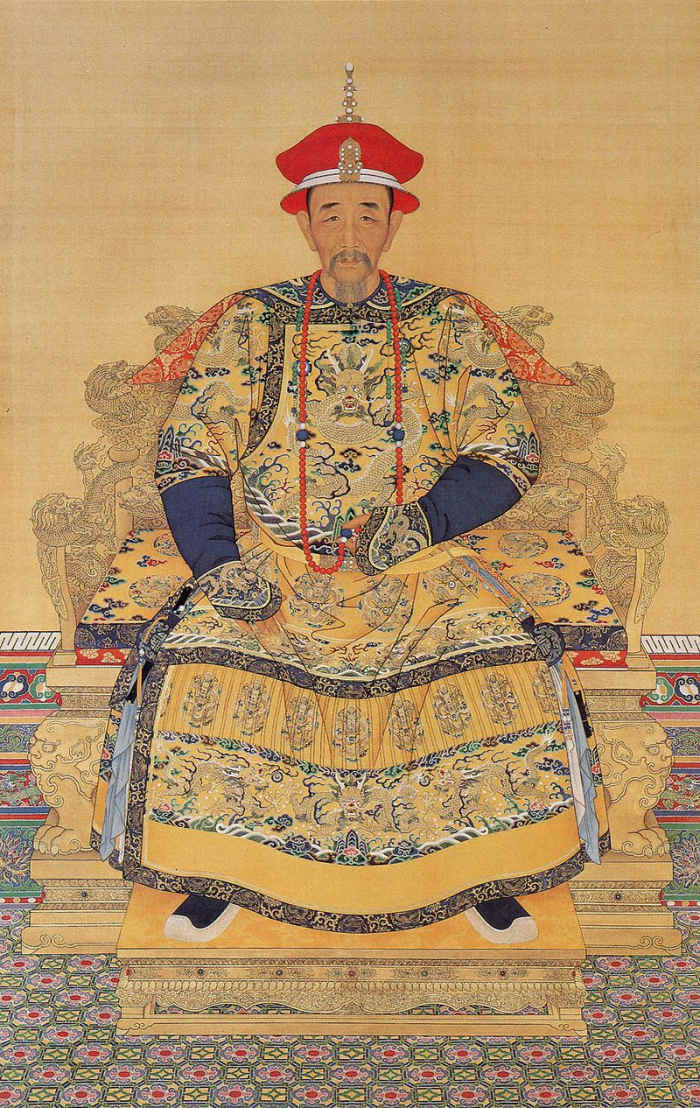
The Kangxi Emperor (r. 1662–1722)
- The Qing Dynasty was the last dynasty in China, beginning in a period of prosperity and ending in tumult.
- It was also the second time China was ruled by a “foreign” group, the Manchurians, rather than the Han people.
- The emperors continued living in the Forbidden City.
- Emperor Kangxi, pictured above, was the first Qing Emperor. He ruled for 61 years, the longest of any Chinese emperor.
- Emperor Kangxi oversaw the creation of a dictionary that is still today considered to be the best standardization of the Han language.
- The Manchurians insisted everyone must follow the Manchurian styles, with men being forced to shave the fronts of their heads and wear a long braided ponytail in the back. Refusals resulted in executions.
- Watch the below videos about an overview of the Qing Dynasty and the hairstyles during the dynasty.
Qianlong Emperor & Poetry
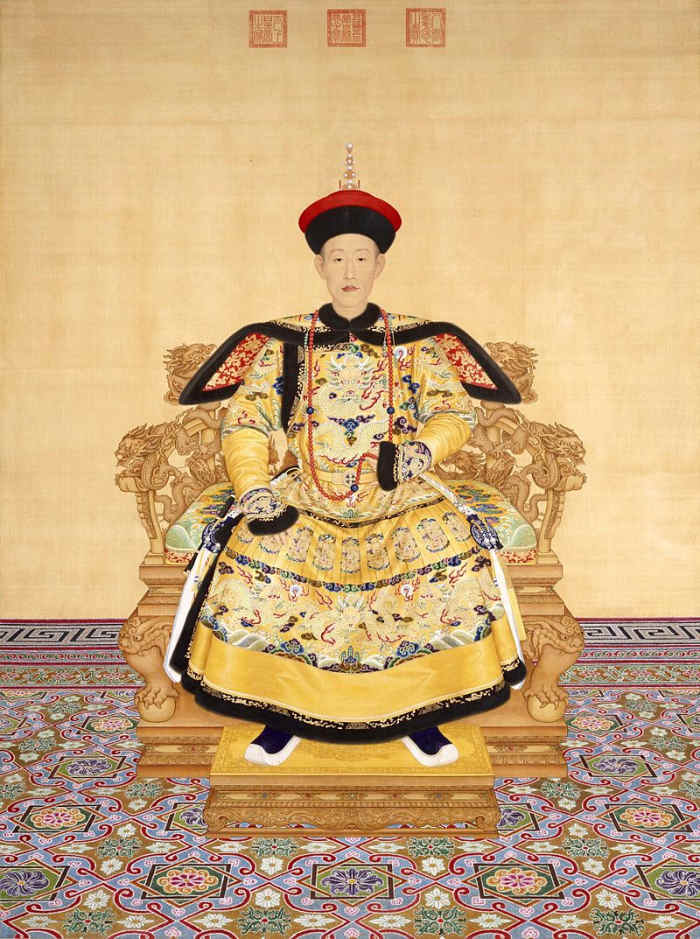
The Qianlong Emperor in court dress by Giuseppe Castiglione
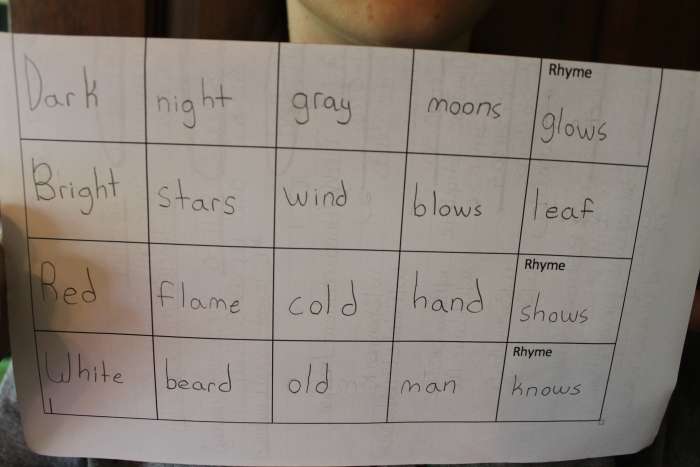
Chinese jueju poem written by a middle schooler
- Qianlong Emperor (1711 – 1799) was a prolific poet, writing over 40,000 poems and 1,300 prose texts.
- One form of Chinese poem is a jueju with either five or seven syllables per line and a stanza of four lines.
- Have children create a Chinese jueju poem by following the directions at https://www.ou.edu/ .
- If you only have younger children, do one together rather than doing them individually.
YOU WILL NEED:
- pencils and paper
Opium Wars

The British East India Company iron steam ship destroying the Chinese war junks during the First Opium War
- Give a simplified explanation of the Opium Wars.
- England wanted silk, tea, and porcelain from China and wanted to trade for them. China didn’t need anything from England but welcomed them to purchase the items from them. England started running out of silver, so they tried smuggling in opium, a highly additive drug, to use for trade instead. The emperor outlawed opium. England declared war on China and attacked. China had to give Hong Kong to England.
- A second Opium War was fought later, and France joined in on that one.
- Watch the below video on the Opium Wars.
Opium Wars Dramatization
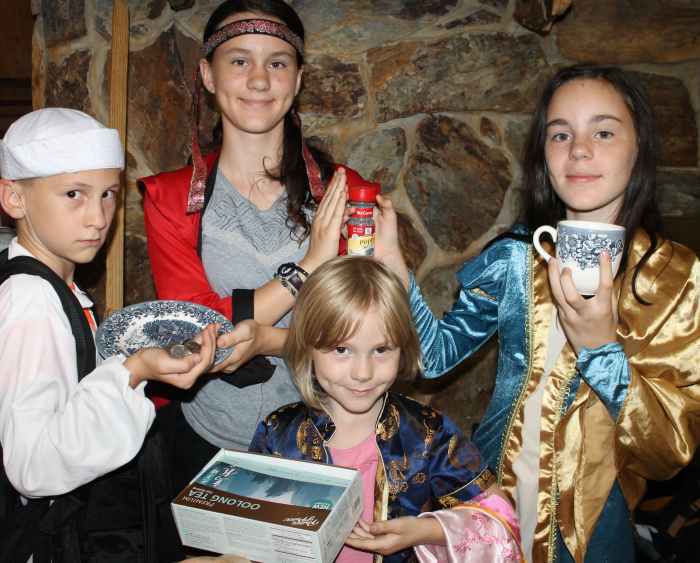
Dramatizing the Opium Wars
- Have children act out a simplified Opium War. Allow them a few minutes to collect items and then let them have an impromptu trade and then battle.
- The “Chinese” sold tea, silk, & porcelain to the British for silver (silver colored coins).
- The British eventually smuggled in opium (poppy seeds).
- The Chinese Emperor banned opium.
- The British attacked the Chinese. (Act out a mini-battle).
YOU WILL NEED:
- materials to act out the Opium Wars such as tea, silk (or polyester), “porcelain”, “silver” (such as nickels and dimes), poppy seeds, weapons, & black pants (to wear on the back of your head as the queue hair)
Boxer Rebellion
![Capture of the Forts at Taku [a.k.a. Dagu] by Fritz Neumann taking place during the Boxer Rebellion](/wp-content/uploads/archived/44410ffa43fbaffc0a2b8aef410bf184.jpg)
Capture of the Forts at Taku [a.k.a. Dagu] by Fritz Neumann taking place during the Boxer Rebellion
- Give a simplified explanation of the Boxer Rebellion.
- A group of Chinese kung fu fighters (the Boxers) got fed up with all the foreigners and led a peasant uprising against all foreigners. They killed many foreigners and Christian missionaries and even killed Chinese Christians.
- Watch the below videos on the Boxer Rebellion.
Kung Fu

Practicing Kung fu positions
- Because the Boxers practiced martial arts, learn about Kung fu.
- Kung fu originated in China around 1600 BC as a way to prepare soldiers for battle.
- Around 500 AD Shaolin Buddhist monks used kung fu as a way to strengthen students so they could meditate for long hours without falling asleep.
- During the Qing Dynasty, the Manchurians feared the Shaolin monks would fight for the Ming Dynasty, so they tried to rid the country of the Shaolin monks, burning their temples. Many fled to the Canton province of China or to other countries. Over time various styles developed.
- Today the traditional form seen in movies is called kung fu and the modern form that involves acrobatics and is used for competitions is called wushu.
- Watch the below videos on kung fu and then practice some some positions. We used the illustrations and explanations from Kungfu for Kids by Paul Eng.
YOU WILL NEED:
- Kungfu for Kids by Paul Eng or other book or video showing basic positions and moves for kung fu
(We only watched part of this.)
Empress Dowager Cixi & the Last Emperor
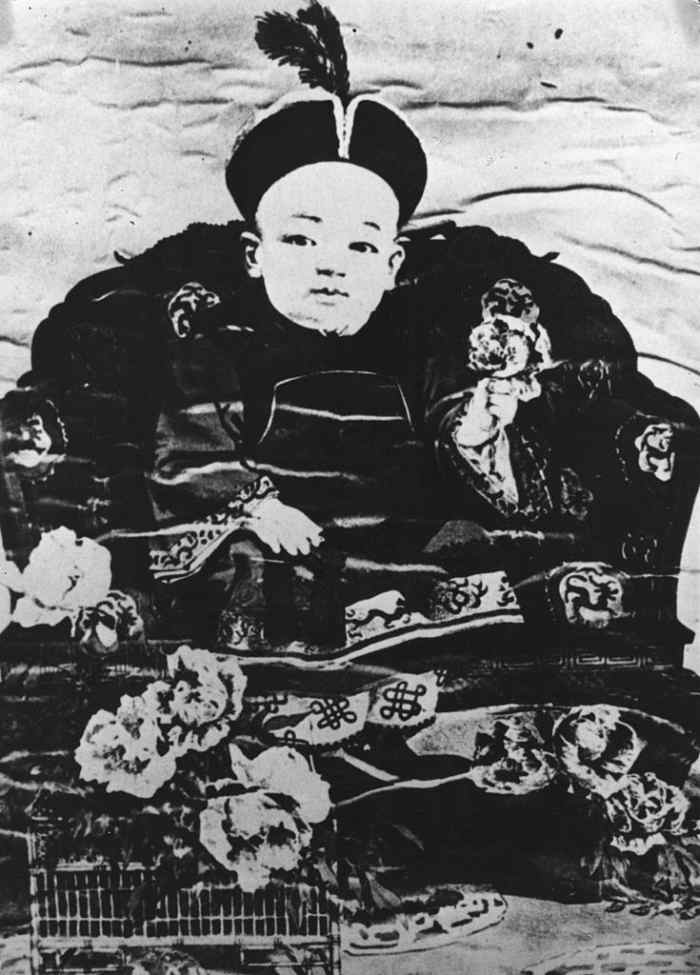
Painting portrait of Puyi, 1908
- Empress Dowager Cixi had unofficially ruled for decades, making the decisions for the weak emperors. She sided with the Boxers during the Boxer Rebellion. Western troops defeated the Boxers and her government, significantly weakening the Qing Dynasty. After she died in 1908, her appointed successor Xuantong (Puyi) became the last emperor of China.
- Read The Last Emperor by Jackie Gaff, which does a good job covering the entire life of Puyi. The illustrations are nice and the text is informative and interesting. We skipped the side bars that give general information about China.
YOU WILL NEED:
- The Last Emperor by Jackie Gaff or other book on Xuantong (Puyi)
The Last Emperor Movie
- Watch some of all of the movie, The Last Emperor. It does have some adult scenes, so you might need to forward through some scenes if desired.
- How historically accurate is the movie? After researching, we learned it’s based on his Puyi’s communist-approved autobiography and stays true to his book. The movie also had to be approved by Communist China. Comparing what is written in his book with accounts from other sources, the movie gives an idealized portrayal of the Communist Education/Prison Center. The prisoners were starved and the conditions were quite meager. The prison guards were quite harsh. When a reporter met with Puyi, he appeared to be trembling with fear throughout the interview and answered with what appeared to be approved answers. .
YOU WILL NEED:
- the movie, The Last Emperor
Pekingese

Pekingese
- At the beginning of the movie The Last Emperor, Empress Dowager Cixi is amused when young Puyi smiles at her dog, a Pekingese.
- Pekingese were originally bred in China and records of them being kept by wealth Chinese date back to 700 B.C.
- Monks used Pekingese as a model for lions, which represent Buddha, so their nickname is “lion dog.” Pekingese are the model breed for the statues of dogs throughout China.
- During the Tang Dynasty, only the imperial family was allowed to own Pekingese.
- In 1860, during the Second Opium War, British and French troops stormed the Summer Palace, so the Xianfeng Emperor and his court fled. They took most of their 100 Pekingese, but a few remained at the palace and were “looted” before the soldiers burned the Summer Palace to the ground. One of the Pekingese was taken to England to be presented a gift to Queen Victoria. They named the dog “Lootie.”
- Empress Dowager Cixi sent Pekingese as gifts to Theodore Roosevelt’s daughter Alice and J.P. Morgan.
- Watch some of the below video on the history of the Pekingese.
- Sketch a picture of a Pekingese using the below video. If you need directions for a simpler Pekinese drawing, use this one instead.
YOU WILL NEED:
- a pencil and paper
Qing Dynasty Books for Children
(1644-1911)
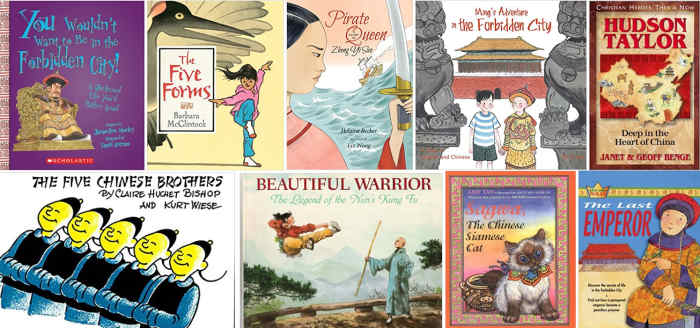
Some Qing Dynasty children’s books (Images are from amazon)
Qing Dynasty Books
Used in the lesson (so the links are above):
- Kungfu for Kids by Paul Eng
- The Last Emperor by Jackie Gaff
More of our favorites:
- Pirate Queen : A Story of Zheng Yi Sao by Helaine Becker
- The Seven Chinese Brothers by Margaret Mahy
- Beautiful Warrior : The Legend of the Nun’s Kung Fu by Emily Arnold McCully
- You Wouldn’t Want to be in the Forbidden City! : A Sheltered Life You’d Rather Avoid by Jacqueline Morley
- Ming’s Adventure in the Forbidden City by Jian Li
- This is the Greatest Place!: The Forbidden City and the World of Small Animals by Brian Tse
- In the Forbidden City by Guangchao Zhao
- Through Time : Beijing by Richard Platt
- Bowls of Happiness : Treasures from China and the Forbidden City by Liwen Xie
- Hudson Taylor by Marlee Alex
- Hudson Taylor: Deep in the Heart of China by Janet Benge and Geoff Benge (chapter book – also has an audio version)
- Lottie Moon: Giving Her All for China by Janet Benge and Geoff Benge (chapter book – also has an audio version)
- The Five Forms by Barbara McClintock
- Sagwa, The Chinese Siamese Cat by Amy Tan
- Lost and Found : Adèle & Simon in China by Barbara McClintock
Ready to Study the Next Dynasty?
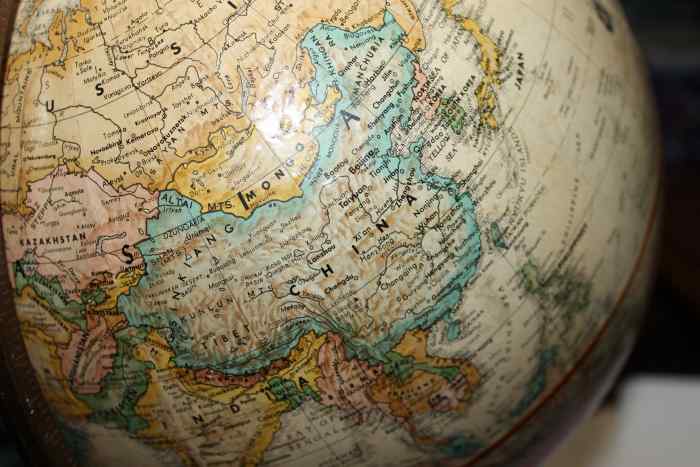
- Xia Dynasty (2205-1766 BC)
- Shang Dynasty (1766-1122 BC)
- Zhou Dynasty (1122-221 BC)
- Qin Dynasty (221-206 BC)
- Han Dynasty (206 BC-220 AD) & Six/Southern Dynasties Period (220-589)
- Sui Dynasty (589-618) & Tang Dynasty (618-907)
- Five Dynasties (907-960) & Song Dynasty (960-1279)
- Yuan or Mongolian Dynasty (1279-1368)
- Ming Dynasty (1368-1644)
- Qing/Manchu Dynasty (1644-1911)
- Revolutions in China (1911-1976)
- Modern China (1977-Present)
- Chinese New Year Celebration
Looking for All My Lessons?
Over the years I have posted over 40 science and social-studies based unit studies, compromised of more than 170 lessons. The unit studies include the Human Body, Simple Machines, Earth Science, Medieval Period, American Revolution, Pioneer Life, Countries of the World, and many more! For each lesson I have included activities (with photos), our favorite books and YouTube video clips, lapbook links, and other resources. I posted links to all of my unit studies and lessons at Fun, FREE Hands-on Unit Studies .
© 2021 Shannon
Leave a Reply