Hands on Lesson Plan on Ancient China and the Ming Dynasty
This is part 8 of a 12 part a hands-on unit study on China. Paint Ming porcelain on paper plates, construct the Forbidden City using Legos, sketch Zheng He’s treasure ship, create and use a Chinese abacus, & more while learning about Ancient Chinese History & the Ming Dynasty. Also included are our favorite Children’s books and YouTube video clips. Use these ideas with your class, family, or homeschool co-op group!
Ming Dynasty
(1368-1644)
*Blue & white porcelain, Zheng He, Forbidden City built, Additional Great Wall construction, Carved lacquer*
Ming Porcelain
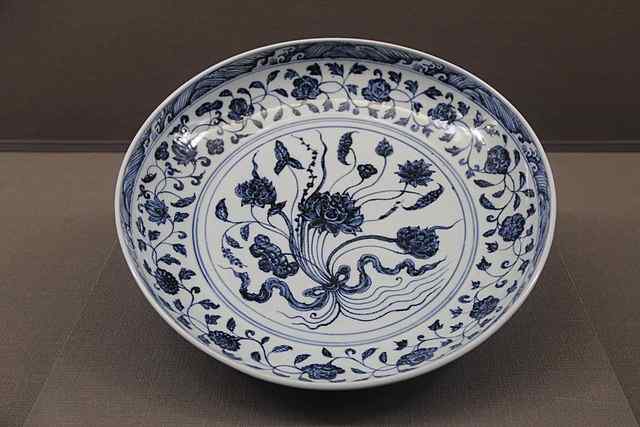
Porcelain from Yongle Reign of Ming Dynasty, Palace Museum, Taipei, Taiwan
- The first thing I think of when I heard about the Ming Dynasty is the blue and white porcelain.
- If the famous blue and white porcelain was created during the Yuan Dynasty, why do we associate it with the Ming Dynasty? The main reason is because it was during the Ming Dynasty that it started coming to Europe.
- The porcelain transformed the way people in Portugal, England, and Holland dined and entertained. No longer did they need to eat from pewter and wood. Now the wealthy had bright, interesting porcelain they could use for meals and for decorating.
- Watch the below 2 videos on Ming porcelain.
(If you have available time, you can also watch part or all of this 58 minute BBC Documentary on Chinese Porcelain.)
Paint Ming Dynasty Porcelain Style Plates

A middle-school aged child painting a Ming porcelain inspired plate
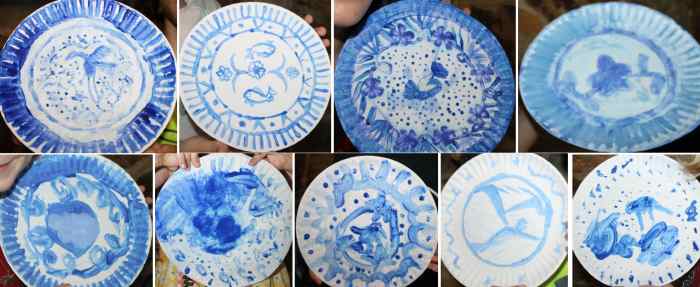
Some of the Ming Dynasty porcelain-inspired plated painted on paper plates by preschoolers, elementary, and middle school aged children
- Look online at various Ming Dynasty porcelain. What do you notice about them?
- Have children use blue and white tempera paints to paint paper plates in the Ming Dynasty style.
- The children were allowed to paint whatever they would like, but I suggested they paint 2 separate borders and then include peony flowers and/or an animal in the center of the plate.
- Provide lots of printed examples on the table for children to look at while painting.
- Encourage children to not mix too much white into their blue paint.
- I allowed children to paint multiple plates if desired.
- (Optional) Listen to music from the Ming Dynasty while painting. (You can easily find the music on YouTube.)
YOU WILL NEED:
- table cover, paintbrushes (thin ones work best), blue & white tempera paint, paper plates
The Forbidden City
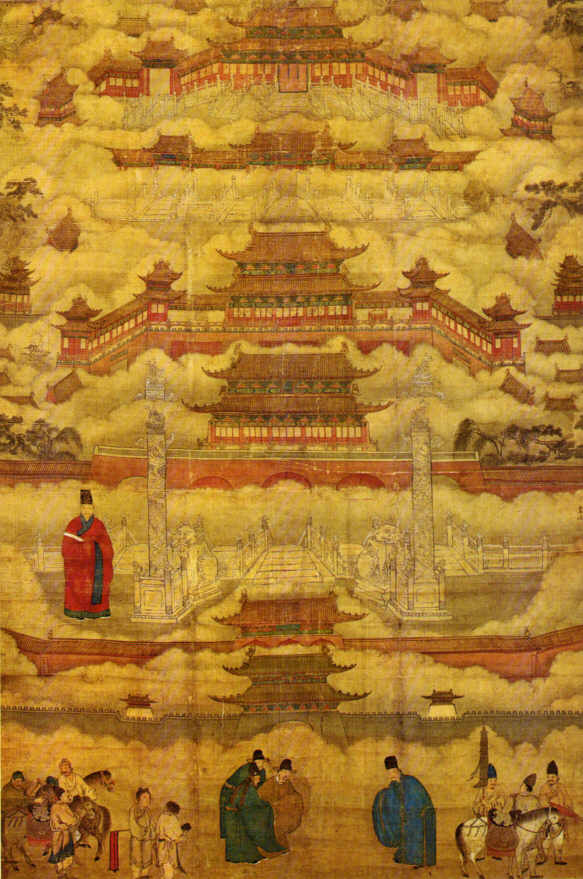
The Forbidden City as depicted in a Ming dynasty painting
- The Forbidden City was built in only 14 years during the Ming Dynasty. Read What’s Inside the Forbidden City? by Professor Beaver.
YOU WILL NEED:
- What’s Inside the Forbidden City? by Professor Beaver or other book on the Forbidden City
- Watch the below video on the Forbidden City.
(If you have extra time, you can watch the first 23 minutes of this History Channel episode “Inside China’s Forbidden City.” It does contain some adult content, so be prepared to skip a few parts if needed.)
Constructing the Forbidden City
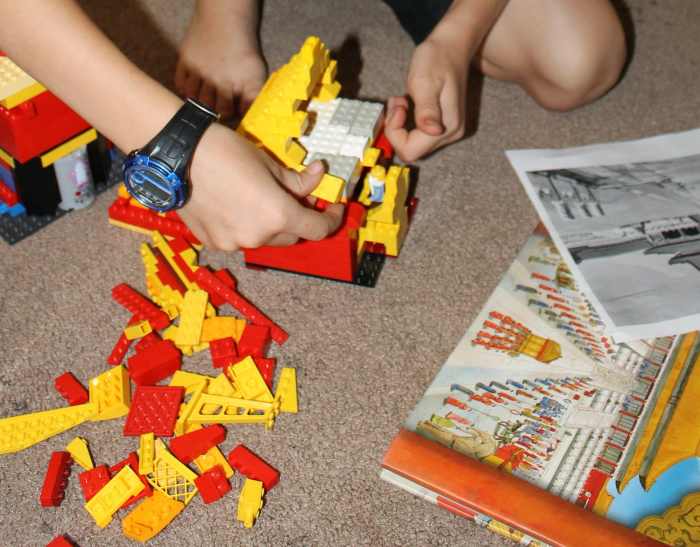
Using Legos to construct the Hall of Supreme Harmony
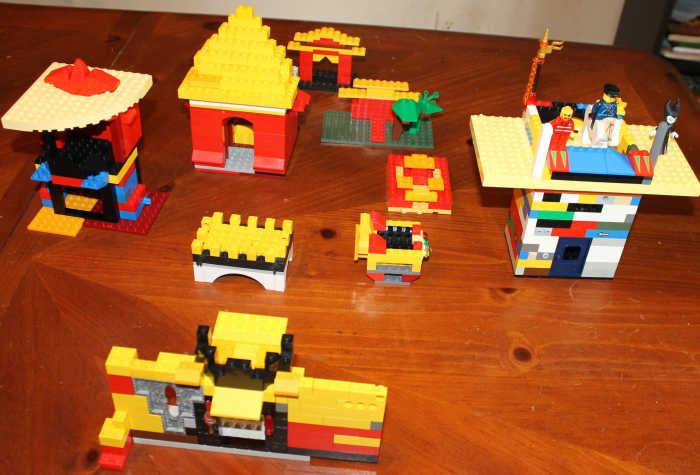
Lego Forbidden City
- Look online or in a book at the various gates and buildings in the Forbidden City.
- Have the children construct a building or gate from the Forbidden City.
- Give children about 5 minutes to plan what they want to build and then to pull out all the red and yellow Legos.
- Because the Forbidden City was constructed in 14 years, the children will get 14 minutes to construct their Lego replicas.
- Alternatively, you could assign each child a gate or building, have them research it, and then report back on what with was used for, where it is, and it looks like.
YOU WILL NEED:
- Legos
Zheng He
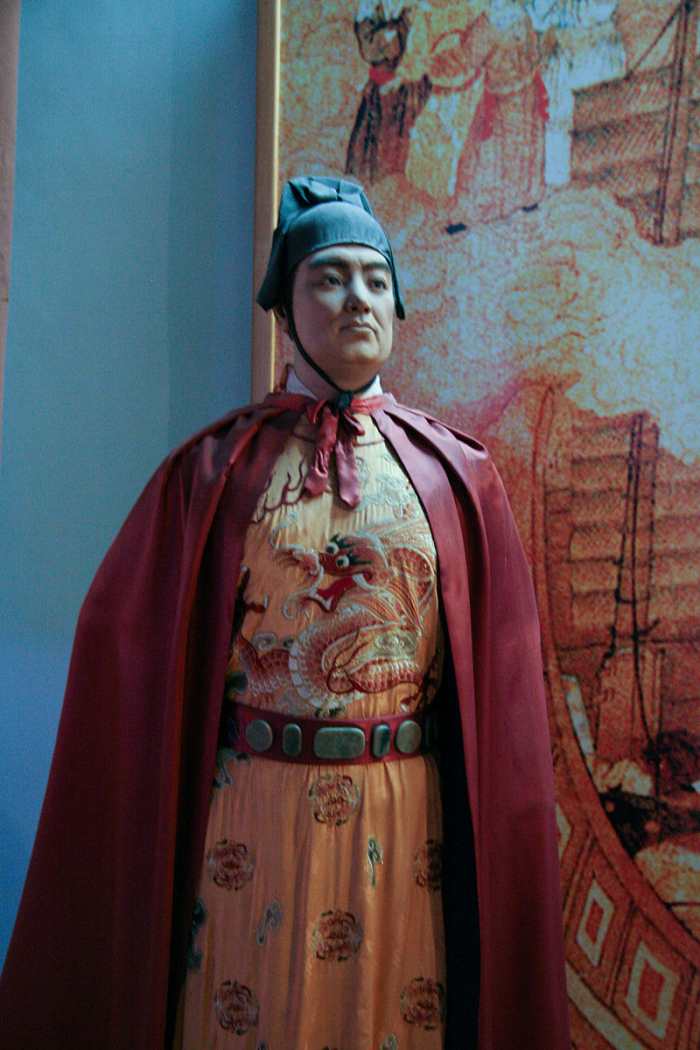
Zheng He wax statue in the Quanzhou Maritime Museum
- Zheng He was a Chinese explorer, diplomat, and fleet admiral during the Ming dynasty.
- Almost 100 years before Columbus sailed to America, Zheng He made seven expeditions around Asia and Africa with hundreds of ships and hundreds of sailors.
- His ships were almost twice as long as any wooden ship ever recorded.
- Read The Great Voyages of Zheng He by Demi.
YOU WILL NEED:
- The Great Voyages of Zheng He by Demi or other book on Zheng He
- Watch the below videos on Zheng He.
(If you have extra time, you can also watch this 17 minute video showing where Zheng He went each year and what happened.)
Zheng He’s Ships
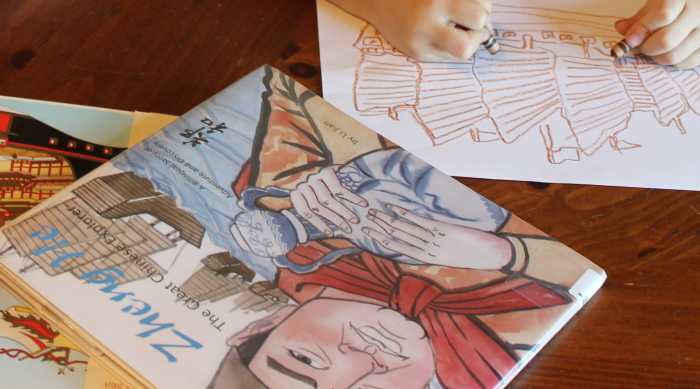
Sketching Zheng He’s treasure ship
- Zheng He’s fleet of over 300 ships consisted of a variety of ship types.
- The ship types were various dimensions depending on the purpose such as carrying soldiers, treasure, horses, water, weapons, supplies, etc.
- His largest ships, the treasure ships (宝船, Bǎo Chuán), were about 417 feet long and 171 feet wide, considered to be the world’s largest wooden ship ever built. It had nine masts.
- Watch part of the below video showing a model of Zheng He’s Treasure Ship.
- Give children 10 minutes to sketch a copy of his treasure ship.
YOU WILL NEED:
- pencil and paper
Chinese Abacus (Suanpan)
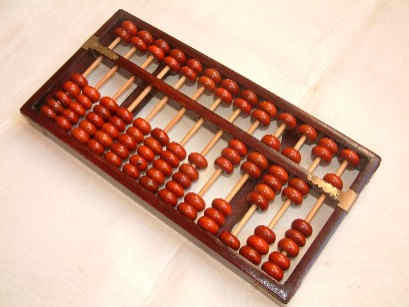
A Chinese abacus, Suanpan
- While the Chinese did not invent the abacus, they perfected its design and still use them today.
- The Chinese refer to their style of abacus as a suanpan (算盤/算盘, literally “calculating tray”).
- The Chinese have been using an abacus since at least the Han Dynasty, but the design and the amount of beads has changed over the years.
- During the Ming Dynasty the current style of Chinese abacus was designed, with 2 beads on one side of a rod (each representing 5) and 5 beads on the other side of the rod (each representing 1).
- Read The Warlord’s Beads by Virginia Walton Pilegard.
YOU WILL NEED:
- The Warlord’s Beads by Virginia Walton Pilegard or other book on a Chinese abacus
- Watch the below videos on the history of the Chinese abacus and a brief explanation of how to use one.
Creating and Using a Chinese Abacus
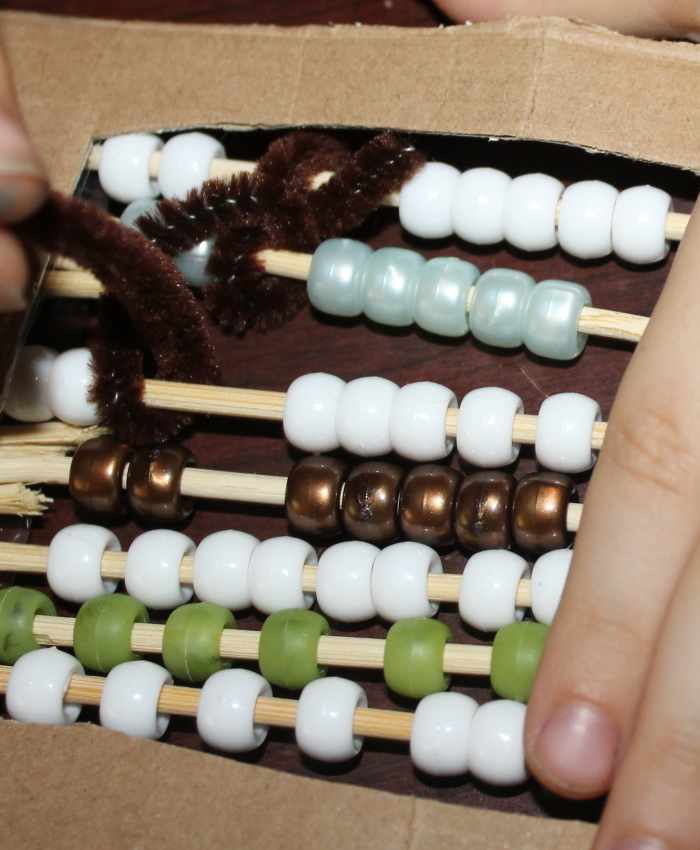
Children creating a Chinese abacus
- Give children 15 minutes. Have them work together to create a working Chinese abacus. (If you have a large group of students, you can divide them into groups of 4-6.)
- I allowed my children to use any materials.
- If your children need more direction, you can follow the model my children created. They used a cut-out cardboard piece (from a cereal box) for the outside rectangle, shish kabob skewers (held down by tape) for the rods, pony beads for the beads, and a pipe cleaner for the dividing rod.
YOU WILL NEED:
- material to use to create an abacus such cardboard (from cereal or cracker boxes), scissors, tape (scotch tape & packing tape), shish kabob skewers, pony beads, pipe cleaners, Fruit Loops, craft sticks, glue, etc.
- Use the Chinese Abacus.
- Have each child write a 5-6 digit number on a sheet of paper & fold up the paper.
- Put the slips of paper in a bowl & have each child pull out a number.
- Have them take turns creating the number on the Chinese Abacus and then have the older children say what the number is.
- If you have older children, have them attempt addition and subtraction problems on the abacus.
- Some Chinese students still learn use abacuses at their schools and become quite fast at calculations. Sometimes there are even races between someone using a calculator and someone using an abacus. Do you think the person using calculator always wins? (No, they don’t. It varies on who wins.)
If you’re not limited by time, watch Ming: 50 Years That Changed China
Ming Dynasty Books for Children
(1368-1644)
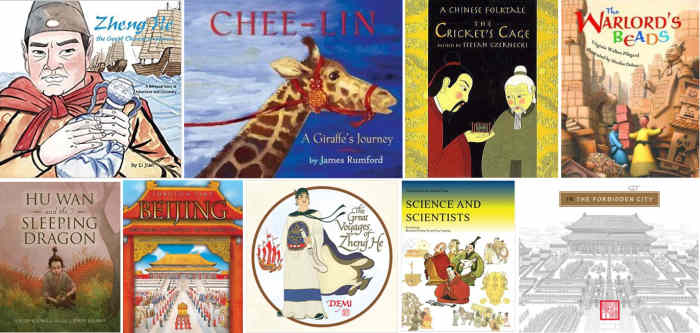
Ming Dynasty Books for Children
Ming Dynasty Books
(We will focus more on the Forbidden City & pet crickets during the Qing Dynasty.)
Books we used during this lesson (so the links are above):
- What’s Inside the Forbidden City? by Professor Beaver or other book on the Forbidden City
- The Great Voyages of Zheng He by Demi
- The Warlord’s Beads by Virginia Walton Pilegard (About the abacus)
More of our favorites:
- Science and Scientists by Zhu Kang – The Travels of Xu Xiake
- Zheng He, The Great Chinese Explorer by Li Jian
- The Happy Sailor Of China: The Story of Zheng He by Jillian Lin
- Chee-lin : A Giraffe’s Journey by James Rumford
- Hu Wan and the Sleeping Dragon by Judy Young
- Through Time: Beijing by Richard Platt (includes multiple dynasties)
- The Cricket’s Cage : A Chinese Folktale by Stefan Czernecki
- In the Forbidden City by Guangchao Zhao (mainly takes place during Qing Dynasty but does a good job showing the parts of the Forbidden City)
- Beijing : A Symmetrical City by Dawu Yu
- The Mountain Man of Music: Zhu Zaiyu by Jillian Lin
Ready to Study the Next Dynasty?

- Xia Dynasty (2205-1766 BC)
- Shang Dynasty (1766-1122 BC)
- Zhou Dynasty (1122-221 BC)
- Qin Dynasty (221-206 BC)
- Han Dynasty (206 BC-220 AD) & Six/Southern Dynasties Period (220-589)
- Sui Dynasty (589-618) & Tang Dynasty (618-907)
- Five Dynasties (907-960) & Song Dynasty (960-1279)
- Yuan or Mongolian Dynasty (1279-1368)
- Ming Dynasty (1368-1644)
- Qing/Manchu Dynasty (1644-1911)
- Revolutions in China (1911-1976)
- Modern China (1977-Present)
- Chinese New Year Celebration
Looking for All My Lessons?
Over the years I have posted over 40 science and social-studies based unit studies, compromised of more than 170 lessons. The unit studies include the Human Body, Simple Machines, Earth Science, Medieval Period, American Revolution, Pioneer Life, Countries of the World, and many more! For each lesson I have included activities (with photos), our favorite books and YouTube video clips, lapbook links, and other resources. I posted links to all of my unit studies and lessons at Fun, FREE Hands-on Unit Studies .
© 2021 Shannon
Leave a Reply