Hands on Lesson Plan on Ancient China & the Han Dynasty
This is part 5 of a 12 part a hands-on unit study on China. Design & fly kites, learn about silk & “embroider” on plastic canvas, create a fish compass, & more while learning about Ancient Chinese History and the Han Dynasty. Also included are our favorite Children’s books and YouTube video clips. Use these ideas with your class, family, or homeschool co-op group!
Han Dynasty
(206 BC-220 AD)
*Silk Road Started = Silk Spread, Embroidery, Buddha, Paper & Kites invented, Compass, Stir-frying & soy sauce*
(*Six/Southern Dynasties Period (220-589) books will be included in the this lesson under the Children’s Books section as there will not be a separate lesson on that time period.*)
Compasses
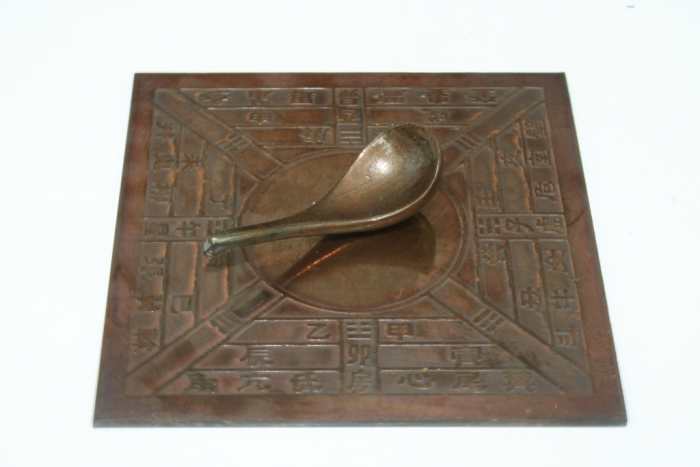
Model of a Han Dynasty south-indicating ladle or sinan
- Hundreds of years before compasses were showing up on European ships, the Chinese were already mass-producing compasses. They were initially used as a way to tell fortunes.
- The initial compasses were made of lodestone, a naturally magnetized stone of iron.
- During the Han Dynasty it was called the “south-governor” or “South Pointing Fish” (sīnán 司南).
- Unlike the compasses we use, these compasses pointed to the south. Why do you think they did that?
- According to some historians, it wasn’t until the Song Dynasty (960–1279 AD) that compasses were used for navigational purposes.
2) Read The Warlord’s Fish by Virginia Walton Pilegard and the section on compasses from Fantastic Inventions and Inventors (True Stories From Ancient China) by Kang Zhu.
YOU WILL NEED:
- The Warlord’s Fish by Virginia Walton Pilegard and Fantastic Inventions and Inventors (True Stories From Ancient China) by Kang Zhu or other book on Chinese compasses
.
Creating a Fish Compass
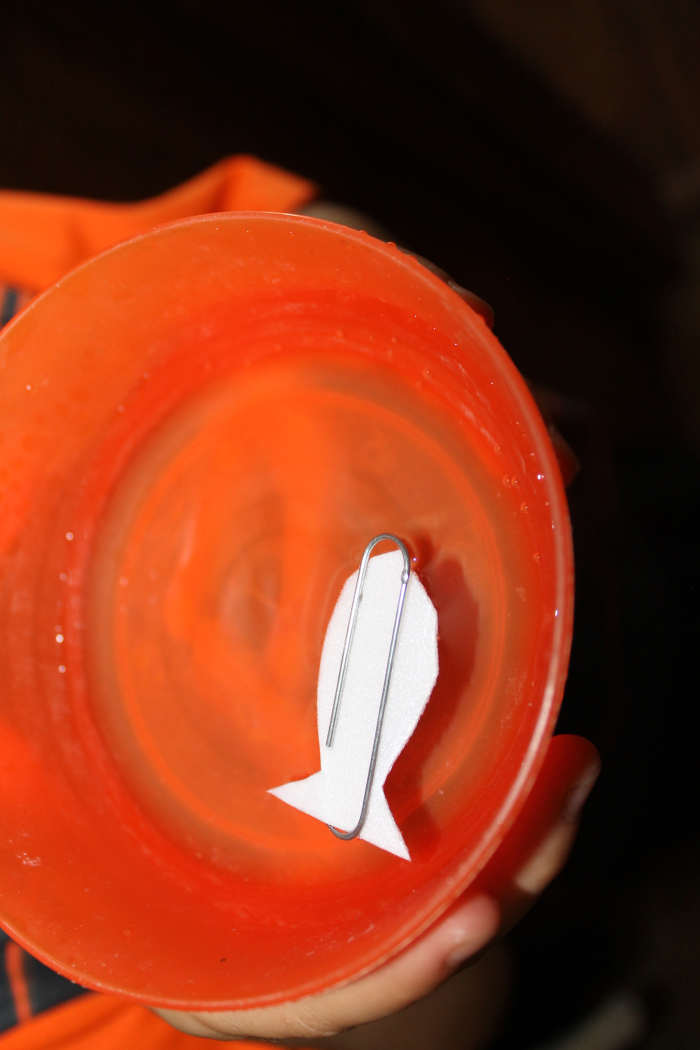
Fish Compass
3) Watch the below video on Chinese compasses.
4) Create a fish compass.
- Cut out a Styrofoam fish or turtle. (Use a Styrofoam tray or cup.)
- Magnetize a metal paper clip by rubbing it the SAME direction across a magnet at least 40 times.
- Attach the paper clip to the Styrofoam fish and place it in a bowl of water.
- What happens when you move the bowl different directions? Which part of the fish is pointing north? How accurate is it? (You can use a regular compass or your cell phone to compare.)
YOU WILL NEED:
- a piece of Styrofoam (from a Styrofoam tray or cup), scissors, magnet (the ones on your refrigerator will work), metal paper clip, bowl of water, & compass or cell phone (optional)
Buddha
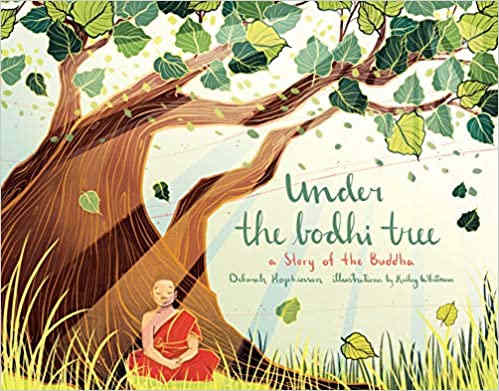
- Buddhism was brought to China by Buddhist monks from India during the latter part of the Han dynasty.
- Read Under the Bodhi Tree : A Story of the Buddha by Deborah Hopkinson.
- If you’d like to read more, KONOS HOW II provides a good summary of his life and beliefs on pp. 533-534.
- How is Buddhism different from the philosophies of Lao-Tzu and Confucius?
- How does Buddhism compare with what the Bible teaches?
- In 366 during the Six Dynasties Period, the Mogao Caves, the “Caves of the Thousand Buddhas” was started & continued for about 1,000 years. You can view some of it & learn more about it at https://www.youtube.com/watch?v=R29A0GyLYlE .
YOU WILL NEED:
- Under the Bodhi Tree : A Story of the Buddha by Deborah Hopkinson or other book on Buddha
Kites
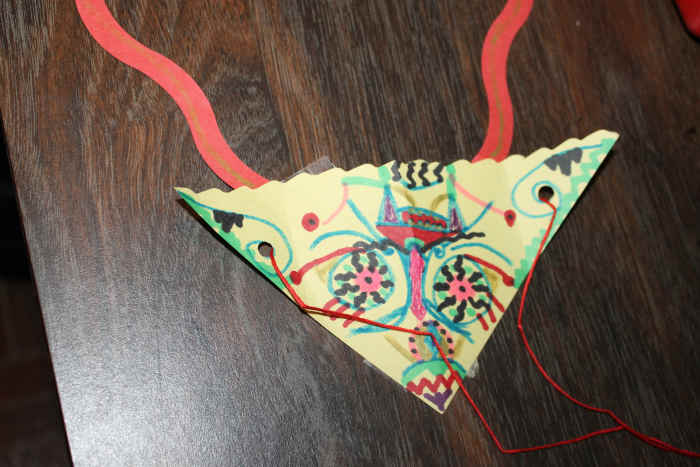
Chinese-inspired kite created by an elementary-aged child
- While we don’t know exactly when or why kites were invented, we do know they were invented in China.
- The earliest written account of kite flying was when the Chinese General Han Hsin of the Han Dynasty flew a kite over the walls of a city he was attacking to measure how far his army needed to tunnel to reach past the wall and surprise the enemy on the other side.
- Read The Story of Kites by Ying Chang Compestine.
YOU WILL NEED:
- The Story of Kites by Ying Chang Compestine or other book on kites
- Watch the below videos on kites.
Kite Competition
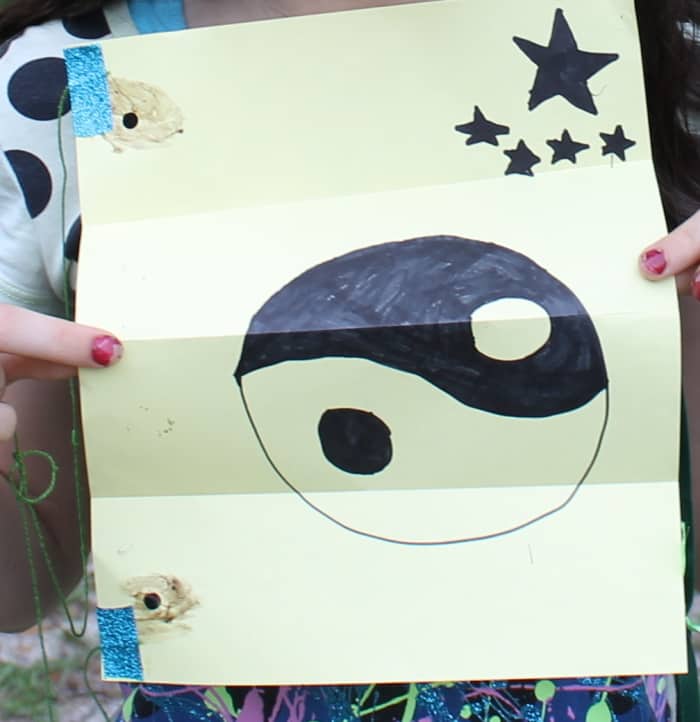
A kite create by an elementary-aged child
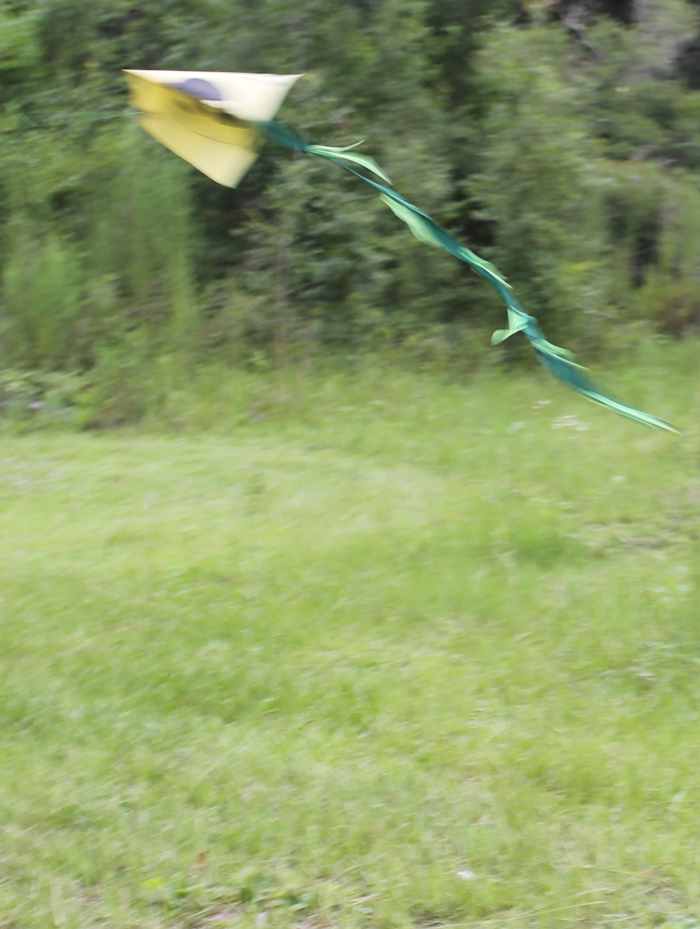
Flying homemade kites
- Give the children 20-25 minutes to create their own kite to enter into the Kite Competition.
- There will be a prize for the best looking kite and for the kite that flies the highest.
- Children may use any materials they would like. (Children ages 6 and under will probably need assistance.)
- I think the easiest design is the one above. Fold a piece of paper into a W. Punch holes in the end. Tie thread in each hole. Reinforce it with tape. Use tape to add ribbon tail that is at least 3 feet.
YOU WILL NEED:
- Materials for making kites such as paper, tape (I prefer scotch tape), markers, thread, ribbon, yarn, hole punchers, scissors, shish-kabob skewers, etc.
- Allow children to fly their kites outside.
- Award prizes to the child with the best-looking kite and to the child whose kite flew the highest. (I gave them Chinese candy. Everyone got a piece and the winners got extra pieces.)
YOU WILL NEED:
- prizes such as Chinese candy (optional)
Papermaking
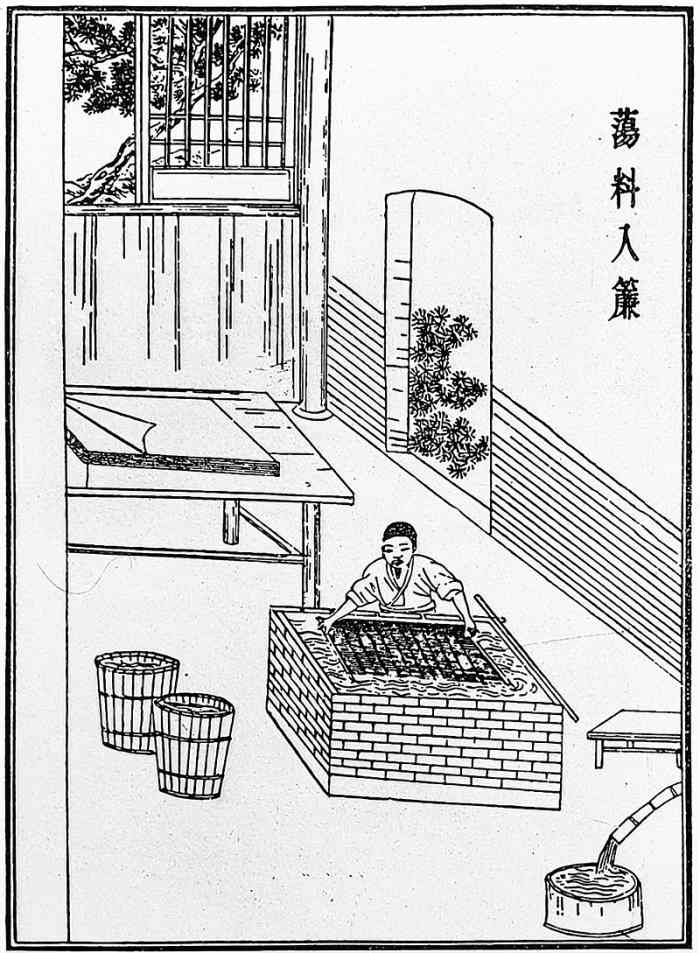
An image of a Ming dynasty woodcut describing one of the five major steps in the ancient Chinese papermaking process as outlined by Cai Lun in 105.
- The art of papermaking has been credited to Cai Lun, a court eunuch during the Han dynasty, who pounded together ingredients including mulberry tree bark, rags, bamboo, hemp, and old fishing nets, mixed them in water, and spread it flat.
- Read The Story of Paper by Ying Chang Compestine.
YOU WILL NEED:
- The Story of Paper by Ying Chang Compestine or other book on paper making
- If you’d like to make paper, you can follow the directions from https://www.tinasdynamichomeschoolplus.com/ .
Silk

Woven silk textile from a tomb no 1. at Mawangdui in Changsha, Hunan province, China, from the Western Han dynasty
- According to legend, the wife of Huangdi/Huang-Ti, the Yellow Emperor, was drinking tea when a silk worm cocoon dropped into her cup. The cocoon began to unwind. Since then the women of China have been raising silkworms and mulberry trees in order to create precious silk thread.
- Huangdi/Huang-Ti is a legendary figure and may or may not have actually existed. If he did exist, he’s thought to have lived around the time of the Flood during the time of Noah.
- China tried to keep silk production a secret, with the punishment of death to anyone who might try to share the secret.
- It was during the Han Dynasty that the Silk Road opened, allowing for goods (particularly silk and spices) to travel between China, the Middle East, and Europe.
- Silk was popular in Rome with Augustus Caesar, who was reigning when Christ was born.
- At some point the secret of silk was shared. Is there anywhere else in the world besides China that is a source of silk? How rare and expensive is silk cloth today?
- Read The Silk Princess by Charles Santore.
YOU WILL NEED:
- The Silk Princess by Charles Santore or other book on the legend of how silk thread was discovered
- Watch the below videos on silkworms and silk.
Embroidery & Weaving Silk
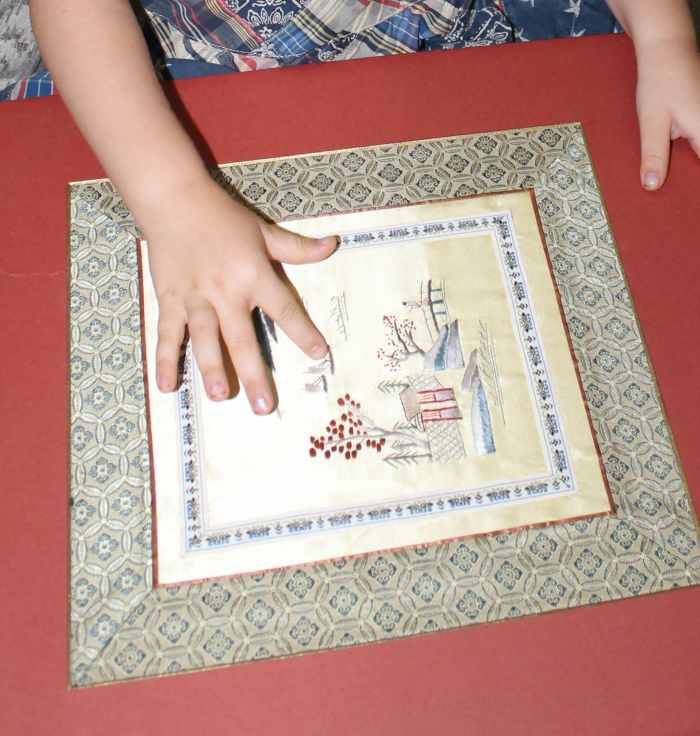
Examining Chinese embroidered silk
17.The art of embroidery was widespread throughout China in the Han Dynasty and continues to this day.
- Read about the four main styles/schools of embroidery at https://www.chinaeducationaltours.com/guide/culture-chinese-embroidery.htm .
- Show an item that has embroidery.
YOU WILL NEED:
- an item that has embroidery
- Watch the below video on Chinese embroidery & weaving silk.
Simplified “Embroidery”
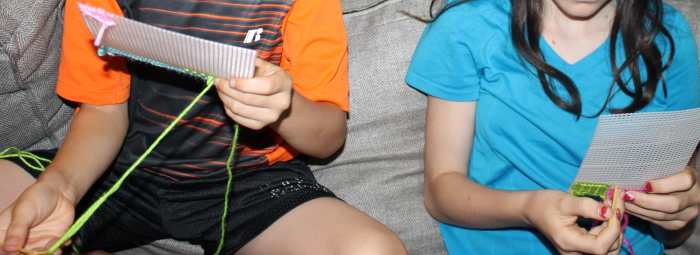
Simplified “embroidery” project using cross-stitch plastic canvas sets
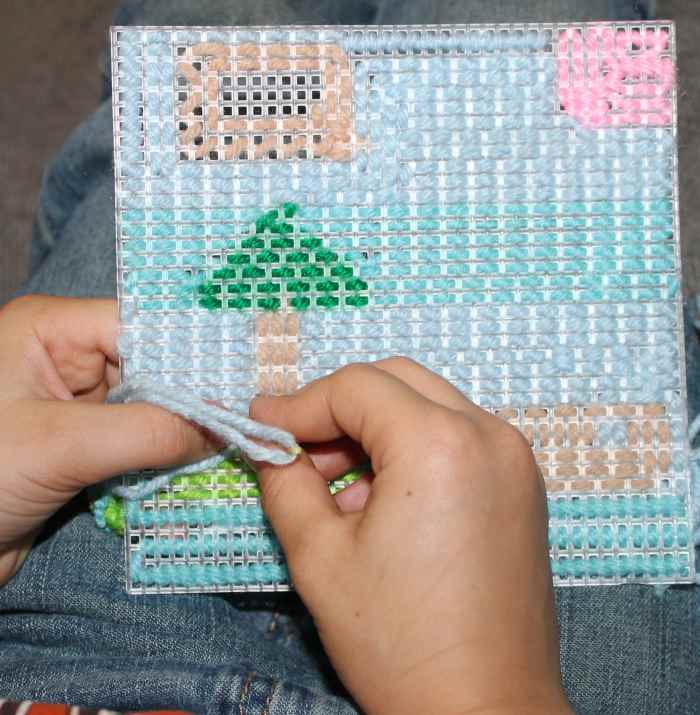
Lower elementary aged child finishing up the simplified “embroidery” project
- Create a silk embroidery. *This will probably take more than one day.* I let my children try it. I didn’t force them to finish their projects unless they wanted to.
- If you know how to sew and embroider fabric, you can have the children attempt to create silk embroidery on satin fabric. Rayon thread is less expensive than silk thread but has the same look and feel as silk. You’ll also need an embroidery need and hoop.
- If you’re like me and don’t sew at all, let children use the cross-stich sets from the toy aisle of the Dollar Tree. They come with everything you need: a plastic canvas, plastic needle, and thread.
YOU WILL NEED:
- either the materials for rayon thread on satin fabric (as listed above) or the cross-stich sets from the toy aisle of the Dollar Tree
“Art” to Note:
If you have time, watch about these amazing art & history pieces from the Han Dynasty.
Tomb of King Liu Sheng in Zhongshan Province “Jade Body Covering” (113 BC)
Galloping Bronze Horse, Gansu Province
Han Dynasty & Six/Southern Dynasties Books for Children
(206 BC – 589 AD)
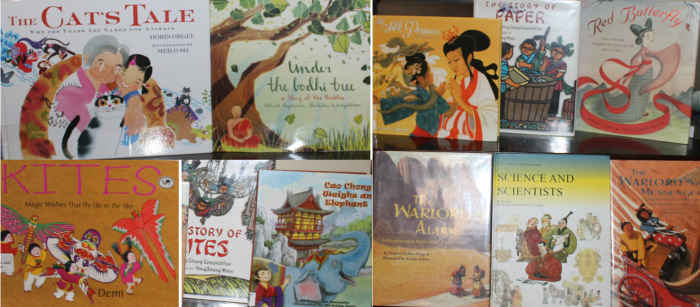
Some of the Han Dynasty Children’s Books
Han Dynasty & Six/Southern Dynasties Books (206 BC – 589 AD)
Used in the above lesson (so the links are above):
- The Warlord’s Fish by Virginia Walton Pilegard
- Fantastic Inventions and Inventors by Zhu Kang (Paper-making)
- Under the Bodhi Tree : A Story of the Buddha by Deborah Hopkinson
- The Story of Paper by Ying Chang Compestine
- The Story of Kites by Ying Chang Compestine
- The Silk Princess by Charles Santore
More of our favorites:
- Red Butterfly : How a Princess Smuggled the Secret of Silk out of China by Deborah Noyes
- The Empress and the Silkworm by Lily Toy Hong
- Stranger on the Silk Road by Jessica Gunderson
- Cao Chong Weighs an Elephant by Songju Ma Daemicke
- Buddha by Demi
- Ming’s Adventure in the Mogao Caves by Li Jian
- Kites: Magic Wishes That Fly up to the Sky by Demi (I changed some words.)
- The Warlord’s Kites by Virginia Walton Pilegard
- The Warlord’s Alarm by Virginia Walton Pilegard
- The Warlord’s Messengers by Virginia Walton Pilegard
- If You Were Me and Lived in…Ancient China: The Han Dynasty – An Introduction to Civilizations Throughout Time (Volume 2) by Carole P. Roman
- Guan Yu by Dan Jolley
- Dragon Prince: A Chinese Beauty & the Beast Tale by Laurence Yep
- On the Run in Ancient China by Linda Bailey
- The Dreamer Of Stars: Zhang Heng by Jillian Lin
- The Miracle Doctor: Hua Tuo by Jillian Lin
- Science and Scientists by Zhu Kang (Zhang Heng and Astronomy and Zu Chongzhi and the Value of Pi)
Ready to Study the Next Dynasty?
- Xia Dynasty (2205-1766 BC)
- Shang Dynasty (1766-1122 BC)
- Zhou Dynasty (1122-221 BC)
- Qin Dynasty (221-206 BC)
- Han Dynasty (206 BC-220 AD) & Six/Southern Dynasties Period (220-589)
- Sui Dynasty (589-618) & Tang Dynasty (618-907)
- Five Dynasties (907-960) & Song Dynasty (960-1279)
- Yuan or Mongolian Dynasty (1279-1368)
- Ming Dynasty (1368-1644)
- Qing/Manchu Dynasty (1644-1911)
- Revolutions in China (1911-1976)
- Modern China (1977-Present)
- Chinese New Year Celebration
Looking for All My Lessons?
Over the years I have posted over 40 science and social-studies based unit studies, compromised of more than 170 lessons. The unit studies include the Human Body, Simple Machines, Earth Science, Medieval Period, American Revolution, Pioneer Life, Countries of the World, and many more! For each lesson I have included activities (with photos), our favorite books and YouTube video clips, lapbook links, and other resources. I posted links to all of my unit studies and lessons at Fun, FREE Hands-on Unit Studies .
© 2021 Shannon
Leave a Reply